
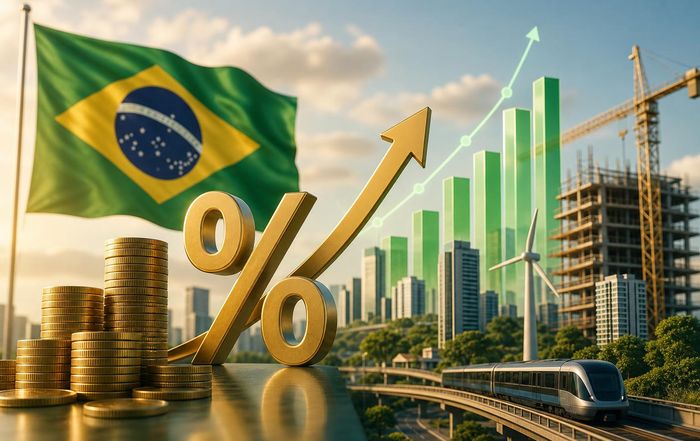
Brazil's Interest Rate Pivot and the New Cycle of Domestic Investment
Introduction: A Turning Point for Latin America's Largest Economy
Brazil's monetary cycle has entered one of its most consequential phases since the inflation-fighting campaigns of the mid-2010s. After an aggressive tightening that took the benchmark Selic rate from a historic low of 2% in 2020 to 13.75% by 2022, the Banco Central do Brasil (BCB) has been steadily lowering rates, attempting to engineer a soft landing for inflation while reigniting domestic investment. For readers of FinancialDailys, this shift is more than a macroeconomic curiosity; it is reshaping opportunities in credit, equity markets, real estate, infrastructure, and corporate funding across Latin America's largest economy.
The trajectory of Brazilian interest rates has always exerted an outsized influence on the country's growth prospects, given the economy's historically high real rates, structural fiscal challenges, and dependence on both domestic savings and global capital flows. The current easing cycle, unfolding in a world of tighter global financial conditions and heightened geopolitical uncertainty, is forcing policymakers, investors, and business leaders to reassess how Brazil can unlock sustainable, productivity-enhancing domestic investment rather than simply fueling short-lived consumption booms.
From Volatility to Credibility: How Brazil's Rate Regime Evolved
Brazil's modern interest rate regime is rooted in the adoption of inflation targeting and a floating exchange rate in 1999, following the collapse of the real's crawling peg. Since then, the Selic rate has been the primary instrument for keeping inflation within the target band set by the National Monetary Council (CMN). Over the past two decades, the BCB's credibility has gradually strengthened, particularly after it was granted formal operational autonomy in 2021, a reform widely regarded by institutions such as the International Monetary Fund and OECD as a cornerstone of macroeconomic stability. Readers can explore background analysis of Brazil's macro framework through resources from the IMF and OECD.
Historically, Brazil has operated with some of the world's highest real interest rates, a reflection of inflation risk, fiscal uncertainty, shallow long-term capital markets, and a legacy of indexation. For much of the 2000s and early 2010s, double-digit nominal rates were the norm, even as many advanced economies maintained near-zero policy rates. This environment discouraged long-term investment in productive assets, particularly in sectors requiring lengthy payback periods such as infrastructure, renewable energy, and industrial capacity.
The pandemic shock initially pushed the Selic to a record low of 2%, as the central bank sought to cushion a severe contraction. However, the combination of global supply constraints, surging commodity prices, domestic fiscal stimulus, and a weaker exchange rate ignited a powerful inflationary wave. From early 2021, the BCB embarked on one of the world's earliest and most forceful tightening cycles, lifting the Selic to 13.75% by mid-2022. According to data compiled by the Bank for International Settlements and World Bank, this rapid tightening contributed to a sharp deceleration in credit growth and a cooling of investment, but it also helped anchor inflation expectations and prevent a more serious macroeconomic dislocation. For readers of FinancialDailys, these dynamics are central to understanding the subsequent investment recovery now underway, as discussed further in our economy coverage.
The Current Easing Cycle: Balancing Inflation and Growth
As inflation began to recede from its peaks, driven by tighter policy, moderating commodity prices, and targeted tax measures on fuels and electricity, the BCB initiated an easing cycle in the second half of 2023. Subsequent decisions have brought the Selic down in measured steps, with policymakers emphasizing a data-dependent approach informed by inflation expectations, fiscal developments, and global financial conditions. Official communications, minutes, and inflation reports from the central bank, available on the Banco Central do Brasil website, indicate a cautious but clear shift toward supporting growth, while maintaining a strong commitment to the inflation target.
Inflation has declined from double-digit levels to a range closer to the official target, though core measures and service prices remain under careful scrutiny. Analysts at institutions such as Banco Itaú, Bradesco, and international houses covered by platforms like Bloomberg and Reuters generally concur that Brazil has moved from a crisis-fighting stance to a normalization phase, albeit with lingering uncertainties related to fiscal anchors and global interest rates. For investors tracking markets and stocks on financialdailys, the key question is how far and how fast rates can fall without reigniting inflation or triggering instability in the currency and bond markets.
There is not full consensus among economists on the neutral real rate of interest in Brazil. Some research, including studies published by the BCB and independent think tanks, suggests that structural reforms and improved credibility have lowered the neutral rate relative to the past, while others argue that persistent fiscal risk and low domestic savings keep it elevated. This uncertainty means that the current easing cycle must be carefully calibrated, especially in a world where major central banks, particularly the Federal Reserve, have maintained higher-for-longer policy rates, influencing global capital flows and risk premia across emerging markets.
Domestic Investment: From Consumption Booms to Capital Formation
The central question for Brazil, and for readers of FinancialDailys focused on investing and business, is whether lower interest rates will translate into a durable upswing in domestic investment rather than a short-lived consumption surge. Historically, Brazilian growth cycles have often been driven by credit-fueled household consumption, supported by payroll-deductible loans, subsidized credit, and social transfers, while gross fixed capital formation lagged behind peers such as China, South Korea, and even some regional neighbors.
Data from the World Bank and IBGE (Brazil's national statistics agency) show that Brazil's investment-to-GDP ratio has generally hovered in the mid-teens to low twenties percentage range, frequently below the levels associated with rapid, sustained growth in emerging economies. This underinvestment has contributed to infrastructure bottlenecks, productivity constraints, and a slower pace of industrial modernization. As the interest rate environment becomes more favorable, businesses and policymakers are increasingly focused on creating conditions that channel cheaper capital into long-term projects, rather than merely easing household debt service burdens.
The government's updated fiscal and industrial policies, including the Novo PAC (Programa de Aceleração do Crescimento) and sectoral initiatives for energy transition and digital infrastructure, aim to leverage lower borrowing costs to crowd in private investment. Official documents and analysis from Brazil's Ministry of Finance and multilateral institutions like the World Bank and Inter-American Development Bank indicate that public investment, concessions, and public-private partnerships are being designed to attract domestic and foreign investors into transport, sanitation, logistics, and renewable energy. Readers interested in the intersection of policy and markets can follow these developments through our world and trade sections.
Credit Channels: Banking System, Capital Markets, and Private Credit
The transmission of lower policy rates into domestic investment depends heavily on Brazil's financial architecture. The country has a sophisticated banking system dominated by large private institutions such as Itaú Unibanco, Bradesco, and Banco Santander Brasil, alongside state-controlled players like Banco do Brasil and Caixa Econômica Federal. Historically, state-owned development bank BNDES (Banco Nacional de Desenvolvimento Econômico e Social) played an outsized role in long-term financing at subsidized rates, but its footprint has been recalibrated over the past decade to reduce distortions and encourage deeper private capital markets.
As the Selic rate declines, commercial bank lending rates for corporates and households tend to adjust with a lag, reflecting credit risk, regulatory costs, and structural spreads. Data from the BCB's credit reports and research by organizations such as the Institute of International Finance suggest that spreads in Brazil remain relatively high by international standards, particularly for small and medium-sized enterprises. Lower policy rates therefore improve conditions but do not automatically guarantee cheap funding for all borrowers. This creates a strong incentive to deepen access to capital markets, including debentures, infrastructure bonds, and securitizations.
Brazil's domestic capital market has grown significantly, with the B3 exchange in São Paulo emerging as a key hub for equity and fixed-income issuance. The growth of infrastructure debentures with tax incentives, as outlined in regulatory frameworks available through the Ministry of Finance and CVM (Brazil's securities regulator), has provided an important channel for financing long-term projects in energy, logistics, and sanitation. International investors can follow these developments via platforms like B3 and global market data providers such as S&P Global.
In parallel, private credit and alternative investment vehicles have expanded, including FIDCs (receivables funds), real estate funds (FIIs), and private equity structures that often benefit from lower base rates when pricing deals and exit strategies. For FinancialDailys readers monitoring finance and banking, these evolving credit channels are central to understanding how the current rate cycle could translate into corporate capex, M&A activity, and infrastructure build-out.
Sectoral Impact: Real Estate, Infrastructure, Industry, and Technology
The easing of interest rates has highly differentiated effects across sectors. Real estate is typically among the most interest-sensitive segments, and Brazil is no exception. Lower mortgage rates support housing demand, particularly in the middle-income segment, while also improving the economics of commercial and logistics developments. Listed real estate investment funds on B3 tend to benefit from lower discount rates applied to their cash flows, often leading to price appreciation and renewed issuance activity. For readers exploring property-related themes, financialdailys provides ongoing insight through its property coverage.
Infrastructure, including roads, ports, airports, railways, and sanitation, stands to gain significantly from reduced funding costs. Many concession and PPP models in Brazil rely on long-term financing structures that are sensitive to the Selic rate and long-term bond yields. Lower rates reduce the cost of capital for concessionaires and can make previously marginal projects financially viable, particularly when combined with regulatory improvements and risk-sharing mechanisms. The role of multilateral lenders such as the Inter-American Development Bank and CAF - Development Bank of Latin America and the Caribbean is also important, as they often blend financing and guarantees with domestic capital, supporting a more robust project pipeline. Interested readers can learn more about infrastructure finance in Brazil through resources at IDB and CAF.
Industrial sectors, especially manufacturing and agribusiness-related processing, benefit from lower working capital costs and improved prospects for investment in machinery, automation, and logistics. Brazil's globally competitive agribusiness sector, supported by organizations like Embrapa, continues to invest in technology, storage, and transport infrastructure to maintain its leadership in soy, corn, meat, and other commodities. However, the extent to which lower rates translate into a broad-based industrial renaissance depends on complementary factors such as tax reform, regulatory simplification, and trade policy, areas that are closely followed in the business and trade sections of FinancialDailys.
The technology and startup ecosystem is also highly sensitive to interest rate trends. After a period of exuberant valuations and abundant global venture capital, followed by a correction as global rates rose, Brazilian startups are navigating a more disciplined funding environment. Lower domestic rates improve the relative attractiveness of growth equity and venture investments, especially for companies closer to profitability or with strong cash-flow prospects. Hubs such as São Paulo and hubs in the South and Northeast have continued to attract investment in fintech, healthtech, edtech, logistics, and agritech. Ecosystem data and analysis from platforms like CB Insights and Crunchbase indicate that Brazil remains one of Latin America's leading destinations for venture capital, even if deal volumes and valuations have normalized from their peaks. Readers can track these developments in our startups and tech sections.
External Environment: Global Rates, Commodities, and Capital Flows
Brazil's interest rate and investment dynamics cannot be understood in isolation from the global environment. The stance of major central banks, especially the Federal Reserve, European Central Bank, and Bank of England, shapes global liquidity, risk appetite, and currency movements. As advanced economies have grappled with persistent inflation and slower growth, policy rates have remained higher than in the decade following the global financial crisis. This backdrop limits how aggressively emerging markets like Brazil can cut rates without risking capital outflows or currency depreciation.
Brazil's external accounts, however, benefit from its role as a major commodity exporter, particularly in agriculture, mining, and energy. Higher commodity prices tend to support trade balances and foreign exchange reserves, which can provide a buffer against external shocks and help stabilize the currency, thereby easing inflationary pressures from imports. At the same time, commodity cycles are inherently volatile, and long-term investment planning must account for this uncertainty. Institutions such as the World Bank, IMF, and UNCTAD provide extensive analysis on commodity markets and global trade patterns, which are useful for investors and policymakers assessing Brazil's external position; readers can explore these through sources like World Bank commodities and UNCTAD.
Foreign portfolio investment in Brazilian bonds and equities is highly sensitive to interest differentials and perceived risk. When domestic rates are high relative to global benchmarks, Brazil often attracts carry trade flows, which can be volatile and procyclical. As rates fall, the composition of foreign investment ideally shifts toward more stable, long-term commitments such as infrastructure, private equity, and strategic corporate stakes. The challenge for policymakers is to create a macro and regulatory environment that encourages this shift, rather than relying on short-term speculative flows. For readers of FinancialDailys active in global investing and markets, understanding these cross-border dynamics is essential for assessing risk and return.
Structural Reforms, Fiscal Anchors, and Investor Confidence
Interest rates and investment decisions are deeply intertwined with perceptions of fiscal sustainability and structural reform. Brazil has undertaken important reforms in recent years, including a landmark pension reform, efforts to modernize its tax system, and the introduction of a new fiscal framework intended to replace the previous expenditure cap. While these measures have been positively received by many market participants, there remains ongoing debate among economists and rating agencies about their sufficiency and durability.
Credit rating agencies such as S&P Global Ratings, Moody's, and Fitch Ratings continue to monitor Brazil's fiscal trajectory, debt dynamics, and political environment. Their assessments, accessible via S&P Global Ratings, Moody's, and Fitch Ratings, influence borrowing costs for both the sovereign and private issuers. A credible fiscal anchor reduces risk premia in long-term interest rates, amplifying the positive impact of Selic cuts on investment decisions. Conversely, doubts about fiscal discipline can limit the extent to which policy easing translates into lower borrowing costs along the yield curve.
Structural reforms in areas such as tax simplification, regulatory modernization, labor flexibility, and infrastructure concessions play a vital role in improving the risk-return profile of investment projects. The ongoing implementation of Brazil's tax reform, aimed at streamlining indirect taxes and reducing distortions across states and sectors, is particularly important for productivity and investment planning. While there is broad agreement among business groups and economists that simplification is beneficial, the exact impact will depend on detailed regulations and transitional arrangements, which are still unfolding.
Sustainability, Energy Transition, and Green Investment
One of the most promising frontiers for domestic and foreign investment in Brazil is the intersection of lower interest rates and the global drive toward sustainability and decarbonization. Brazil's energy matrix is already relatively clean, with a large share of hydroelectric, wind, and bioenergy, and the country has significant potential in solar, green hydrogen, and sustainable aviation fuels. As financing costs decline and international climate finance frameworks mature, Brazil is well positioned to attract capital into green infrastructure, renewable power, and low-carbon industrial clusters.
Global initiatives such as the Paris Agreement and frameworks promoted by institutions like the International Energy Agency and UNEP Finance Initiative are encouraging financial institutions to integrate climate risk and sustainable finance criteria into their portfolios. Investors can learn more about these trends through sources such as the IEA and UNEP FI. In Brazil, regulators and market participants have advanced ESG disclosure standards and sustainable bond frameworks, including green, social, and sustainability-linked bonds listed on B3. These instruments benefit from lower interest rates by reducing the cost of capital for environmentally and socially impactful projects.
For readers of FinancialDailys, the convergence of macro easing, regulatory innovation, and global climate commitments creates a significant opportunity set in sustainable infrastructure, agritech, reforestation, and low-carbon manufacturing. Our dedicated sustainability section follows these developments closely, highlighting how Brazil's unique natural endowments and policy choices can translate into both financial returns and positive environmental outcomes.
Implications for Investors and Businesses
For international and domestic investors, Brazil's evolving interest rate landscape offers both opportunities and risks. Lower rates can support equity valuations, stimulate credit growth, and improve the economics of long-duration assets, but they also require careful analysis of sectoral dynamics, currency risk, and policy credibility. Institutional investors, family offices, and corporate treasurers are increasingly adopting a more granular approach, differentiating between sectors and regions within Brazil, and incorporating macro, political, and ESG factors into their allocation decisions.
Businesses operating in Brazil are reassessing their capital structures, weighing the benefits of refinancing high-cost debt, issuing longer-term bonds, or tapping equity markets. Many corporates are revisiting postponed investment projects, exploring M&A, or accelerating digital transformation initiatives that were constrained by higher funding costs. For small and medium-sized enterprises, improved access to credit and capital markets can unlock productivity-enhancing investments in technology, logistics, and workforce development, although challenges in collateral, documentation, and financial literacy remain.
Professionals considering careers in finance, infrastructure, technology, and sustainability in Brazil may find the coming years particularly dynamic, as the investment cycle shifts from caution to selective expansion. Those interested in understanding the career implications of these trends can explore our careers coverage, which examines how macro and sectoral shifts translate into demand for skills in risk management, project finance, data analytics, ESG, and cross-border deal-making.
Conclusion: Toward a More Investment-Led Growth Model
Brazil's current interest rate cycle represents more than a routine adjustment to inflation dynamics; it is a test of whether Latin America's largest economy can transition toward a more investment-led, productivity-driven growth model. The combination of a more credible monetary framework, cautious but meaningful fiscal and structural reforms, a deepening financial system, and powerful secular themes such as digitalization and decarbonization provides a foundation for optimism, even amid global uncertainty.
For readers of FinancialDailys, the key to navigating this environment lies in integrating macro analysis with sectoral insight and rigorous risk assessment. Lower interest rates will not automatically solve structural challenges, but they can act as a powerful catalyst when combined with sound policy, institutional strength, and entrepreneurial dynamism. As Brazil moves through this pivotal phase, the interplay between monetary policy, domestic investment, and global capital will continue to shape opportunities across finance, markets, stocks, business, and beyond.
In this evolving landscape, financialdailys will remain focused on providing readers with clear, trustworthy, and forward-looking coverage of Brazil's economic transformation, helping investors, executives, and policymakers alike to identify not only the risks, but also the many avenues for positive, long-term value creation that can emerge when interest rate cycles and domestic investment agendas align.
