
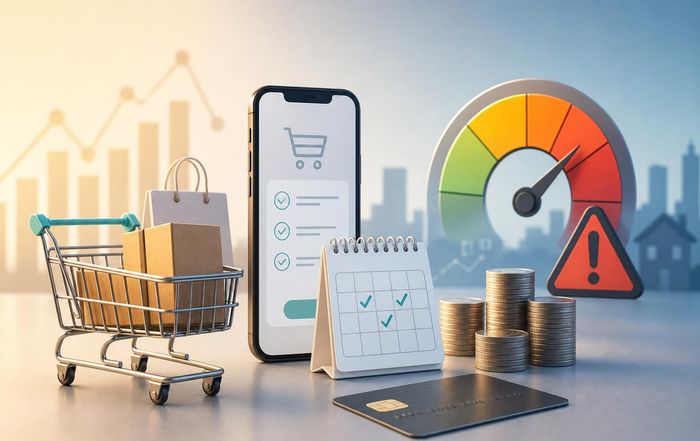
Understanding Buy Now, Pay Later and Consumer Credit Risk
The Rise of Buy Now, Pay Later in Modern Finance
Buy Now, Pay Later has moved from a niche checkout option to a mainstream financing tool embedded in global ecommerce, mobile wallets and even in-store point-of-sale systems. As FinancialDailys tracks developments across finance, markets and consumer behavior, BNPL increasingly sits at the intersection of payments innovation, household debt dynamics and regulatory scrutiny, making it a crucial topic for investors, policymakers and financial institutions.
BNPL arrangements generally allow consumers to split purchases into several interest-free installments, with providers earning revenue primarily from merchant fees, late charges and, in some cases, interest on longer-term plans. This model has been popularized by firms such as Klarna, Afterpay (now part of Block, Inc.), Affirm, PayPal's "Pay in 4", and large card networks and banks that have introduced installment features on existing credit lines. According to data from the World Bank and industry analyses, digital installment products have spread rapidly across North America, Europe, Asia-Pacific and increasingly emerging markets, supported by higher ecommerce penetration, smartphone adoption and the demand for frictionless checkout experiences.
What distinguishes BNPL from traditional credit cards is not only its marketing and user experience but also its underwriting, data usage and regulatory treatment. For readers of FinancialDailys, understanding these differences is essential to evaluating the implications for consumer credit risk, bank earnings, fintech valuations and the broader economy.
How BNPL Works: Business Models and Economics
At its core, BNPL is a short-term consumer credit product, though it is often presented to shoppers as a budgeting tool rather than a loan. Providers typically offer a fixed number of installments over a defined period, such as four payments over six weeks, with the first payment due at checkout. For merchants, BNPL aims to increase conversion rates and average order values, while for consumers the attraction lies in immediate access to goods without paying the full amount upfront.
BNPL providers usually pay merchants the full transaction amount (minus a merchant discount fee) shortly after purchase, assuming the credit risk that the consumer may default on subsequent installments. Merchant fees can be significantly higher than standard card interchange, reflecting BNPL's role as both a payment method and a sales-boosting marketing tool. Reports from organizations such as the Bank for International Settlements indicate that merchant discount rates for BNPL are commonly in the mid-single to low-double-digit percentage range, although exact numbers vary by provider, sector and geography and are not always publicly disclosed.
Revenue models differ across providers. Some focus on short-term, interest-free installment plans funded by merchant fees and late charges. Others offer longer-duration financing with explicit interest rates, more closely resembling traditional personal loans or revolving credit. Many providers monetize data insights to refine underwriting and risk-based pricing, and some have expanded into broader financial services ecosystems, including debit cards, virtual cards and shopping apps. Interested readers can explore further analysis from the International Monetary Fund on the evolution of digital credit products and their impact on financial stability.
Global Adoption and Market Structure
The BNPL landscape is geographically diverse, shaped by local regulation, consumer payment habits and competition from established credit providers. In the United States and United Kingdom, BNPL has grown rapidly alongside entrenched credit card markets, positioning itself as a flexible alternative, particularly for younger consumers and those wary of revolving credit. In markets such as Sweden and Australia, BNPL gained traction earlier, partly due to strong ecommerce ecosystems and consumers' familiarity with invoice-based payment methods.
In continental Europe, providers like Klarna and Scalapay have expanded across multiple countries, while in Asia-Pacific, firms such as Atome in Southeast Asia and Zip in Australia have become prominent. Large technology and payments companies, including Apple with Apple Pay Later (subject to ongoing strategic adjustments), PayPal, Visa and Mastercard, have introduced installment features, either directly or through partnerships, adding competitive pressure on standalone BNPL fintechs. Coverage by the European Central Bank and national regulators shows that traditional banks increasingly view BNPL as both a threat and an opportunity, responding with white-label solutions and embedded finance offerings for retailers.
In emerging markets such as India, Brazil and parts of Africa, BNPL often intersects with broader financial inclusion efforts, mobile money ecosystems and alternative credit scoring models that rely on telecom or ecommerce data. Research from organizations like the World Economic Forum and CGAP highlights that digital installment products can help previously underserved consumers access credit, while simultaneously raising questions about affordability, transparency and recourse mechanisms.
BNPL versus Traditional Consumer Credit
Although BNPL and credit cards both facilitate consumption smoothing, their risk profiles and consumer behaviors differ in important ways. Credit cards typically provide a revolving credit line with variable interest rates, minimum payments and complex fee structures. BNPL, by contrast, is usually structured as a fixed-schedule, closed-end loan tied to a specific purchase, with clear repayment dates and, in many cases, no interest if payments are made on time.
This difference in design can influence how consumers perceive and manage their obligations. Behavioral studies cited by the OECD and regulators such as the UK Financial Conduct Authority (FCA) suggest that consumers may underestimate the risk associated with BNPL because it is often framed as a budgeting tool, presented with minimal friction at checkout and sometimes not subject to full credit checks. The absence of an explicit interest rate, coupled with the psychological effect of smaller installments, can make purchases feel more affordable than they are, potentially encouraging overextension.
Another key distinction lies in reporting and credit histories. In several jurisdictions, BNPL use has not been consistently reported to credit bureaus, limiting lenders' visibility into total consumer leverage. Although some providers have begun sharing data with bureaus or building their own internal scoring systems, coverage remains uneven. This contrasts with traditional credit cards and personal loans, where reporting is typically standardized, allowing for more comprehensive assessment of debt burdens and repayment behavior.
Regulatory Responses and Policy Debates
Regulators across major markets have moved from observation to action as BNPL volumes have grown and concerns about consumer harm have intensified. Supervisory authorities, including the FCA in the UK, the Consumer Financial Protection Bureau (CFPB) in the United States, the Australian Securities and Investments Commission (ASIC) and the European Banking Authority (EBA), have published discussion papers, market reviews and consultation documents examining the risks and benefits of BNPL.
Common themes in these regulatory initiatives include the need for clearer disclosure of terms and fees, consistent creditworthiness assessments, appropriate treatment of late fees, fair debt collection practices and alignment with existing consumer credit laws. Some jurisdictions have already moved to bring BNPL within the scope of credit regulation, while others are in transitional phases, consulting on proportional approaches that recognize both innovation and potential harm. For instance, in the UK, policymakers have been working on a framework to ensure that BNPL products are subject to affordability checks and standardized information requirements, though the precise timetable and final form of the rules remain under discussion.
In the United States, the CFPB has conducted market monitoring and issued interpretive guidance clarifying that certain BNPL providers may be subject to rules governing credit card-like products, especially in areas such as dispute resolution and refunds. In the European Union, the ongoing evolution of consumer credit directives and digital finance strategies is likely to shape the regulatory perimeter for BNPL and related products. Readers seeking deeper policy context can consult resources from the Bank for International Settlements and the Financial Stability Board, which have explored the systemic implications of new credit channels.
Consumer Credit Risk: Overextension, Delinquencies and Financial Health
The core question for FinancialDailys readers is how BNPL affects consumer credit risk and, by extension, the health of lenders, fintechs and the broader financial system. Empirical evidence is still developing, and data quality varies, but several risk channels are increasingly clear.
One concern is overextension through "stacking," where consumers accumulate multiple BNPL plans across providers and merchants, sometimes in combination with credit cards and overdrafts. Because BNPL obligations may not be fully visible in traditional credit reports, lenders assessing an individual's capacity to repay may underestimate their total commitments. Studies by the FCA, CFPB and consumer advocacy organizations in various countries have documented cases where frequent BNPL users report difficulty keeping track of payment dates, leading to missed installments and late fees.
Delinquency trends offer another lens, though comparisons must be made carefully due to differences in product design and customer segments. Public disclosures from listed BNPL providers, as well as analyses by rating agencies such as Moody's and S&P Global Ratings, indicate that loss rates in BNPL portfolios can be higher than in prime credit card portfolios but may still be manageable if priced and provisioned appropriately. During periods of macroeconomic stress, such as inflation spikes and rising interest rates, BNPL providers that serve more subprime or near-prime customers may experience disproportionate increases in delinquencies, especially where underwriting has emphasized growth over risk controls.
At the household level, research from the OECD, national central banks and consumer research institutes suggests that BNPL usage is often concentrated among younger adults, renters and those with lower or more volatile incomes. For some, BNPL facilitates access to essential goods or helps manage cash flow shocks; for others, it can become a gateway to problematic debt, particularly when used to finance discretionary or non-essential spending. The challenge for regulators and providers is to differentiate between responsible, manageable use and patterns that signal financial vulnerability.
Implications for Banks, Fintechs and Capital Markets
The growth of BNPL has strategic implications for banks, card networks, fintechs and investors, which FinancialDailys continues to monitor through its investing and stocks coverage. For incumbent banks, BNPL represents both competition for consumer lending revenue and a potential channel for customer acquisition. Some institutions have launched their own installment products, either on-credit-card lines or as standalone offerings at checkout, leveraging existing regulatory licenses, funding bases and risk management infrastructure.
Fintech BNPL providers, meanwhile, often rely on wholesale funding, securitization markets or partnerships with banks to finance their loan books. As interest rates have risen globally, funding costs have increased, putting pressure on business models that were built in a low-rate environment. Rating agencies and analysts have noted that access to capital markets can become more challenging for BNPL providers if investors perceive heightened credit risk or regulatory uncertainty. At the same time, partnerships between banks and BNPL fintechs can mitigate some of these challenges by combining technology and distribution with balance sheet strength and compliance expertise.
From a capital markets perspective, investors evaluate BNPL firms on a combination of factors, including customer acquisition cost, unit economics, credit performance, regulatory risk and path to profitability. Publicly listed BNPL and payments companies have experienced periods of significant share price volatility, reflecting changing expectations about growth, competition and macroeconomic conditions. For readers following developments in fintech equities, the intersection of BNPL with broader themes in digital payments, embedded finance and open banking remains a key area of analysis.
BNPL and the Macroeconomic Environment
Consumer credit risk in BNPL cannot be understood in isolation from the broader macroeconomic context. Inflation, wage growth, employment trends and interest rate cycles all shape households' capacity to service debt and influence the demand for installment credit. In an environment of elevated living costs, BNPL may appear attractive as a way to manage short-term budget pressures, but this can also mask underlying affordability issues if incomes do not keep pace with expenses.
Central banks and institutions such as the OECD and IMF have emphasized the importance of monitoring non-bank credit channels, including BNPL, as part of macroprudential surveillance. While BNPL volumes remain small compared with traditional credit markets, rapid growth in a lightly regulated segment can create pockets of vulnerability, particularly if credit is extended to borrowers with limited resilience to shocks. For policymakers, the task is to balance financial innovation and competition with safeguards that prevent the buildup of hidden leverage.
At the same time, BNPL can contribute positively to economic activity by supporting retail sales, especially in ecommerce and sectors such as fashion, electronics and travel. Retailers that integrate BNPL at checkout often report higher conversion rates and larger basket sizes, which can have knock-on effects for employment and investment in logistics, marketing and technology. The net macroeconomic impact depends on whether BNPL primarily shifts the timing of consumption or genuinely expands it, a question that economists and statisticians are still examining with emerging data.
Responsible Innovation: Best Practices for Providers and Merchants
As BNPL matures, a growing body of best practices is emerging around responsible product design, underwriting and customer communication. Industry associations, regulators and consumer groups have called for clearer disclosures, including total cost of credit, late fee structures and consequences of missed payments, presented in language that is understandable to a wide range of consumers. Learn more about sustainable business practices from organizations such as the UN Principles for Responsible Banking and the OECD's work on financial consumer protection.
Robust creditworthiness assessments are another cornerstone of responsible BNPL. While instant approvals at checkout are central to the user experience, providers are increasingly expected to incorporate meaningful checks, including income verification where appropriate, assessment of existing obligations and, where available, use of credit bureau data. Some markets are moving toward more comprehensive reporting of BNPL usage to credit bureaus, which can improve risk assessment but also raises questions about how short-term installment behavior should influence long-term credit scores.
Merchants that offer BNPL at checkout also play a role in consumer outcomes. Responsible practices may include limiting the promotion of BNPL for certain categories of goods or services, ensuring that marketing materials do not trivialize the risks of borrowing and providing easy access to support for customers facing repayment difficulties. For businesses, aligning BNPL strategies with broader environmental, social and governance (ESG) objectives can support long-term brand trust, a theme covered extensively in sustainability reporting on FinancialDailys.
Guidance for Consumers and Investors
For consumers, BNPL can be a useful tool when used deliberately and within a realistic budget. Financial education resources from organizations such as OECD, Money Advice Service in the UK, Consumer Financial Protection Bureau in the US and similar bodies in other countries emphasize fundamental principles: understanding total obligations, tracking due dates, avoiding using BNPL to cover everyday shortfalls in income and seeking help early if repayment becomes challenging. In many jurisdictions, consumers have rights related to refunds, disputes and hardship arrangements, though these rights can differ between BNPL and traditional credit products.
Investors evaluating BNPL providers, banks with BNPL exposure or retailers heavily reliant on installment-based sales should consider not only top-line growth but also credit quality, regulatory trajectory and customer satisfaction metrics. Articles in the business and banking sections of FinancialDailys often underscore the importance of governance, risk culture and stress testing in financial institutions; these considerations are equally relevant to fintechs, even when they operate outside traditional banking charters.
Moreover, as BNPL ecosystems evolve, adjacent sectors such as insurance, credit scoring, debt collection and personal finance management apps are likely to see new opportunities and challenges. Technology coverage on tech and startups at FinancialDailys illustrates how data analytics, open banking APIs and artificial intelligence can enhance affordability assessments and early-warning systems for financial distress, while also raising important questions about privacy, fairness and explainability.
Looking Ahead: BNPL in a More Regulated, Data-Rich Future
The trajectory of Buy Now, Pay Later over the coming years will be shaped by a combination of regulatory tightening, competitive dynamics and advances in data and technology. As more jurisdictions bring BNPL within the scope of consumer credit laws, providers will need to adapt their models to include more rigorous underwriting, standardized disclosures and enhanced reporting. While this may slow the pace of expansion in some markets, it can also support long-term sustainability by reducing reputational and legal risks, improving credit performance and fostering greater trust among consumers and investors.
Data will play a central role in this evolution. The integration of BNPL data into credit bureaus, open banking frameworks and alternative scoring engines can enable more accurate assessments of consumers' total obligations and repayment capacity. However, achieving this potential requires careful design to avoid penalizing responsible short-term installment use or entrenching existing biases in credit access. Collaboration between regulators, industry participants and consumer advocates will be vital to ensure that data is used in a way that enhances financial inclusion without compromising fairness or privacy.
For readers of FinancialDailys, the BNPL story is not merely about a new payment button at checkout; it is a window into broader shifts in how credit is created, distributed and regulated in an increasingly digital economy. Coverage in areas such as finance, investing, economy, consumer and world will continue to follow how BNPL interacts with macroeconomic cycles, household balance sheets and technological innovation.
As the world navigates the mid-2020s, Buy Now, Pay Later stands at a crossroads between innovation and responsibility. Its future will depend on whether providers, regulators, merchants and consumers can collectively harness its benefits while managing the very real risks to consumer credit health. With thoughtful oversight, robust risk management and a commitment to transparency, BNPL can evolve from a controversial disruptor into a stable, integrated component of modern financial systems, supporting both economic activity and the long-term financial wellbeing of households across the globe.
