
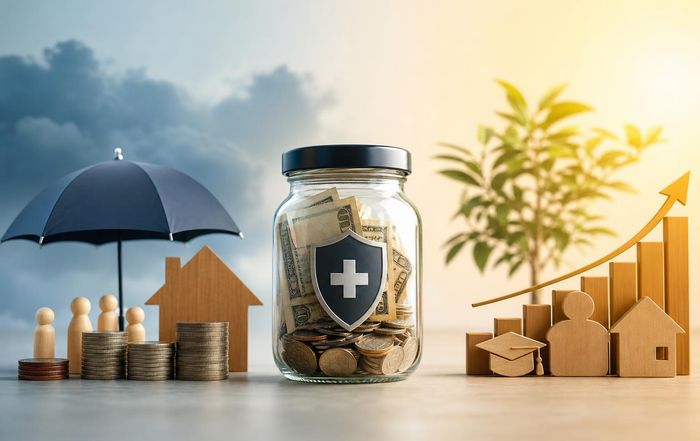
Building an Emergency Fund Without Disrupting Long-Term Goals
Why Emergency Funds Matter More Than Ever
Across major economies from the United States and Europe to Asia-Pacific, households are facing a more volatile financial landscape than at almost any time in recent decades. Inflation shocks, higher interest rates, geopolitical tensions, climate-related disruptions, and rapid technological change have combined to make income less predictable and expenses more variable, even for professionals in traditionally stable careers. Against this backdrop, the role of a robust emergency fund has become central to any serious financial plan, not as a luxury but as a core form of self-insurance that protects both day-to-day stability and long-term wealth building.
For readers of FinancialDailys, who are often focused on markets, investing, property, and business growth, the challenge is not simply understanding that an emergency fund is important. The real strategic question is how to build and maintain that safety buffer without derailing investing strategies, retirement plans, entrepreneurial ambitions, or broader wealth-creation goals. The answer lies in integrating emergency planning into a holistic financial framework, rather than treating it as a separate, competing priority.
Defining the Purpose and Size of an Emergency Fund
Financial planners across leading institutions broadly agree that an emergency fund is money set aside in highly liquid, low-risk form, reserved strictly for unexpected, essential expenses such as sudden job loss, urgent medical costs, major car or home repairs, or family emergencies. Organizations such as Vanguard, Fidelity, and Charles Schwab emphasize that this reserve is not an investment in the traditional sense, but a protective layer that allows investors to avoid forced asset sales at unfavorable times. Readers can explore detailed guidance from sources like Vanguard's emergency savings insights or Fidelity's budgeting and saving resources.
There is no single perfect formula for how large an emergency fund should be, but a widely cited rule of thumb-endorsed by many planners and referenced by entities such as the Consumer Financial Protection Bureau in the United States-is to target three to six months of essential living expenses for households with relatively stable income, and six to twelve months for those with variable or high-risk income, such as self-employed professionals, entrepreneurs, or commission-based workers. In countries with less comprehensive social safety nets or more volatile job markets, a higher target may be prudent.
For FinancialDailys readers who follow global macroeconomic trends through sections such as economy and markets, the emergency fund can also be seen as a hedge against systemic risk. During sharp downturns, when equity markets fall and credit conditions tighten, having cash on hand can prevent the need to liquidate growth assets at depressed prices, preserving long-term compounding.
Prioritizing: Debt, Emergency Savings, and Investing
One of the most common dilemmas for financially engaged individuals is how to prioritize between paying down debt, building an emergency fund, and investing for long-term goals such as retirement or property acquisition. The right balance depends on interest rates, risk tolerance, job security, and personal circumstances, and there is no universally optimal sequence. However, several principles can help.
High-interest consumer debt, particularly revolving credit card balances, can severely undermine wealth building, as noted in research from organizations like the Bank for International Settlements and national central banks. When interest rates on such debt exceed the expected long-term return on investments, many advisors recommend directing a substantial portion of surplus cash toward repayment while still allocating a smaller, consistent amount to emergency savings. This dual approach prevents a household from remaining perpetually exposed to shocks while also reducing the drag of expensive borrowing.
For secured or lower-interest debt such as many mortgages or student loans, the calculus is different. In those cases, building an emergency fund often takes higher priority than accelerated repayment, because liquidity risk-being unable to meet obligations in a crisis-can be more damaging than the incremental interest cost. Readers can deepen their understanding of this trade-off in the finance and banking coverage at financialdailys, where interest rate trends and household balance sheet dynamics are regularly examined.
The key is to view emergency savings, debt management, and investing as interlocking components of a single plan. Rather than pausing investing entirely until a full emergency fund is built, many households benefit from a proportional allocation model, for example splitting available monthly surplus between emergency savings and tax-advantaged retirement accounts, adjusting the ratio as milestones are reached.
Choosing the Right Vehicles: Safety, Liquidity, and Yield
An emergency fund must meet three criteria: safety of principal, immediate or near-immediate access, and reasonable protection against inflation. Historically, this has meant using insured bank savings accounts, money market funds, or short-term government securities. The rise of digital banking, fintech platforms, and higher interest rate environments has expanded the range of options, but the core principles remain unchanged.
Traditional high-yield savings accounts and money market deposit accounts at regulated banks, often insured by schemes such as FDIC coverage in the United States or similar protections in the United Kingdom, European Union, and other jurisdictions, remain a cornerstone for many households. Comparisons from resources like Bankrate or NerdWallet can help savers evaluate interest rates, fees, and access terms. For investors comfortable with capital markets, money market mutual funds and ultra-short-term government bond funds, offered by providers such as BlackRock or State Street Global Advisors, can also serve as emergency fund vehicles, though they may carry slightly different risk profiles and settlement times.
In some regions, government-backed premium bonds, savings certificates, or national savings schemes provide another low-risk avenue, though their liquidity and return characteristics vary. It is essential to understand local regulations, tax treatment, and protection limits, and to cross-check product details using official sources such as central bank or treasury websites; for example, Bank of England or European Central Bank resources for European savers.
For readers of FinancialDailys who closely follow stocks and investing, it can be tempting to treat part of an emergency fund as "cash-equivalent" holdings in short-term bond ETFs or even defensive equity positions. However, most professional planners caution against placing emergency funds in assets that can experience material volatility or liquidity constraints, especially during market stress. The purpose of this capital is resilience, not return maximization.
Integrating Emergency Planning with Long-Term Investment Strategy
The most effective way to avoid disrupting long-term goals when building an emergency fund is to design the process as part of the overall investment strategy rather than as a competing objective. This begins with a clear articulation of long-term targets-such as retirement income, property purchases, education funding, or business investment-and an asset allocation framework that balances growth and safety across time horizons.
By separating portfolios conceptually into a short-term safety bucket, a medium-term goal bucket, and a long-term growth bucket, households can mentally and operationally assign different roles to each pool of capital. The emergency fund sits firmly in the safety bucket, while equity, real estate, and alternative investments reside in the growth bucket. This "bucket strategy," endorsed by many financial advisors and discussed by institutions like Morningstar and J.P. Morgan Asset Management, helps investors avoid the emotional temptation to raid long-term investments for short-term needs.
For example, a professional in Germany or Canada who is systematically investing in diversified equity index funds for retirement can simultaneously build an emergency fund by directing a modest percentage of each paycheck into a high-yield savings account. When market volatility strikes, the presence of a robust cash buffer makes it easier to stay invested according to plan, rather than selling at a loss to cover unexpected expenses. Readers can explore deeper portfolio construction concepts in the investing and markets sections of financialdailys, where asset allocation and risk management themes are regularly analyzed.
Aligning Emergency Savings with Career and Income Risk
Emergency fund design should be closely tied to an individual's career profile and income volatility. A tenured academic in a country with strong employment protections and universal healthcare may reasonably target a smaller emergency buffer than a startup founder, gig-economy worker, or commission-based sales professional whose income can fluctuate sharply from month to month. The rise of remote work, freelance platforms, and digital entrepreneurship has made this consideration more relevant across regions from North America and Europe to Asia and Africa.
Career-oriented resources from organizations such as the OECD, World Bank, and national labor agencies highlight the growing prevalence of non-traditional work arrangements. For readers of FinancialDailys who follow careers and startups, this shift underscores the need to treat income as a risk factor to be managed, not simply a number on a payslip. A larger emergency fund can function as a personal "runway," allowing professionals to navigate job transitions, pursue further education, or launch a business without being forced into suboptimal decisions by immediate financial pressure.
In regions with less comprehensive unemployment insurance or healthcare coverage, such as parts of emerging markets, the emergency fund often needs to be more substantial and diversified, potentially including foreign-currency holdings or access to international accounts to mitigate local currency and banking system risks. Reputable sources such as the International Monetary Fund and World Economic Forum offer macro-level insights into these structural differences, which can guide personal planning.
Protecting Long-Term Goals During Economic Shocks
Economic downturns, whether triggered by financial crises, pandemics, geopolitical conflicts, or commodity price shocks, tend to arrive with limited warning and significant impact on both income and asset values. Historical analysis from institutions like the Federal Reserve, European Commission, and Bank of Japan shows that households with higher liquid savings and lower leverage are more likely to maintain investment contributions, avoid distress sales, and recover more quickly after recessions.
For investors who closely follow global developments through world and economy coverage on FinancialDailys, emergency funds can be seen as a strategic buffer that allows them to treat downturns as opportunities rather than threats. When others are forced to sell or halt contributions, those with robust liquidity can continue dollar-cost averaging into diversified portfolios, potentially enhancing long-term returns.
At the same time, it is important not to over-allocate to cash out of fear. Holding excessively large balances in low-yield accounts over many years can erode purchasing power, especially in periods of elevated inflation, as documented by central banks and research institutions such as the Bank of Canada or Reserve Bank of Australia. The goal is to calibrate the emergency fund to realistic risk scenarios, then allow surplus capital beyond that threshold to flow into higher-return assets aligned with long-term objectives.
Leveraging Technology and Automation
Digital tools have made it easier than ever to build an emergency fund systematically without constant manual intervention. Budgeting and savings apps, online banks, and robo-advisors now offer automatic transfers, round-up features that sweep spare change into savings, and visual goal-tracking dashboards. Platforms covered frequently in financial media, including Mint, YNAB (You Need A Budget), and various neobanks, provide functionality that can help households in the United States, Europe, and beyond establish discipline with minimal friction. Readers can explore broader technology trends in the tech section of financialdailys.
Automation is particularly powerful because it reduces reliance on willpower and day-to-day decision-making. By setting a fixed percentage of income to flow directly into an emergency fund on payday, households effectively "pay themselves first," a principle long advocated by financial educators and supported by behavioral economics research from institutions such as Harvard University and the London School of Economics. Over time, these small, consistent contributions accumulate, and when income rises, the automated amount can be increased with minimal effort.
However, as with any financial technology, it is critical to prioritize security, regulatory oversight, and transparency. Users should verify that digital providers are licensed in their jurisdiction, protected by appropriate deposit insurance or custodial arrangements, and compliant with data protection standards. Cross-referencing providers using independent reviews from outlets like Investopedia or The Balance can help validate claims and identify potential risks.
Coordinating Emergency Funds with Insurance and Other Safety Nets
An emergency fund does not exist in isolation; it interacts with other elements of a household's risk management framework, including health insurance, disability coverage, life insurance, unemployment benefits, and social safety nets. In countries with robust public healthcare and unemployment insurance, such as many in Northern Europe, the required size of a cash buffer for medical or short-term job loss may be reduced, though other risks such as housing costs or family obligations may still necessitate substantial savings.
Conversely, in markets where individuals bear a larger share of healthcare or education costs, or where unemployment benefits are limited, emergency funds often need to be more extensive. Global surveys by organizations like the OECD and World Health Organization highlight significant cross-country differences in out-of-pocket expenses and social protection coverage, which should be factored into personal planning.
Insurance can complement, but not fully replace, emergency savings. For instance, comprehensive health insurance may cover the bulk of medical expenses, but deductibles, co-payments, and non-covered services can still be significant. Property and casualty insurance may cover major losses, but claims processing times and exclusions can leave gaps. A well-structured emergency fund ensures that these gaps do not force individuals to liquidate long-term investments or take on high-interest debt.
Readers of FinancialDailys who monitor property markets and consumer trends will recognize that rising housing costs, energy prices, and education expenses in many regions make this coordination between cash reserves and insurance more critical than in previous decades.
Supporting Entrepreneurial and Investment Ambitions
For entrepreneurs, property investors, and active market participants, the tension between building an emergency fund and pursuing opportunities can feel particularly acute. Capital that sits in a savings account may appear to be capital that could have been deployed into a promising startup, rental property, or undervalued stock. Yet the experience of countless business cycles suggests that a lack of liquidity at the wrong moment can be far more damaging to long-term wealth than a modest delay in seizing an opportunity.
Many seasoned entrepreneurs and investors advocate maintaining both a personal emergency fund and a separate business or investment reserve, recognizing that shocks can affect both spheres simultaneously. During downturns, rental vacancies can rise, startup revenues can fall, and equity portfolios can decline at the same time that personal expenses become harder to meet. By ring-fencing personal emergency savings from speculative or business capital, individuals create a firewall that protects household stability even when risk assets are under stress.
Readers who regularly engage with the business and startups coverage on financialdailys will find numerous examples of founders and investors who navigated crises more effectively because they had disciplined liquidity management. This is not about pessimism; it is about creating the resilience that allows for bolder, more confident risk-taking over the long term.
A Global Perspective on Emergency Preparedness
Across continents, surveys from institutions like the OECD, Eurostat, and the Federal Reserve have repeatedly shown that a significant share of households would struggle to cover even a relatively modest unexpected expense from savings alone. While the exact figures vary by country and methodology, the underlying pattern is clear: many families, including those with middle or higher incomes, remain financially fragile.
At the same time, there is growing recognition among policymakers, employers, and financial institutions that building household resilience is a shared interest. Initiatives such as employer-sponsored emergency savings programs, financial literacy campaigns, and regulatory support for low-cost digital savings products are emerging in markets from the United States and United Kingdom to Singapore and Australia. International organizations like the World Bank and UNDP have also highlighted financial resilience as a key component of inclusive economic development.
For readers of FinancialDailys, this global context underscores why personal emergency planning is not merely a private concern but part of a broader economic narrative. Households with stronger buffers are better positioned to sustain consumption during downturns, invest in education and skills, support small businesses, and participate in capital markets, all of which contribute to more stable growth and healthier financial systems.
Building Stability Without Sacrificing Ambition
An emergency fund is sometimes perceived as a drag on returns or a symbol of excessive caution, especially among investors and entrepreneurs who are naturally inclined toward growth and opportunity. In reality, it is a foundation that enables those ambitions to be pursued more sustainably. By insulating day-to-day life from the inevitable volatility of markets, careers, and economies, a well-designed emergency reserve allows individuals and families to remain invested, stay focused on long-term goals, and make decisions from a position of strength rather than fear.
For the global audience of FinancialDailys, spanning professionals, investors, business owners, and aspiring entrepreneurs across North America, Europe, Asia, Africa, and beyond, the path forward is not to choose between security and growth, but to integrate them. By calibrating emergency funds to realistic risks, selecting appropriate low-risk vehicles, leveraging technology for disciplined saving, coordinating with insurance and public safety nets, and maintaining clear boundaries between personal reserves and risk capital, it is entirely possible to build a robust financial safety net without disrupting long-term wealth creation.
In a world where uncertainty is a structural feature rather than a temporary anomaly, the households and investors who thrive will be those who treat resilience as a strategic asset. An emergency fund, thoughtfully constructed and consistently maintained, is one of the most powerful tools for achieving that resilience-and for ensuring that the pursuit of financial independence, business success, and investment growth can continue, even when the unexpected arrives.
