
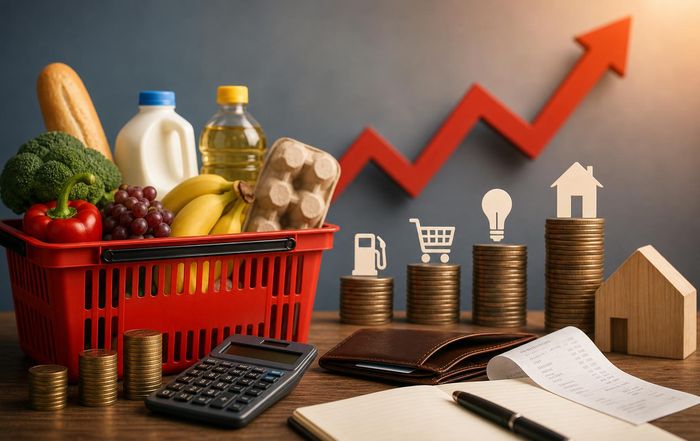
Consumer Price Pressures and Household Budgets
A New Inflation Reality for Households
Households across advanced and emerging economies are living through a structurally different price environment than the one that defined the decade after the global financial crisis. For readers of Financialdailys.com, the story of consumer price pressures and household budgets is no longer about a brief post-pandemic spike, but about the long tail of inflation's impact on savings, wages, debt servicing, and long-term financial security. Central banks from the US Federal Reserve to the European Central Bank have made progress in pulling headline inflation down from its 2022 peaks, yet the cost of everyday essentials-food, housing, healthcare, insurance, and energy-remains elevated relative to incomes, particularly for lower and middle-income families in the United States, the United Kingdom, the euro area, and key Asia-Pacific economies.
The data from institutions such as the International Monetary Fund and the OECD confirm that while aggregate inflation rates have moderated, the composition of inflation has shifted toward more persistent "core" components, including services and shelter, which exert disproportionate pressure on household budgets. At the same time, rising interest rates, implemented to combat inflation, have translated into higher mortgage, rent, and credit costs, creating a double bind for consumers who are paying more both for goods and for the financing used to purchase them. For a global business and finance audience, understanding these dynamics is essential not only for personal financial planning but also for evaluating corporate earnings, consumer-facing business models, and broader macroeconomic risk, themes that are central to the coverage at Financialdailys.com.
The Anatomy of Consumer Price Pressures
The inflationary wave of the early 2020s began with pandemic-related supply shocks, fiscal stimulus, and disrupted global trade routes, but by 2026 the drivers have become more complex and more structurally embedded. Energy markets, shaped by the geopolitical reverberations of Russia's invasion of Ukraine and the accelerated transition to low-carbon technologies, continue to introduce volatility into transport and utility costs, even as global benchmarks such as Brent crude have stabilized relative to their peaks. Food prices, influenced by climate-related disruptions, higher input costs, and trade restrictions, remain sensitive, with organizations like the Food and Agriculture Organization tracking elevated levels for key staples. These upstream pressures filter through to supermarkets and restaurants in the United States, Europe, and Asia, where consumers experience what feels like a permanent step-change in the cost of living.
In services, wage dynamics play a central role. Tight labor markets in North America, parts of Europe, and advanced Asian economies, combined with demographic aging in countries such as Germany, Japan, and Italy, have driven employers to raise pay to attract and retain staff, particularly in healthcare, logistics, and hospitality. While higher wages are welcome for workers, they also feed into service-sector inflation, which tends to be sticky and less responsive to short-term interest rate adjustments. As analysts following global economic trends recognize, this interplay between wages, productivity, and prices complicates the disinflation process and influences corporate margins and equity valuations, especially in consumer-facing sectors.
Central Banks, Interest Rates, and Household Balance Sheets
Monetary policy has been the primary tool deployed to tame inflation, and by 2026 the cumulative effects of tighter policy are fully visible on household balance sheets. The Federal Reserve, the Bank of England, the European Central Bank, and the Bank of Canada, among others, have raised policy rates to levels not seen in more than a decade, a move that has cooled housing markets and curbed some speculative excesses but has also raised borrowing costs for mortgages, auto loans, and credit cards. In countries like the United States and Canada, where a significant share of mortgage debt is on fixed-rate terms, many households initially enjoyed some insulation; however, as refinancing cycles unfold and new buyers enter the market, the reality of structurally higher rates is now fully priced into monthly payments.
In the United Kingdom, Sweden, and other markets with a larger share of variable-rate or short-term fixed mortgages, the pass-through from monetary policy to households has been faster and more painful, contributing to what some analysts describe as a "silent squeeze" on disposable incomes. Institutions such as the Bank for International Settlements have warned that the combination of elevated debt levels and higher rates can amplify financial vulnerabilities, particularly among younger households and those with lower incomes who lack savings buffers. For readers tracking banking sector developments, this environment has implications for credit quality, loan growth, and the competitive dynamics between traditional banks and fintech lenders, many of which built their models during a period of ultra-low interest rates that no longer exists.
Housing, Rent, and Property Affordability
Housing has emerged as one of the most acute pressure points in household budgets across major economies. In the United States, constrained supply, zoning restrictions, and a surge in institutional investment in single-family homes have kept prices elevated even as higher mortgage rates have cooled transaction volumes. In cities such as London, Sydney, Toronto, and Amsterdam, affordability metrics-price-to-income and rent-to-income ratios-are at or near record highs, according to analyses from organizations like OECD Housing and research produced by national central banks. Renters, who typically have lower net worth and fewer assets than homeowners, face particularly intense pressure as landlords pass through higher financing and maintenance costs.
For investors and property professionals following real estate trends, this environment presents both risks and opportunities. On one hand, elevated housing costs can limit consumer spending in other categories, dampening retail sales and discretionary service consumption; on the other, structural undersupply in key urban markets continues to support long-term demand for residential assets, student accommodation, and logistics properties. Policymakers in countries such as Germany, Canada, and New Zealand have experimented with measures ranging from rent controls to foreign buyer restrictions and accelerated planning approvals, with mixed results. The core reality for households remains that housing is absorbing an ever-larger share of income, leaving less room for savings, investment, and consumption of non-essentials.
Food, Energy, and the Essentials Squeeze
Beyond housing, the essentials that households cannot easily substitute-food, energy, healthcare, and basic services-have become the primary channels through which price pressures are felt. The World Bank has highlighted the impact of climate-related shocks, fertilizer price volatility, and conflict-driven supply disruptions on global food markets, with particular effects on cereals, vegetable oils, and proteins. In Europe, the lingering consequences of reduced Russian gas supplies and the cost of integrating renewables into the grid have kept electricity and heating prices above pre-pandemic levels, even as short-term spot prices have occasionally fallen. In emerging markets, currency depreciation against the US dollar has compounded imported inflation, raising local prices for fuel and food, and thus intensifying the burden on lower-income families.
For consumers in the United States, the United Kingdom, and the euro area, the perception is that "everything essential costs more," even when headline inflation prints suggest moderation. This divergence between statistical measures and lived experience is partly explained by the composition of consumer baskets, as lower-income households spend a higher share of their income on food and energy, categories that have seen some of the most pronounced price increases. Analysis from institutions such as Eurostat and the US Bureau of Labor Statistics underscores that while some discretionary goods, particularly electronics, have benefited from technological deflation and global competition, the categories that matter most for day-to-day survival have not. For readers of consumer-focused coverage, understanding these nuances is crucial when assessing retail earnings, pricing strategies, and the resilience of different market segments.
Wage Growth, Labor Markets, and Real Incomes
The question of whether wages have kept pace with prices is central to understanding household resilience. In 2024 and 2025, many advanced economies experienced robust nominal wage growth as employers competed for scarce workers in tight labor markets, particularly in technology, logistics, healthcare, and professional services. However, when adjusted for inflation, real wage gains were far more modest and in some cases negative, especially for lower-skilled workers and those in sectors with limited bargaining power. Organizations such as the International Labour Organization have documented how real wages in several G20 economies remain below their pre-pandemic trend, even as corporate profits in some sectors have recovered strongly.
By 2026, the labor market landscape has become more bifurcated. High-skill professionals in technology, finance, and specialized engineering, particularly in hubs such as the United States, Germany, Singapore, and South Korea, continue to command premium compensation, even amid periodic waves of restructuring and automation-driven job redesign. At the same time, workers in retail, hospitality, and certain manufacturing segments face a more challenging environment, with wage growth slowing as demand normalizes and employers seek to protect margins. For individuals planning their professional trajectories and income prospects, resources that explore career and labor market trends are increasingly valuable, as they provide insight into which skills and sectors are likely to offer sustainable real income growth in an inflation-aware world.
Household Budget Strategies in an Inflation-Aware Era
In response to sustained price pressures, households have adapted their budgeting, spending, and investing behaviors in ways that are reshaping consumer markets and financial services. Many families have re-prioritized essential spending, cutting back on discretionary categories such as travel, dining out, and non-essential retail, while seeking value through private-label brands, discount retailers, and subscription optimization. The rise of digital budgeting tools, open banking platforms, and personal finance apps has enabled more granular tracking of expenses and more disciplined savings behavior, although the benefits are unevenly distributed across income and age groups. Organizations such as Consumer Financial Protection Bureau in the United States and similar bodies in Europe and Asia have emphasized the importance of financial literacy and transparency in fees, especially as more households rely on credit to smooth consumption.
For readers of Financialdailys.com, the connection between personal budgeting strategies and broader finance and investing decisions is increasingly direct. As inflation erodes the real value of idle cash, households are more aware of the need to deploy savings into assets that can at least preserve, if not grow, purchasing power over time. This has driven renewed interest in inflation-linked securities, dividend-paying equities, real assets such as real estate and infrastructure, and diversified global portfolios. At the same time, the experience of market volatility in 2022-2024, including sharp swings in technology stocks, cryptocurrencies, and speculative growth names, has made many investors more cautious, more valuation-sensitive, and more focused on downside protection.
Investing Through Persistent Price Pressures
Persistent consumer price pressures have significant implications for investors across asset classes, as they influence interest rates, corporate earnings, valuation multiples, and risk premia. Equities in sectors that can pass cost increases on to consumers-such as consumer staples, utilities, and certain healthcare providers-have generally shown more resilience, while companies with limited pricing power or high sensitivity to interest rates, such as speculative growth stocks and some real estate investment trusts, have faced greater headwinds. For those following stock market developments, the key analytical question is which business models can sustain margins and cash flows in an environment where input costs remain elevated and consumers are increasingly price-sensitive.
Fixed income markets have also been transformed by the new inflation reality. After years of ultra-low yields, government and corporate bonds now offer more attractive nominal returns, but investors must carefully evaluate real yields, credit risk, and duration exposure in light of uncertain inflation trajectories. Institutions such as BlackRock and Vanguard have published extensive guidance on constructing portfolios that balance inflation protection with income generation, highlighting the role of inflation-protected securities, short-duration bonds, and diversified global exposure. For retail investors and high-net-worth individuals alike, the central challenge is to design investment strategies that align with their risk tolerance and time horizon while acknowledging that the era of "free money" is over, a theme regularly explored in investing coverage.
Corporate Pricing Power, Strategy, and Consumer Trust
On the corporate side, the inflationary environment has forced management teams to reassess pricing strategies, supply chain resilience, and brand positioning. Companies with strong brands, differentiated products, and loyal customer bases have been more successful in passing on cost increases without significant volume loss, while those operating in commoditized segments have had to absorb more of the cost pressure or risk losing market share. Regulators and consumer advocacy groups in the United States, the European Union, and other jurisdictions have intensified scrutiny of so-called "greedflation," where companies are alleged to have used the cover of general inflation to raise prices more than necessary, thereby boosting margins. Institutions such as the OECD Competition Division and national competition authorities are monitoring pricing behavior in sectors like food retail, energy, and telecommunications.
For businesses aiming to maintain consumer trust, transparency in pricing, communication about cost drivers, and investments in quality and service have become critical differentiators. Surveys from organizations such as McKinsey & Company and Deloitte indicate that consumers are more likely to remain loyal to brands that clearly explain price changes and demonstrate efforts to improve value, whether through product innovation, sustainability initiatives, or enhanced customer experience. For readers interested in how companies adapt to these challenges, the business and corporate strategy insights provided by Financialdailys.com offer a lens into which firms are navigating the inflationary landscape successfully and which are at risk of consumer backlash or margin compression.
Global Divergence: Advanced Economies, Emerging Markets, and Regional Nuances
While consumer price pressures and household budget strains are global phenomena, their intensity and characteristics vary significantly across regions. In the United States, the United Kingdom, and the euro area, the primary concerns revolve around housing affordability, healthcare costs, and services inflation, with relatively strong social safety nets in parts of Europe partially mitigating the impact on the most vulnerable. In contrast, emerging markets in Latin America, Africa, and parts of Asia face additional challenges related to currency volatility, higher sovereign borrowing costs, and more limited fiscal space to cushion shocks. The World Bank and IMF have warned that elevated food and fuel prices can exacerbate social tensions and inequality in countries with large informal sectors and limited social protection infrastructure.
In Asia-Pacific, the picture is more mixed. Economies such as Japan and South Korea, long accustomed to low inflation, have experienced a structural shift that has forced both policymakers and households to adjust expectations. In Southeast Asia, including Thailand and Malaysia, tourism recovery and resilient manufacturing have supported incomes, but imported inflation and climate-related disruptions to agriculture remain key risks. For global investors and corporate decision-makers, these regional nuances underscore the importance of granular analysis when evaluating consumer demand, pricing strategies, and macroeconomic risk. Readers seeking a broader perspective on these dynamics can explore world and regional coverage, which situates household-level experiences within the larger geopolitical and economic context.
Technology, Fintech, and the Digital Cushion
Technology and fintech innovation have played a dual role in the story of consumer price pressures. On one hand, digital platforms, e-commerce, and price comparison tools have increased transparency and competition, enabling consumers to find better deals on everything from groceries to insurance. On the other, subscription models, in-app purchases, and frictionless digital payments have sometimes made it easier for households to lose track of small recurring expenses that accumulate over time. Companies such as Amazon, Alibaba, and regional e-commerce leaders have leveraged scale and data to optimize logistics and pricing, often delivering lower prices and greater convenience, but they also raise questions about market concentration and the long-term health of smaller retailers.
Fintech firms offering budgeting apps, robo-advisory services, and micro-investing platforms have helped many individuals take their first steps into structured saving and investing, providing tools that were once accessible mainly to high-net-worth clients. Regulators such as the Monetary Authority of Singapore and the UK Financial Conduct Authority have encouraged innovation while emphasizing consumer protection, data privacy, and the need to avoid predatory practices. For readers following technology and digital finance trends, the key question is how these tools can be harnessed to strengthen household financial resilience, rather than simply facilitating more consumption in an environment where budgets are already under strain.
Sustainability, Climate Risk, and the Cost of Transition
The intersection of inflation, household budgets, and sustainability has become more pronounced by 2026, as climate policies and physical climate risks increasingly influence prices. Carbon pricing mechanisms, emissions regulations, and investments in renewable energy and resilient infrastructure all carry upfront costs that can translate into higher prices for energy, transportation, and certain goods, at least in the short to medium term. Organizations such as the Intergovernmental Panel on Climate Change and the International Energy Agency have emphasized that the long-term benefits of transition-reduced climate damage, lower operating costs for clean technologies, and enhanced energy security-outweigh the initial expenditures, but the distribution of costs across households, businesses, and governments remains politically sensitive.
For households, the transition manifests in decisions such as whether to invest in home insulation, solar panels, electric vehicles, or energy-efficient appliances, each of which requires upfront capital but can reduce long-term utility and fuel bills. Policy instruments such as tax credits, subsidies, and green financing products aim to make these investments more accessible, but uptake varies by income level and geography. For investors and corporate leaders, integrating environmental, social, and governance considerations into strategy and portfolio construction is no longer optional, as regulators and stakeholders demand greater transparency and accountability. Readers interested in how sustainability shapes prices, profits, and household decisions can explore sustainable business and finance coverage, which connects climate policy with real-world financial outcomes.
The Role of Policy: Tax, Transfers, and Social Safety Nets
Governments have responded to the cost-of-living crisis with a mix of targeted transfers, tax adjustments, price caps, and regulatory interventions, though the scope and effectiveness of these measures vary widely. In Europe, temporary energy subsidies, windfall taxes on energy producers, and enhanced social benefits have sought to shield vulnerable households from the worst of the price shocks, while in the United States, debates over child tax credits, healthcare subsidies, and student loan relief have reflected broader questions about fiscal sustainability and inequality. Institutions such as the OECD and IMF have advised that well-targeted, time-limited support is preferable to broad-based subsidies that can be fiscally costly and distort price signals.
For households, the design of tax systems and social benefits significantly shapes net disposable income and the capacity to save and invest. Progressive tax credits, indexed social benefits, and automatic stabilizers can help buffer income shocks and maintain consumption, while poorly targeted subsidies may benefit higher-income groups more than those in need. For businesses and investors, fiscal policy affects not only consumer demand but also the regulatory environment, corporate tax burdens, and the availability of public investment in infrastructure, education, and innovation. Readers of Financialdailys.com who follow trade and macroeconomic policy developments will recognize that policy choices made in Washington, Brussels, Beijing, and other capitals have direct implications for both corporate strategies and household budgets worldwide.
Navigating the Next Phase: Household Resilience and Strategic Planning
As the global economy moves through 2026, consumer price pressures are no longer an unexpected shock but a persistent feature of the landscape that households, businesses, and policymakers must integrate into long-term planning. For individuals and families, building resilience means combining disciplined budgeting, prudent use of credit, and thoughtful investment strategies that account for inflation risk, interest rate uncertainty, and labor market dynamics. For businesses, it requires a clear understanding of pricing power, cost structures, and consumer behavior, along with transparent communication and a commitment to delivering value in ways that justify higher prices.
For policymakers and regulators, the challenge is to balance inflation control with growth, protect the most vulnerable without undermining fiscal sustainability, and support the structural transitions-digital, demographic, and environmental-that will define the next decade. In this environment, the need for reliable, analytical, and globally informed financial journalism is greater than ever. Financialdailys.com is positioned to provide that perspective, connecting developments in markets, the economy, corporate strategy, and public policy with the lived reality of household budgets in the United States, Europe, Asia, and beyond. As consumer price pressures evolve, the ability of households to adapt, and of decision-makers to respond with foresight and discipline, will be a central determinant of financial stability and prosperity in the years ahead.
