
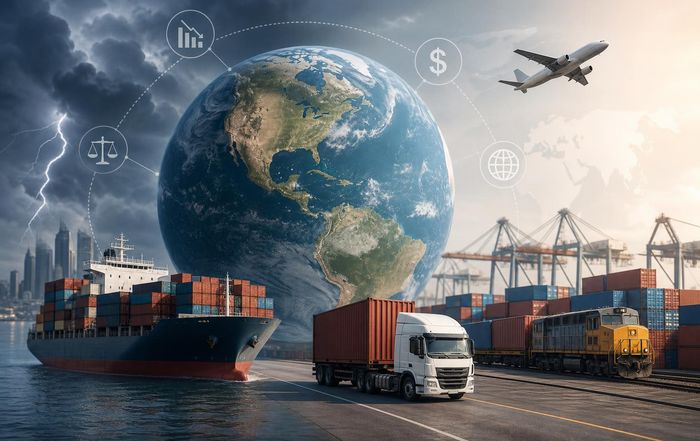
Global Trade Challenges Facing Businesses
A New Era for Global Commerce
Global trade has entered a period defined less by the steady expansion that characterized the early 2000s and more by volatility, fragmentation and strategic realignment, and for the readers of FinancialDailys.com, this shift is not an abstract macroeconomic story but a daily operational and strategic reality that affects financing decisions, market entry plans, supply chain design, technology investment and talent strategy across every major region and sector. The combination of geopolitical tension, accelerating technological change, climate-related disruption and evolving consumer expectations has created a complex landscape in which businesses must navigate not only tariffs and regulations but also sanctions regimes, data localization rules, carbon border measures and increasingly assertive competition and industrial policies in the United States, European Union, China and other key economies.
Global merchandise trade volumes, according to the World Trade Organization and organizations such as the OECD, have recovered from the pandemic-era collapse but now grow more slowly and unevenly, with regional blocs deepening intra-bloc trade while cross-bloc flows are sometimes constrained by security concerns and regulatory divergence. In this context, corporate leaders, investors and policymakers who follow global economy coverage at FinancialDailys.com are increasingly focused on resilience, optionality and strategic autonomy, recognizing that the old assumption of ever-greater globalization can no longer be taken for granted and that trade strategy must now be integrated with risk management, sustainability and digital transformation at the highest levels of governance.
Geopolitics, Fragmentation and the Return of Industrial Policy
The most visible challenge for businesses engaged in cross-border trade in 2026 is the intensification of geopolitical rivalry, particularly among the United States, China and key powers in Europe and Asia, which has led to a resurgence of industrial policy, export controls and investment screening regimes that directly shape corporate choices about where to locate production, how to structure supply chains and which markets to prioritize. The World Economic Forum has repeatedly highlighted the risks of a more fragmented global economy, where overlapping regulatory frameworks and strategic competition can reduce efficiency and increase compliance costs, even as governments argue that such measures are necessary to protect national security, critical infrastructure and advanced technology sectors. Learn more about how global risks are evolving through analyses from institutions like the World Economic Forum.
In parallel, policymakers in the European Union, the United Kingdom, Japan, South Korea and other advanced economies have expanded investment screening mechanisms to scrutinize foreign direct investment in sensitive sectors such as semiconductors, telecommunications, defense, biotech and critical minerals, and businesses seeking to expand across borders must now factor in not only traditional antitrust reviews but also national security assessments that can delay or derail transactions. The European Commission, for example, has tightened its stance on foreign subsidies and strategic dependencies, while the Committee on Foreign Investment in the United States (CFIUS) has broadened its scope, and companies that previously treated cross-border M&A as a purely commercial decision now require detailed geopolitical and regulatory due diligence, something increasingly reflected in the advisory work of leading law firms and consultancies as well as in the strategic coverage on global business and trade at FinancialDailys.com.
Supply Chain Reconfiguration and the Search for Resilience
If geopolitics sets the overall tone, supply chain reconfiguration is where the new realities of global trade are most concretely felt by manufacturers, retailers and service providers in regions from North America and Europe to Asia-Pacific and Africa, as firms continue to adjust after the disruptions of the COVID-19 pandemic, the war in Ukraine, persistent logistics bottlenecks and the increasing frequency of climate-related shocks such as floods, droughts and extreme weather events. Many organizations are shifting from just-in-time to more resilient models, increasing inventory buffers for critical components, diversifying suppliers and considering "China plus one" or "China plus many" strategies that add production capacity in countries such as Vietnam, Thailand, Malaysia, India, Mexico and Poland, while still recognizing the central role that China plays in many global value chains.
At the same time, governments are offering incentives for reshoring or nearshoring production of strategic goods, particularly in semiconductors, pharmaceuticals, batteries and clean energy technologies, and initiatives like the EU Chips Act and the US CHIPS and Science Act, alongside similar measures in Japan and South Korea, are reshaping capital allocation across industries. Businesses that follow markets and investing trends through FinancialDailys.com can see how these policies are influencing equity valuations, corporate bond issuance and project finance structures, especially in advanced manufacturing and infrastructure. Insights into supply chain resilience and global value chains are regularly explored by organizations like the OECD and the World Bank, which provide data and analysis that executives and investors increasingly use to benchmark their own exposure and strategic options.
Trade Policy Volatility and Regulatory Complexity
Beyond geopolitics and industrial policy, the day-to-day reality of global trade for businesses involves navigating a dense web of tariffs, quotas, customs procedures, standards and rules of origin that vary across bilateral and regional trade agreements, and by 2026 this web has become even more intricate as new digital trade provisions, sustainability requirements and security-related clauses are added to existing frameworks. The proliferation of regional and mega-regional trade agreements, from the Comprehensive and Progressive Agreement for Trans-Pacific Partnership (CPTPP) to the Regional Comprehensive Economic Partnership (RCEP) and the evolving trade arrangements between the United Kingdom and its partners, has created both opportunities and challenges, as firms with sophisticated trade compliance capabilities can optimize their sourcing and routing to minimize tariffs, while smaller businesses may struggle to fully utilize the preferences available to them.
The World Trade Organization continues to serve as the backbone of the multilateral trading system, but its dispute settlement mechanism and negotiating function have faced limitations, prompting countries to pursue plurilateral and regional solutions on issues such as digital trade, services and environmental goods. Companies that rely on cross-border trade in services, data and intellectual property must increasingly track developments in forums such as the WTO Joint Statement Initiatives, the G20 and regional digital economy agreements, and they often turn to specialized legal and advisory firms as well as trusted news sources like FinancialDailys.com's trade and world sections to understand how evolving rules will affect their operations in markets from Canada and Australia to Brazil, South Africa and Singapore. Authoritative resources such as the World Trade Organization and the International Monetary Fund offer detailed reports and data that complement this more applied, business-focused perspective.
Digital Trade, Data Localization and Cybersecurity
A defining feature of global trade in 2026 is the rapid growth of digital trade, encompassing not only e-commerce and digital services but also cross-border data flows, cloud computing, AI-enabled services and the digital components of traditional goods, all of which have become integral to modern business models across sectors as diverse as finance, manufacturing, retail, healthcare and logistics. However, this expansion is accompanied by growing regulatory scrutiny and divergence, as governments seek to balance innovation, consumer protection, national security and competition policy, leading to an increasingly complex environment for companies that rely on data-driven business models and cross-border digital operations.
Regimes such as the EU's General Data Protection Regulation (GDPR), the Digital Services Act, the Digital Markets Act and emerging AI regulations, alongside data localization and cybersecurity laws in China, India, Russia and other jurisdictions, require businesses to carefully manage where data is stored, how it is transferred and who can access it, often necessitating significant investment in compliance, legal expertise and technical infrastructure. Technology firms and digitally intensive businesses that rely on cross-border cloud and platform services must also contend with growing antitrust scrutiny in major markets, as regulators in the US, EU and UK examine the market power of large platforms and consider remedies that may affect interoperability, data access and platform governance. For readers following technology and business coverage at FinancialDailys.com, these developments intersect with trade in complex ways, as digital regulations increasingly shape which services can be offered across borders and on what terms. Deeper insight into digital trade governance can be found through organizations such as the UN Conference on Trade and Development (UNCTAD) and the International Telecommunication Union.
Cybersecurity has also become a core trade issue, as cross-border supply chains and digital platforms are prime targets for state and non-state actors, and incidents affecting ports, logistics providers, financial institutions and critical infrastructure can rapidly cascade through global networks, disrupting trade flows and eroding trust. Businesses are therefore investing more in cyber resilience, third-party risk management and collaboration with national cyber agencies, recognizing that a single weak link in a global supply chain can expose the entire system to significant risk. Guidance from bodies such as the US Cybersecurity and Infrastructure Security Agency and the European Union Agency for Cybersecurity (ENISA) is increasingly integrated into corporate risk frameworks, while investors monitoring stocks and banking sectors through FinancialDailys.com pay close attention to cyber incidents and preparedness as material factors in valuation and credit risk.
Sustainability, Climate Policy and Carbon Border Measures
Another structural challenge facing global trade in 2026 is the integration of sustainability and climate considerations into trade policy, corporate strategy and consumer behavior, as governments, investors and customers demand that businesses reduce their environmental footprint, improve labor standards and demonstrate responsible sourcing throughout their value chains. The Paris Agreement and subsequent national commitments to net-zero emissions have driven a wave of regulation and market-based mechanisms that directly affect trade, including carbon pricing schemes, emissions reporting requirements and emerging carbon border adjustment mechanisms such as the EU Carbon Border Adjustment Mechanism (CBAM), which imposes a carbon-related cost on certain imports to prevent carbon leakage and level the playing field for domestic producers subject to stricter climate regulations.
For exporters in sectors such as steel, cement, aluminum, fertilizers and electricity, particularly in countries with less stringent climate policies, CBAM and similar instruments under consideration in other regions pose both compliance and competitiveness challenges, requiring investments in cleaner technologies, energy efficiency and transparent emissions accounting. Companies across Europe, Asia, North America and South America are increasingly integrating environmental, social and governance (ESG) criteria into procurement, logistics and product design, recognizing that access to capital from institutional investors and banks often depends on credible sustainability strategies, and that consumer-facing brands in markets like the United States, United Kingdom, Germany, France, Italy, Spain and the Nordic countries are judged not only on price and quality but also on their environmental and social impact. Learn more about sustainable business practices through organizations such as the UN Global Compact and the World Resources Institute.
For readers of FinancialDailys.com's sustainability and business sections, the interplay between trade and sustainability is increasingly central, as companies must balance the cost and complexity of decarbonizing global supply chains with the strategic opportunity to differentiate through greener products, circular business models and transparent reporting aligned with frameworks like the Task Force on Climate-related Financial Disclosures (TCFD) and emerging international sustainability standards. Financial institutions and investors are also using climate and sustainability metrics to assess trade-related risks, from stranded assets in carbon-intensive sectors to transition risks in countries heavily reliant on fossil fuel exports, and resources from the International Energy Agency and the Network for Greening the Financial System are increasingly incorporated into scenario planning and portfolio management.
Financial, Currency and Credit Risks in Cross-Border Trade
Global trade challenges for businesses in 2026 are not limited to physical and regulatory aspects; they also encompass financial and currency risks that have become more pronounced in an environment of higher interest rates, divergent monetary policies and shifting capital flows. After years of ultra-low rates, central banks in major economies such as the US Federal Reserve, the European Central Bank, the Bank of England and the Bank of Japan have recalibrated policy in response to inflation dynamics, growth concerns and financial stability risks, leading to greater volatility in exchange rates, bond yields and capital markets. Companies engaged in cross-border trade must manage not only transactional currency risk but also translation and economic exposure, particularly when operating in emerging markets with more volatile currencies and less developed hedging markets.
Credit risk in trade finance has also become more complex, as banks and non-bank financial institutions adjust their risk appetite and regulatory capital treatment for trade-related exposures, while sanctions and compliance requirements add another layer of scrutiny. The Bank for International Settlements and the International Chamber of Commerce have highlighted the importance of trade finance as a critical enabler of global commerce, especially for small and medium-sized enterprises (SMEs), yet many SMEs still face obstacles in accessing affordable trade finance, particularly in Africa, South Asia and parts of Latin America. Readers tracking banking and finance coverage on FinancialDailys.com can observe how these dynamics influence bank lending strategies, fintech innovation in trade finance and the development of alternative financing platforms, including the use of blockchain-based solutions and supply chain finance programs.
In this environment, businesses must enhance their treasury and risk management capabilities, integrating trade, liquidity, currency and interest rate risk into a coherent framework that aligns with their overall corporate strategy and risk appetite, and leading corporates increasingly use sophisticated analytics, scenario planning and stress testing tools, often in collaboration with global banks and specialized advisors, to anticipate and mitigate financial shocks. Organizations such as the Bank for International Settlements and the International Chamber of Commerce provide thought leadership and standard-setting that help shape best practices in trade finance and risk management, while FinancialDailys.com offers ongoing analysis of how these macro-financial trends translate into practical implications for businesses and investors across North America, Europe, Asia-Pacific and beyond.
Labor, Skills and the Human Dimension of Trade
Behind every container, data packet and financial transaction that crosses borders, there are people whose skills, mobility and working conditions are central to the functioning of global trade, and by 2026 labor and talent considerations have become a defining challenge for globally active businesses. The acceleration of automation, robotics and artificial intelligence in manufacturing, logistics and services has changed the nature of work in trade-intensive sectors, requiring new skills in areas such as data analytics, digital operations, cybersecurity, supply chain management and sustainability, while also raising questions about job displacement, reskilling and social protection in both advanced and emerging economies. Institutions like the International Labour Organization and the World Bank have emphasized the need for policies and corporate practices that support inclusive and sustainable globalization, including investment in education, training and active labor market programs.
Migration and mobility policies also influence trade, as businesses in countries such as the United States, Canada, United Kingdom, Germany, Australia, Singapore and New Zealand rely on international talent in fields ranging from engineering and finance to logistics and technology, yet face evolving visa regimes, political debates and public attitudes toward immigration. For multinational companies and export-oriented SMEs alike, the ability to attract, retain and deploy talent across borders is becoming as critical as access to capital or technology, and effective human capital strategies must now consider not only compensation and career development but also remote work, cross-cultural collaboration and the well-being of employees working in complex and sometimes volatile environments. Readers interested in the intersection of trade, labor and talent can explore related analysis in careers and business coverage at FinancialDailys.com, which often highlights how global trade trends are reshaping job markets and skill requirements across regions and sectors.
Strategic Responses: From Risk Management to Opportunity Capture
While the global trade environment in 2026 is undoubtedly more challenging, it also presents significant opportunities for businesses that can combine rigorous risk management with strategic agility, technological innovation and a clear commitment to sustainability and responsible business practices. Companies that invest in end-to-end visibility across their supply chains, leveraging digital tools such as IoT, advanced analytics and AI, can better anticipate disruptions, optimize routing and inventory, and respond more quickly to changes in demand or regulatory conditions, and those that build diversified sourcing and production networks across multiple regions can reduce concentration risk while tapping into new growth markets in Southeast Asia, Africa, Latin America and parts of Eastern Europe.
At the same time, firms that proactively engage with policymakers, industry associations and multilateral organizations can help shape the evolving rules of global trade, ensuring that their perspectives are heard in debates over digital trade, sustainability standards, industrial policy and trade facilitation, and many leading companies now view participation in forums organized by bodies such as the World Economic Forum, UNCTAD and the OECD as a strategic activity rather than a peripheral one. For investors and corporate leaders who rely on comprehensive business and markets analysis at FinancialDailys.com, these strategic responses are not merely defensive but are increasingly seen as sources of competitive advantage, as firms that can navigate complexity and uncertainty more effectively are better positioned to capture growth, build resilient brands and maintain the trust of customers, employees, regulators and investors.
In this context, the role of specialized, high-quality financial and business journalism becomes even more critical, as decision-makers require timely, accurate and nuanced insights into how global trade dynamics intersect with finance, technology, sustainability and geopolitics. FinancialDailys.com aims to serve this need by integrating macroeconomic and policy analysis with sector-specific reporting and practical guidance for businesses, investors and professionals across finance, markets, investing, banking, property, startups, tech, trade and sustainability, recognizing that in a fragmented and fast-changing world, informed and strategic decision-making is the most valuable asset any organization can possess. For readers seeking to deepen their understanding of these issues, the site's sections on finance, business and trade provide ongoing coverage of the global trade challenges and opportunities that will shape corporate strategies and investment decisions well beyond 2026.
