
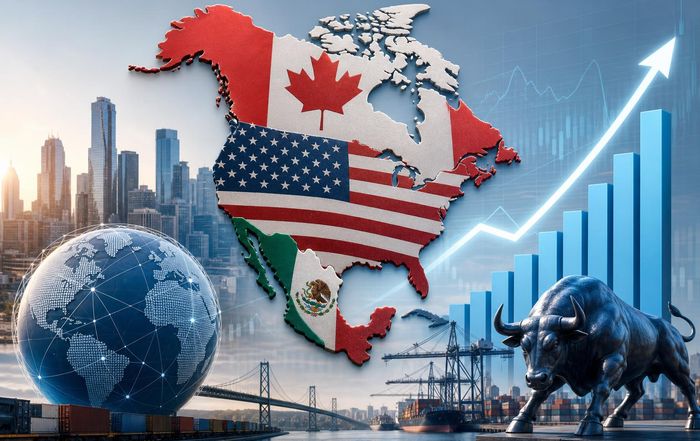
North America's Economy and Investor Confidence in 2026
A Region at an Inflection Point
As 2026 unfolds, North America stands at a decisive inflection point where resilient economic fundamentals, rapid technological transformation and shifting geopolitical dynamics converge to reshape growth prospects and investor confidence. For readers of FinancialDailys.com, whose interests span finance, markets, investing, business strategy and global macro trends, the evolution of the North American economy is more than a regional story; it is a bellwether for capital flows, corporate decision-making and portfolio risk across developed and emerging markets alike.
The combined economic weight of the United States, Canada and Mexico continues to anchor global demand and financial liquidity, with the United States alone still accounting for roughly a quarter of world GDP according to World Bank data. Yet the environment is more complex than in previous cycles. Higher-for-longer interest rates, persistent geopolitical tensions, accelerated decarbonization, and the diffusion of artificial intelligence are simultaneously challenging and reinforcing North America's role in global finance and trade. Against this backdrop, investor confidence has become more discriminating, less momentum-driven and increasingly focused on balance-sheet strength, policy predictability and the credibility of long-term earnings growth.
For institutional and sophisticated individual investors, understanding these dynamics is critical to navigating opportunities across equities, fixed income, real assets and private markets. The editorial stance at FinancialDailys.com has increasingly emphasized the need to connect macroeconomic analysis with actionable insights in finance, markets, investing and business strategy, and nowhere is that integration more important than in assessing North America's evolving economic trajectory.
Growth, Inflation and Policy: The Macroeconomic Landscape
The macroeconomic profile of North America in 2026 reflects a region transitioning from post-pandemic volatility toward a more mature, albeit uneven, expansion. The United States has managed to avoid a deep recession despite aggressive monetary tightening by the Federal Reserve, while Canada and Mexico have navigated their own versions of the same challenge, shaped by differing fiscal capacities, trade structures and demographic trends.
In the United States, growth has cooled from the stimulus-fueled peaks of the early 2020s but remains positive, supported by resilient consumer spending, a still-tight labor market and sustained capital expenditure in technology, energy infrastructure and manufacturing. Official data from the U.S. Bureau of Economic Analysis indicate that real GDP growth has normalized to a modest but steady pace, with quarterly volatility now more closely aligned with pre-pandemic norms. Inflation, which once surged to multi-decade highs, has gradually receded under the combined influence of tighter monetary policy, easing supply-chain pressures and a partial rebalancing of labor markets, although it remains somewhat above the 2% target favored by the Federal Reserve.
Canada's economic performance has been more sensitive to interest rate moves and housing market dynamics, with the Bank of Canada raising rates sharply before cautiously pivoting toward a more balanced stance. The Canadian economy, described by Statistics Canada as heavily influenced by commodities, real estate and cross-border trade, has experienced slower growth, yet remains fundamentally sound due to prudent banking regulation, robust immigration and strong institutional frameworks. Mexico, under the guidance of the Banco de México, has pursued a comparatively orthodox monetary policy, maintaining higher policy rates to anchor inflation expectations and to preserve currency stability, while benefiting from nearshoring trends that are redirecting global supply chains closer to the U.S. consumer market.
Across the region, the interplay between central bank policy and fiscal strategy remains central to investor sentiment. Analysts tracking developments via IMF regional outlooks and OECD economic surveys observe that fiscal space is constrained by elevated public debt levels, particularly in the United States, where long-term sustainability concerns have sharpened debates over entitlement reform, tax policy and defense spending. For bond investors, this translates into a heightened focus on term premia, sovereign credit perceptions and the potential for renewed bouts of volatility in the Treasury market, especially as global central banks recalibrate their reserve holdings and as regulatory changes alter the demand profile of large financial institutions.
Labor Markets, Productivity and the AI Transition
One of the defining features of North America's economic resilience has been the robustness of its labor markets. Unemployment rates in the United States and Canada have remained historically low, even as job openings have gradually normalized from the extreme tightness of the early 2020s. According to data from the U.S. Bureau of Labor Statistics, participation rates have improved among prime-age workers, though demographic aging and skills mismatches continue to pose structural challenges.
The central question for investors and corporate leaders is whether the region can sustain productivity gains sufficient to offset demographic headwinds and maintain real income growth. The answer increasingly hinges on the effective deployment of artificial intelligence, automation and data-intensive technologies across sectors. Research from institutions such as the McKinsey Global Institute and the World Economic Forum highlights North America's leadership in AI research, cloud infrastructure and venture-backed innovation, but also warns of uneven diffusion and the risk of widening inequality between firms and workers who can harness these tools and those who cannot.
For the readership of FinancialDailys.com, this technological transition intersects directly with themes in careers and skills development, corporate strategy and capital allocation. Boards and executives across Fortune 500 companies, as well as high-growth North American startups, are under pressure to convert AI hype into measurable productivity improvements, cost efficiencies and new revenue streams, all while navigating regulatory scrutiny and societal concerns over privacy, bias and job displacement. Investors, in turn, are scrutinizing earnings calls, capital expenditure plans and workforce strategies to distinguish between firms with credible AI roadmaps and those relying on narrative rather than substance.
Capital Markets, Risk Appetite and Valuation Discipline
Investor confidence in North America cannot be analyzed without reference to its deep, liquid and globally influential capital markets. The United States remains home to the world's largest equity and bond markets, with the New York Stock Exchange and Nasdaq continuing to attract listings from domestic and international issuers. Canada's Toronto Stock Exchange and Mexico's Bolsa Mexicana de Valores play important but more regionally focused roles, particularly in resource sectors, financial services and select growth industries.
Equity valuations in 2026 reflect a more differentiated environment than the broad-based rallies of earlier years. While segments of the U.S. technology complex still command premium multiples, driven by AI, cloud computing and cybersecurity, other sectors such as traditional retail, discretionary consumer goods and certain industrials have seen more subdued performance, reflecting margin pressures and cyclical uncertainty. Data from S&P Global and MSCI indicate that factor performance has rotated toward quality and profitability, with investors rewarding companies that exhibit strong balance sheets, consistent cash flows and disciplined capital allocation.
Fixed income markets have also regained prominence in portfolio construction as higher yields restore the attractiveness of bonds as both income generators and potential shock absorbers. The U.S. Treasury curve, corporate credit spreads and municipal bond markets are closely monitored by institutional allocators and wealth managers, who rely on resources such as the U.S. Treasury and major rating agencies to assess credit risk and policy direction. For readers seeking to understand how these developments influence portfolio strategy, the coverage on bonds and broader markets at FinancialDailys.com provides a bridge between macro commentary and implementable ideas.
Risk appetite, while recovering from earlier episodes of volatility, remains cautious rather than euphoric. Geopolitical tensions, regulatory shifts in technology and finance, and the lingering memory of abrupt tightening cycles have encouraged a more balanced approach to leverage, sector concentration and speculative exposures. Hedge funds, private equity firms and sovereign wealth funds continue to allocate heavily to North America, but with more stringent due diligence and a greater emphasis on governance, environmental risk and long-term resilience.
Banking, Credit Conditions and Financial Stability
The banking systems of the United States and Canada, as well as the evolving financial architecture in Mexico, are central to the region's capacity to sustain growth and maintain investor trust. The U.S. banking sector, supervised by the Federal Reserve, the FDIC and the Office of the Comptroller of the Currency, has strengthened capital and liquidity buffers since the global financial crisis, though episodes of stress in regional banks during the early 2020s underscored vulnerabilities linked to interest rate risk, concentrated deposit bases and exposure to commercial real estate.
Canadian banks, overseen by the Office of the Superintendent of Financial Institutions (OSFI) and supported by a conservative regulatory culture, have historically demonstrated resilience, though they remain exposed to high household debt levels and property market dynamics. Mexican banks, under the regulation of CNBV and the Banco de México, have gradually expanded credit penetration while improving risk management and digital capabilities, supported by structural reforms and increasing integration with North American supply chains.
Credit conditions across North America have tightened relative to the ultra-loose environment that prevailed during the era of near-zero interest rates. Corporate borrowers face higher refinancing costs, stricter covenants and more discerning lenders, while households encounter more stringent mortgage underwriting and consumer credit standards. Central banks and policymakers track these developments through stress-testing frameworks and macroprudential tools, informed by analysis from organizations such as the Bank for International Settlements and the Financial Stability Board.
For investors following banking and credit trends at FinancialDailys.com, the key questions revolve around the durability of bank profitability, the potential for consolidation among mid-sized institutions, and the implications of digital disruption as fintechs, neobanks and large technology platforms encroach on traditional intermediation. Confidence in the financial system remains broadly intact, but it is conditional on continued regulatory vigilance, transparent risk disclosure and prudent balance-sheet management.
Real Assets, Property Markets and the Geography of Capital
Property markets in North America have undergone a profound revaluation as higher interest rates, remote and hybrid work patterns and shifting demographic preferences reshape demand for residential, commercial and industrial real estate. In major U.S. and Canadian metropolitan areas, residential affordability has emerged as a central political and economic issue, with housing supply constraints, zoning regulations and construction bottlenecks contributing to elevated prices and rents, even as transaction volumes have slowed.
Commercial real estate, particularly office space in central business districts, faces structural headwinds as corporations reconfigure their space requirements and employees maintain a preference for flexible work arrangements. Reports from organizations such as CBRE and JLL highlight rising vacancy rates in certain downtown cores, contrasted with robust demand for logistics, data centers and specialized industrial properties linked to e-commerce, cloud computing and manufacturing reshoring. Mexico has benefited from increased interest in industrial and logistics real estate along key corridors, reflecting the broader nearshoring trend and the deepening of North American supply chains.
For investors, real assets offer both diversification and inflation-hedging potential, but they also carry liquidity and valuation risks in an environment where financing costs have reset structurally higher. Coverage of property and real estate trends on FinancialDailys.com emphasizes the importance of location, asset quality, tenant profile and capital structure in assessing opportunities across listed REITs, private funds and direct ownership structures.
Trade, Nearshoring and North America's Global Role
North America's economic influence extends far beyond its borders through trade, investment and supply-chain networks. The United States-Mexico-Canada Agreement (USMCA) has provided a framework for deepening regional integration, even as global trade faces headwinds from protectionism, industrial policy and geopolitical fragmentation. According to analysis from the World Trade Organization, North America remains a pivotal hub in global value chains, particularly in automotive, aerospace, agriculture, energy and advanced manufacturing.
The concept of nearshoring has gained renewed prominence as companies seek to reduce reliance on distant suppliers, mitigate geopolitical risk and shorten delivery times. Mexico, in particular, has emerged as a key beneficiary, attracting investment from multinational corporations seeking to serve the U.S. market from a geographically proximate and cost-competitive base. Canada has also positioned itself as a stable and resource-rich partner in critical minerals, energy and advanced manufacturing, aligning with broader strategic objectives around supply-chain security and decarbonization.
For global investors and executives tracking trade and global business dynamics, the evolution of North America's external relationships with Europe, Asia and emerging markets is a critical determinant of growth and risk. The region's interactions with major economies such as China, Japan and the European Union influence everything from currency movements and commodity prices to regulatory standards in technology, data and sustainability. Multilateral institutions, including the World Bank and the Asian Development Bank, continue to monitor and analyze these linkages as part of broader assessments of global economic health.
Sustainability, Energy Transition and ESG Imperatives
Sustainability and the energy transition have become central pillars of North America's economic and investment narrative. The United States, Canada and Mexico are all engaged in complex efforts to balance energy security, industrial competitiveness and climate commitments, with substantial implications for capital allocation, regulatory frameworks and corporate strategy. Policy initiatives such as the U.S. Inflation Reduction Act, Canada's clean technology incentives and Mexico's evolving energy reforms are reshaping the landscape for renewable energy, electric vehicles, grid infrastructure and emissions-intensive industries.
Investors have increasingly integrated environmental, social and governance (ESG) considerations into their decision-making, though the approach has become more nuanced and, in some jurisdictions, politically contested. Large asset managers, informed by principles from the UN Principles for Responsible Investment and guidance from the Task Force on Climate-related Financial Disclosures, are pressing companies for more granular disclosure, credible decarbonization pathways and robust governance of climate and social risks. At the same time, regulators and policymakers in North America are refining rules around ESG labeling, fiduciary duty and greenwashing to ensure that sustainable finance claims are backed by verifiable data.
For the FinancialDailys.com audience, which increasingly engages with sustainability and climate-related content, the key issue is how the energy transition will influence sectoral winners and losers, asset valuations and long-term portfolio resilience. North America's abundant natural resources, technological capabilities and deep capital markets position it well to lead in areas such as clean energy, carbon management and sustainable infrastructure, but the path is unlikely to be linear, and policy uncertainty remains a material risk.
Startups, Innovation Ecosystems and the Private Markets Boom
North America's innovation ecosystems remain among the most dynamic in the world, anchored by technology hubs such as Silicon Valley, Seattle, Toronto, Vancouver, Austin, Boston and Mexico City, among others. Venture capital and private equity have played a crucial role in financing high-growth companies across software, biotechnology, fintech, climate tech and advanced manufacturing. Data from PitchBook and Crunchbase indicate that while deal activity cooled from the exuberant peaks of 2021-2022, the region continues to attract a disproportionate share of global venture funding.
The maturation of North American startup ecosystems intersects with broader themes in technology and digital transformation, as well as with the interests of readers focused on startups and entrepreneurship. Founders and investors operate in an environment where capital is more selective, business models are scrutinized for path-to-profitability, and regulatory expectations around data privacy, cybersecurity and competition are rising. Yet the region's combination of world-class universities, deep pools of technical talent and sophisticated capital providers continues to foster innovation that reverberates across global markets.
Private markets, including venture capital, growth equity, private credit and infrastructure funds, have become integral to North American capital formation. Institutional investors such as pension funds, endowments and sovereign wealth funds have expanded allocations to these asset classes in search of diversification and higher returns, guided by research from organizations like the CFA Institute and major consulting firms. The challenge in 2026 lies in managing liquidity, valuation transparency and the potential for regime shifts in interest rates and regulation that could reshape the risk-reward calculus.
Consumer Behavior, Confidence and the New Economic Normal
Consumer behavior in North America has evolved significantly in response to inflation dynamics, digitalization and changing preferences around work, lifestyle and sustainability. While real wage growth has been uneven, households have demonstrated adaptability by rebalancing spending between goods and services, adopting new payment technologies and recalibrating savings and investment patterns. Surveys and data from organizations such as the Conference Board and national statistics agencies reveal that consumer confidence, though sensitive to inflation and political uncertainty, remains broadly supportive of moderate growth.
The expansion of e-commerce, digital banking and embedded finance has transformed the way consumers interact with financial products, retailers and service providers. For readers tracking consumer trends and personal finance at FinancialDailys.com, these shifts create both opportunities and challenges. On one hand, financial inclusion and access to investment platforms have improved; on the other, households must navigate a more complex landscape of credit options, subscription models and digital risks.
In parallel, consumer preferences increasingly reflect concerns over sustainability, data privacy and corporate responsibility, influencing brand loyalty and pricing power. Companies operating in North America must therefore align product offerings, marketing strategies and supply-chain practices with these evolving expectations, or risk erosion of market share and reputation.
Outlook: Confidence, Caution and the Search for Quality
Looking ahead through 2026 and beyond, North America's economic and investment landscape is likely to be characterized by a blend of cautious optimism and disciplined risk management. The region retains formidable strengths: deep and innovative capital markets, world-leading technology and research capabilities, relatively flexible labor markets, and strong institutional frameworks. At the same time, it faces non-trivial challenges, including fiscal sustainability concerns, geopolitical tensions, demographic shifts, climate risks and the need to ensure that the benefits of technological change are broadly shared.
For the global audience of FinancialDailys.com, spanning North America, Europe, Asia, Africa and South America, the key implication is that North America will remain a central anchor of the world economy and a core component of diversified portfolios, but one that demands more selective and research-driven engagement. Coverage across economy and macro trends, stocks and equity strategy, global developments and the main homepage insights will continue to emphasize the importance of quality, resilience and transparency as guiding principles for capital allocation.
Investor confidence in North America, therefore, is neither uncritical nor fragile; it is conditional, evidence-based and increasingly aligned with long-term fundamentals. Those who combine a nuanced understanding of macroeconomic forces with rigorous bottom-up analysis, and who remain attentive to structural shifts in technology, sustainability and geopolitics, are best positioned to navigate the opportunities and risks that define North America's evolving role in the global economy.
