
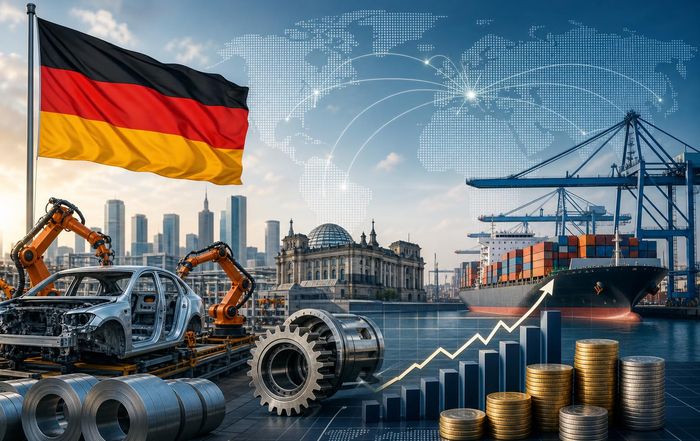
Germany's Manufacturing Finance and Export Competitiveness: An Evolving Powerhouse
Introduction: Why Germany Still Matters to Global Industry
Germany remains one of the world's most closely watched industrial economies, not only because of its engineering reputation but also because of the sophisticated financial and institutional architecture that supports its export-driven model. For readers of FinancialDailys, understanding how Germany's manufacturing finance ecosystem operates, how its export competitiveness is evolving, and where the key opportunities and vulnerabilities lie is essential to interpreting wider developments in global markets, cross-border capital flows, and corporate strategy.
While the country has faced cyclical slowdowns, energy price shocks and structural challenges in sectors such as autos and chemicals, its combination of high-value manufacturing, disciplined fiscal policy, deep capital markets, and strong export institutions continues to shape trade and investment patterns from North America to Asia. As global supply chains are reconfigured and industrial policy returns to the forefront in the United States, the European Union, and China, Germany's experience offers a detailed case study in how an advanced economy finances manufacturing, sustains export capacity, and adapts to technological and geopolitical change.
The Structure of German Manufacturing: Mittelstand at the Core
Germany's industrial base is often associated with global giants such as Volkswagen, Siemens, BASF, and BMW, yet the backbone of its manufacturing strength lies in the so-called Mittelstand-a dense network of small and mid-sized, often family-owned companies that specialize in high-precision, niche products. According to the German Federal Statistical Office (Destatis), manufacturing still accounts for a substantially larger share of value added in Germany than in most other advanced economies, with machinery, automotive, chemicals, electrical equipment, and pharmaceuticals forming the core pillars.
Many Mittelstand firms are "hidden champions," a term popularized by business scholar Hermann Simon, to describe companies that dominate narrow global market segments while remaining relatively unknown to the broader public. These firms, often located outside major metropolitan centers, typically maintain conservative balance sheets, long-term bank relationships, and sustained investment in research and development. Their export orientation is reflected in Germany's persistent trade surplus and its position among the world's leading exporters, as documented by the World Trade Organization (WTO).
For investors and analysts following business trends on FinancialDailys, this structure is critical: the resilience of Germany's export performance is not only a function of large multinational corporations, but also of thousands of medium-sized suppliers that underpin complex global value chains in automotive, industrial machinery, and advanced manufacturing equipment.
Bank-Based Finance and the Role of Hausbanken
Germany's financial system is traditionally bank-centric, with companies-especially Mittelstand manufacturers-relying heavily on relationship banking rather than capital markets. The concept of the Hausbank (house bank) remains central. Firms typically maintain a close, often decades-long relationship with a primary bank that provides working capital, investment loans, trade finance, and risk management services.
The German banking landscape is characterized by three pillars: private commercial banks such as Deutsche Bank and Commerzbank, public sector banks including the regional Landesbanken and savings banks (Sparkassen), and cooperative banks (Genossenschaftsbanken). According to the Deutsche Bundesbank (Bundesbank), small and mid-sized enterprises (SMEs) still obtain the majority of their external funding through bank loans, although capital market financing via bonds and Schuldscheine (a traditional German debt instrument) has gained importance for larger mid-caps and corporate groups.
This bank-based model has both strengths and weaknesses. On the positive side, relationship banking enables lenders to look beyond quarterly earnings, supporting long-term investment in plant, equipment, and innovation. During periods of stress, such as the global financial crisis and the pandemic shock, Hausbanken often played a stabilizing role by extending credit lines and restructuring loans rather than forcing abrupt deleveraging. The European Central Bank (ECB) has highlighted the role of such relationship lending in cushioning real-economy shocks across the euro area.
However, heavy reliance on bank finance also exposes manufacturers to banking sector headwinds and can limit access to risk capital for more disruptive innovation. As FinancialDailys readers tracking banking developments know, German banks themselves have faced profitability challenges, low interest margins in the era of ultra-low rates, and restructuring pressures, which have implications for credit availability and pricing for industrial borrowers.
Public Development Banks and Export Credit Support
A distinctive feature of German manufacturing finance is the prominent role of public development and export credit institutions. KfW, the state-owned development bank, is one of the largest promotional banks in the world, providing subsidized loans, guarantees, and equity-like instruments to support SME investment, innovation, energy efficiency, and digitalization. KfW's programs, often delivered through partner banks, have been instrumental in financing modernization of manufacturing facilities, deployment of Industry 4.0 technologies, and the energy transition in industrial processes. Detailed program information is available on KfW's official website.
On the export side, Euler Hermes Aktiengesellschaft, operating under the trade name Allianz Trade and acting on behalf of the German federal government, provides export credit guarantees that protect exporters against commercial and political risks, particularly in emerging markets. These guarantees, often combined with buyer credit or supplier credit structures arranged by commercial banks, enable German manufacturers to offer competitive financing terms to overseas customers, thereby enhancing their ability to win large contracts in infrastructure, machinery, and capital goods. The OECD (OECD export credits) provides comparative data on such schemes across advanced economies.
The interaction between private banks, KfW, and public export credit guarantees creates a layered financing ecosystem that is particularly supportive of capital-intensive exports and long-term industrial projects. For readers following trade and export trends at financialdailys, this institutional architecture helps explain how German companies continue to secure sizeable orders in markets such as China, the United States, and the Middle East despite rising competition and geopolitical uncertainty.
Capital Markets, Private Equity, and Alternative Financing
Although Germany is less capital-market-driven than the United States or the United Kingdom, the role of equity and bond markets in financing manufacturing has expanded. The Frankfurt Stock Exchange, operated by Deutsche Börse, remains a key venue for large industrial listings, while the Prime Standard and Scale segments offer access to equity capital for mid-caps and growth companies. Corporate bond issuance in euros has become a significant funding source for investment-grade industrials, with data from the Bank for International Settlements (BIS) highlighting the growth in euro-denominated corporate debt over the past decade.
Private equity and infrastructure funds have also become more active in German manufacturing and industrial technology, targeting succession situations in family-owned firms, carve-outs from conglomerates, and platform roll-ups in areas such as automation, specialty components, and industrial software. International investors, including funds based in the United States, the United Kingdom, and the Nordic countries, frequently partner with local management teams to accelerate international expansion and digital transformation. Regulatory frameworks overseen by BaFin (Federal Financial Supervisory Authority) and EU-level rules on foreign direct investment screening shape the landscape for cross-border deals.
At the same time, alternative financing instruments such as leasing, factoring, and asset-based lending remain important, particularly for working capital and equipment finance, while venture capital supports a growing cohort of industrial tech and deep-tech startups in robotics, additive manufacturing, and clean-tech. Investors tracking startups and innovation on FinancialDailys will recognize that Germany's industrial heritage is increasingly intersecting with software and data-driven business models, creating new financing needs and opportunities beyond traditional bank loans.
Export Competitiveness: Strengths and Pressures
Germany's export competitiveness is rooted in several enduring advantages. The country specializes in high-value, complex products where quality, reliability, and after-sales service are critical, such as machine tools, automotive components, process engineering equipment, and chemical intermediates. According to the World Bank (World Bank trade data), Germany consistently ranks among the top global exporters by value, with a strong presence in European intra-EU trade as well as significant exports to the United States, China, and other major markets.
The integrated European single market, supported by common standards and the euro, provides German manufacturers with frictionless access to a large customer base and a dense network of suppliers and logistics hubs. Trade agreements negotiated at the EU level, such as those with Canada (CETA) and Japan (EU-Japan EPA), further facilitate market access and regulatory cooperation, as documented by the European Commission (EU trade policy). For readers monitoring global markets on FinancialDailys, Germany's position within this broader European framework is a key factor in understanding its export performance.
However, these structural strengths are increasingly challenged by several pressures. Rising labor and energy costs, especially after the disruption of Russian gas supplies, have eroded some of the cost competitiveness of energy-intensive sectors. The International Energy Agency (IEA) has detailed how higher gas and electricity prices in Europe have affected industrial output, particularly in chemicals and metals. At the same time, global competition from Chinese manufacturers in machinery and electric vehicles has intensified, while U.S. industrial policy initiatives, such as the Inflation Reduction Act and CHIPS and Science Act, are attracting investment to North America.
Exchange rate movements of the euro, regulatory changes within the EU, and evolving trade policies in key partner countries add further layers of uncertainty. The IMF (International Monetary Fund) has noted that Germany's large current account surplus has been a source of debate within Europe and globally, with discussions focusing on the balance between export-led growth and domestic investment and consumption.
The Energy Transition and Industrial Transformation
One of the central themes shaping Germany's manufacturing and export competitiveness is the energy transition, known domestically as the Energiewende. Germany has committed to ambitious climate targets, including substantial reductions in greenhouse gas emissions and a rapid expansion of renewable energy. The shift away from nuclear and fossil fuels, while environmentally driven, has complex implications for industrial competitiveness.
Energy-intensive manufacturers in chemicals, steel, glass, and paper have faced higher electricity and gas prices compared with some international competitors, prompting concerns about "de-industrialization" and the relocation of production. The German Council of Economic Experts and institutes such as the ifo Institute (ifo Institute) have highlighted these risks while also noting opportunities for Germany to lead in green technologies, from hydrogen production and industrial heat pumps to battery manufacturing and grid infrastructure.
Public policy responses include support for industrial decarbonization projects, carbon contracts for difference, and incentives for investments in energy efficiency and renewable power procurement. KfW and other public instruments are heavily involved in financing these initiatives, while EU-level programs such as the Innovation Fund complement national efforts. Investors and corporate leaders following sustainability trends on FinancialDailys will recognize that the energy transition is increasingly central to capital allocation decisions, affecting plant location, technology choices, and long-term export strategies.
For many German manufacturers, the challenge is to reconcile climate objectives with cost competitiveness by leveraging technological innovation, advanced process engineering, and long-term energy contracts, while diversifying markets and product portfolios toward solutions that enable decarbonization in customer industries worldwide.
Digitalization, Industry 4.0, and Productivity
Germany has been a pioneer in the concept of Industry 4.0, which integrates cyber-physical systems, the industrial Internet of Things, advanced robotics, and data analytics into manufacturing processes. The term itself originated from a strategic initiative promoted by the German government and industry associations such as Bitkom and VDMA, and has since entered global industrial vocabulary. The Fraunhofer Society (Fraunhofer) and other research institutions play a key role in applied research, pilot projects, and technology transfer.
Digitalization is critical for maintaining export competitiveness in high-wage economies, as it enhances productivity, flexibility, and customization capabilities. German machine builders and automation specialists are embedding sensors, connectivity, and software into equipment, enabling predictive maintenance, remote monitoring, and data-driven optimization services. This transition is gradually shifting revenue models from one-off equipment sales toward recurring service and platform-based offerings, which can strengthen customer relationships and create new export opportunities.
At the same time, there are concerns that Germany has lagged in some aspects of digital infrastructure, such as broadband rollout, and in the scaling of digital platforms compared with the United States and parts of Asia. The OECD (OECD digital economy) has highlighted both the strengths and gaps in Germany's digital transformation. Financing digitalization projects often requires a mix of traditional bank credit, public grants, and equity capital, particularly when business models involve significant upfront software development and data infrastructure.
For readers interested in technology and innovation coverage at FinancialDailys, the evolution of Industry 4.0 in Germany illustrates how industrial companies can reposition themselves as technology providers and solution partners, with implications for valuation, risk profiles, and international competitiveness.
Labor Markets, Skills, and Demographics
Germany's manufacturing success has long been supported by a strong vocational training system, known as the dual system, which combines classroom education with on-the-job apprenticeships in companies. This model, coordinated by organizations such as the Federal Institute for Vocational Education and Training (BIBB), has produced a highly skilled workforce in trades ranging from precision machining to mechatronics and industrial electronics.
However, demographic trends pose significant challenges. An aging population and low birth rates are contributing to labor shortages in many industrial regions, particularly in skilled technical roles. The German Federal Employment Agency and research institutes have documented increasing vacancies in engineering, IT, and skilled trades, raising concerns about capacity constraints and upward pressure on wages. Immigration reforms and initiatives to attract international talent are part of the policy response, but integration and recognition of qualifications remain practical hurdles.
From a financial and strategic perspective, companies are responding by investing in automation, flexible production systems, and lifelong learning programs, while exploring new work models to retain experienced staff. For readers tracking careers and labor market dynamics on FinancialDailys, Germany provides a clear demonstration of how human capital, education systems, and demographic policy intersect with manufacturing finance and export competitiveness.
Real Estate, Infrastructure, and Industrial Clusters
Industrial competitiveness is also shaped by the quality and cost of real estate, logistics, and infrastructure. Germany benefits from a dense network of highways, rail lines, and inland waterways, as well as major ports such as Hamburg and Bremen, which facilitate efficient movement of goods across Europe and beyond. The Federal Ministry for Digital and Transport (BMDV) outlines ongoing infrastructure investment plans, including rail modernization and digital traffic management.
Industrial clusters, such as automotive hubs in Bavaria and Baden-Württemberg, chemical complexes along the Rhine, and machinery clusters in North Rhine-Westphalia and Saxony, create ecosystems where suppliers, research institutions, and service providers co-locate. These clusters reduce transaction costs, foster innovation, and enhance export readiness, but they also create localized pressures on industrial and logistics real estate. Investors analyzing property markets with a business lens on FinancialDailys will note that demand for modern, energy-efficient industrial space, close to transport links and labor pools, continues to shape regional development.
Financing industrial real estate often involves a combination of corporate balance sheet investment, sale-and-leaseback structures, and specialized real estate investment funds. As sustainability standards tighten, the need to retrofit or replace older facilities with greener, more efficient buildings is becoming a significant capital allocation issue for both manufacturers and property investors.
Strategic Outlook: Opportunities and Risks for Investors and Policymakers
Looking ahead, Germany's manufacturing finance and export competitiveness will be influenced by a complex interplay of technological, geopolitical, and macroeconomic factors. For FinancialDailys readers who follow finance, investing, and economy-wide developments, several themes stand out.
First, the shift toward green and digital industrial technologies presents both an opportunity and a necessity. German manufacturers that successfully reposition themselves as providers of climate-friendly solutions, industrial software, and integrated service models can capture growing global demand, particularly as countries across Europe, North America, and Asia pursue decarbonization and automation. This will require sustained investment in R&D, partnerships with technology firms and research institutes, and an openness to equity and risk capital alongside traditional bank finance.
Second, diversification of export markets and supply chains is likely to accelerate. While China and the United States will remain crucial trading partners, companies are increasingly exploring opportunities in Southeast Asia, India, the Middle East, and Africa, both as markets and as components of reconfigured supply networks. Export finance, risk management tools, and public-private collaboration through institutions such as KfW and export credit agencies will be central to enabling this diversification.
Third, the resilience of the banking system and the evolution of financial regulation will matter greatly for manufacturing finance. Efforts to deepen European capital markets, including the Capital Markets Union initiative, may gradually provide more options for equity and bond financing, especially for mid-sized industrials. At the same time, prudential regulation, climate-related disclosure requirements, and digital finance innovations will shape banks' capacity and willingness to lend to manufacturing, particularly for projects with long payback periods or technological uncertainty.
Fourth, domestic policy choices on energy, infrastructure, education, and immigration will influence Germany's ability to sustain a high-value industrial base. Investments in renewable energy, grid upgrades, and hydrogen infrastructure can, over time, mitigate energy cost disadvantages, while reforms to vocational training and labor market integration can help address skills shortages. Coordination between federal and state governments, industry associations, and financial institutions will be critical to aligning these policies with the needs of exporters and industrial investors.
Finally, geopolitical developments, including trade disputes, sanctions regimes, and security concerns, will continue to affect export strategies and risk assessments. German firms must navigate an environment where economic and security considerations are increasingly intertwined, requiring sophisticated scenario planning, compliance capabilities, and flexible financing structures. International organizations such as the World Bank, IMF, and WTO will remain important sources of data and frameworks, but companies and investors will also need to develop their own granular understanding of country-specific and sector-specific risks.
Conclusion: A System in Transition, Not in Decline
Germany's manufacturing finance and export competitiveness are undergoing a profound transition rather than a simple decline. The traditional strengths of engineering excellence, a dense network of Mittelstand firms, stable banking relationships, and robust export institutions remain powerful assets. Yet they must now operate within a world of accelerated technological change, heightened geopolitical tension, and ambitious climate policies.
For the global audience of financialdailys, the German case offers valuable lessons on how an advanced industrial economy can adapt its financial architecture, industrial strategy, and export model to new realities. Investors, policymakers, and corporate leaders who engage deeply with these dynamics will be better positioned to identify opportunities in German industrial equities, cross-border M&A, green and digital infrastructure projects, and long-term trade partnerships.
As the decade progresses, Germany's success will depend on its ability to combine fiscal prudence with strategic investment, to leverage its industrial heritage while embracing digital and green innovation, and to maintain open, rules-based trade relationships even as global competition intensifies. If it can achieve this balance, Germany is likely to remain a central pillar of the global manufacturing and export system, and a critical reference point for the financial and business analysis that FinancialDailys is committed to providing.
