
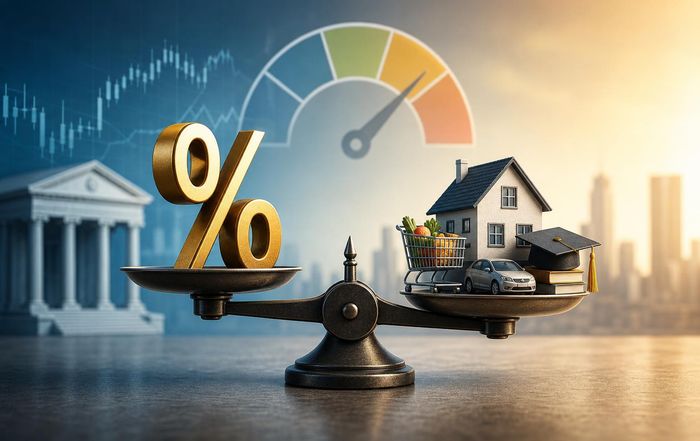
How Credit Conditions Influence Everyday Financial Decisions
Credit conditions, often discussed in central bank reports and market commentary, can appear abstract and distant from daily life. Yet, they shape the cost of mortgages, the availability of small-business loans, the terms on credit cards, and even hiring decisions that affect household income. For readers of FinancialDailys, understanding how shifts in credit conditions filter through to the real economy has become an essential part of making informed financial choices and building long-term resilience.
What "Credit Conditions" Really Mean
In professional finance and central banking, credit conditions describe the overall environment for borrowing and lending, including the cost, availability, and terms of credit across households, businesses, and governments. Analysts often distinguish between interest rates, which are the price of borrowing, and non-price terms such as collateral requirements, covenants, credit limits, and approval standards.
Institutions such as the Bank for International Settlements explain that credit conditions are shaped by a combination of monetary policy, banking sector health, risk appetite in financial markets, and regulatory frameworks. Central banks including the Federal Reserve, the European Central Bank, and the Bank of England regularly publish surveys of bank lending practices, which give insight into whether banks are tightening or loosening standards for mortgages, corporate loans, and consumer credit. These reports, together with data from organizations such as the International Monetary Fund and OECD, provide an evidence-based view of how credit flows are evolving across regions.
For individuals and businesses, these conditions eventually show up in loan approvals or rejections, changing credit limits, varying interest rates, and shifts in the types of products lenders are willing to offer. When credit is abundant and inexpensive, borrowing to buy a home, expand a company, or finance education becomes easier; when credit tightens, the same decisions can become materially more difficult or costly.
Readers can follow these developments in the dedicated finance coverage and economy analysis published by financialdailys, which track how macro-level shifts translate into practical outcomes.
The Transmission from Central Banks to Household Budgets
The starting point for modern credit conditions is usually monetary policy. Central banks set short-term policy rates and use tools such as balance sheet operations to influence broader financial conditions. Institutions like the Federal Reserve explain through their monetary policy frameworks that changes in policy rates feed into market interest rates on government bonds, corporate debt, and eventually consumer lending products.
When policy rates rise, banks' own funding costs generally increase, leading to higher interest rates on variable-rate mortgages, personal loans, and credit cards, although the speed and magnitude of transmission can vary by country and product. Conversely, when policy rates fall, the cost of borrowing can decline, but banks may not always pass on the full reduction if they face higher risk or wish to rebuild margins. The Bank of England and Reserve Bank of Australia, among others, have documented these asymmetric transmission effects in their research.
For households, this process manifests in several concrete ways. Mortgage payments on adjustable-rate loans can rise or fall with benchmark rates such as SOFR in the United States or Euribor in the euro area. Auto loans and personal loans may be priced off government bond yields and bank funding costs, which are influenced by policy decisions and market expectations. Credit card interest rates often move more slowly, but over time they too reflect broader changes in funding costs and risk perceptions.
The policy environment is covered extensively in global outlets such as the Financial Times, Reuters, and Bloomberg, which provide timely reporting on central bank decisions and market reactions. Readers of FinancialDailys can complement this with markets-focused insights to understand how shifts in yields and credit spreads are likely to affect borrowing costs and investment returns.
Bank Lending Standards and the "Hidden" Side of Credit
Interest rates are only one dimension of credit conditions. Equally important are the standards and criteria that lenders apply when assessing applications. Regulatory bodies such as the European Banking Authority and the Federal Reserve publish periodic surveys of senior loan officers, which highlight whether banks are tightening or loosening standards for different borrower segments.
When banks become more cautious, they may require higher credit scores, larger down payments, more robust documentation of income, or stronger collateral. They may also cap loan-to-value or loan-to-income ratios more strictly. Even if headline interest rates are low, tighter standards can restrict access to credit for first-time homebuyers, small firms without extensive track records, or consumers with limited credit histories.
Research from institutions such as the International Monetary Fund and Bank of Canada has shown that after financial stress episodes, banks tend to reassess risk models and increase buffers, leading to periods of tighter credit even as central banks may be lowering policy rates. For example, after the global financial crisis and subsequent regulatory reforms, many banks raised capital levels and adjusted risk-weighted asset models, which influenced their willingness to lend to certain sectors.
For households and small businesses, these dynamics can be more decisive than headline rate moves. An entrepreneur may find that a promised overdraft facility is reduced or a loan application is delayed or declined despite relatively stable interest rates, simply because the bank has revised its risk appetite. The OECD and World Bank have documented how credit constraints can limit small and medium-sized enterprise growth, particularly in emerging markets where capital markets are less developed.
Readers following the banking sector on FinancialDailys can observe how regulatory changes, stress test outcomes, and bank earnings reports signal shifts in lending capacity and willingness, all of which feed into the practical experience of borrowers.
Credit Conditions and Housing Decisions
Housing is one of the most visible areas where credit conditions intersect with everyday life. The affordability of homeownership in countries such as the United States, United Kingdom, Germany, Canada, and Australia is heavily influenced by mortgage availability, interest rates, and underwriting standards. Organizations like Freddie Mac and the U.S. Consumer Financial Protection Bureau provide detailed data and guidance on mortgage markets, while the Bank of England and Bank of Canada regularly assess housing-related financial stability risks.
When mortgage rates are low and banks compete aggressively for borrowers, monthly payments can fall relative to income, encouraging more households to enter the market or upgrade properties. This can support housing demand and, over time, contribute to price increases, as seen in many advanced economies during extended periods of low interest rates. Conversely, when rates rise sharply or banks tighten loan-to-value limits, potential buyers may be priced out, and existing borrowers with variable-rate loans may face higher monthly payments.
Credit conditions also influence the structure of mortgage products. In some markets, lenders may be more willing to offer longer-term fixed-rate mortgages during periods of stable funding conditions, while in others they may prefer variable-rate products that shift interest rate risk to borrowers. Regulatory guidelines from authorities such as the European Central Bank and national supervisory bodies can encourage or discourage certain product types, affecting the risk profile of households.
Property investors and homeowners can monitor these dynamics through property market coverage on financialdailys, which links mortgage trends with broader housing supply, demographic shifts, and fiscal policies such as tax incentives or subsidies.
Consumer Credit, Spending, and Financial Well-Being
Beyond housing, credit cards, auto loans, and personal loans play a significant role in everyday financial decisions. Institutions like the U.S. Federal Reserve, European Central Bank, and Bank of Japan publish data on consumer credit volumes, delinquency rates, and interest rate trends, offering a window into how households are using debt.
When credit conditions are loose, card issuers may extend higher limits, offer promotional 0% periods, and reduce annual fees, making it easier to finance discretionary spending or manage short-term cash flow gaps. Auto lenders may provide longer loan terms or lower down payments, which can increase vehicle affordability but also raise the risk of negative equity. Personal loan providers, including fintech platforms, may expand their offerings to consumers with thinner credit histories, supported by alternative data and algorithmic underwriting.
Consumer protection agencies such as the U.S. Consumer Financial Protection Bureau, the UK Financial Conduct Authority, and the Australian Securities and Investments Commission have emphasized that while expanded credit access can support consumption and financial inclusion, it can also lead to over-indebtedness if borrowers do not fully appreciate the long-term cost of high interest rates, particularly on revolving credit.
For readers of FinancialDailys, tracking consumer finance trends can provide valuable context when evaluating offers or considering debt consolidation. Understanding how banks and fintech lenders price risk, and how they may adjust terms in response to economic uncertainty, helps individuals anticipate changes to credit card rates, personal loan availability, or refinancing opportunities.
Small Businesses, Startups, and the Credit Cycle
Small businesses and startups are especially sensitive to credit conditions because they often lack deep cash reserves or diversified funding sources. Traditional bank loans, credit lines, and trade finance remain core instruments, even as venture capital and private credit markets have grown. Organizations such as the World Bank, OECD, and European Investment Bank have documented how access to finance is one of the most cited constraints on small and medium-sized enterprises across both developed and emerging economies.
When banks are optimistic and competition for business customers is strong, lending officers may be more willing to extend working capital lines, inventory financing, and term loans for expansion. Credit scoring models may place more weight on growth potential and less on collateral, and loan covenants may be more flexible. In contrast, during periods of heightened risk aversion, banks typically prefer established firms with strong balance sheets and proven cash flows, leaving younger companies to rely more heavily on equity financing or alternative lenders.
The rise of fintech platforms, peer-to-peer lending, and revenue-based financing has provided additional channels for startups and small firms to access capital. Research by organizations such as the Bank for International Settlements and national regulators notes that these innovations can broaden access but also introduce new forms of risk and regulatory challenges. Many platforms rely on institutional funding, meaning their own ability to lend is indirectly tied to broader credit conditions and investor appetite.
Entrepreneurs and founders can benefit from following startup and business coverage and business analysis on FinancialDailys, where shifts in bank lending surveys, venture capital trends, and private credit developments are translated into actionable insights for capital planning, hiring, and expansion strategies.
Labor Markets, Careers, and Household Income
Credit conditions do not only affect borrowing; they also influence employment prospects and wage growth. When credit is plentiful and relatively inexpensive, companies are more likely to finance investment in new projects, technology, and capacity, which can support job creation and productivity gains. Research by the OECD and International Labour Organization has highlighted the link between investment cycles, access to finance, and labor market outcomes across both advanced and emerging economies.
Conversely, when banks tighten lending or bond markets become more volatile, firms may defer capital expenditures, reduce hiring plans, or even cut staff to preserve cash. Sectors that are capital-intensive or heavily reliant on external finance, such as construction, manufacturing, and certain technology segments, can be particularly exposed. For individuals, this means that career prospects, bonus pools, and promotion opportunities are indirectly tied to the credit environment, even if this connection is not always visible.
Professional associations and labor market research institutes provide data and analysis on how shifts in business confidence and financing conditions translate into hiring and wage trends. For readers of financialdailys, the careers-focused content can help connect macroeconomic indicators with personal career strategy, highlighting which industries may be expanding or contracting as credit conditions evolve.
Credit Conditions, Markets, and Investment Decisions
Investors, whether retail or institutional, pay close attention to credit spreads, default rates, and liquidity conditions because these factors influence asset prices, portfolio risk, and the cost of capital for companies. Organizations such as S&P Global Ratings, Moody's, and Fitch Ratings provide assessments of corporate and sovereign creditworthiness, while platforms like Morningstar and large asset managers publish research on bond markets and credit cycles.
When credit conditions are easy, corporate bond spreads over government yields tend to narrow, reflecting lower perceived default risk and strong investor demand. This environment can support equity valuations because companies can refinance debt cheaply, fund share buybacks, or invest in growth. In contrast, when credit conditions tighten, spreads often widen, new issuance can slow, and weaker firms may struggle to roll over maturing obligations, which can increase volatility in both bond and equity markets.
For individual investors, understanding these dynamics is crucial when making decisions about bond funds, high-yield investments, or leveraged products. Central bank financial stability reports and market commentary from reputable institutions such as the Bank of England, European Central Bank, and Federal Reserve often highlight vulnerabilities related to corporate leverage or illiquid credit instruments, offering guidance on systemic risks.
Readers can explore investing insights, stocks coverage, and broader markets reporting on FinancialDailys to see how shifts in credit conditions are influencing valuations, sector performance, and portfolio strategies across regions including North America, Europe, and Asia.
Digital Credit, Fintech, and Data-Driven Lending
The past decade has seen rapid growth in digital lending platforms, buy-now-pay-later services, and data-driven underwriting models, transforming how credit is offered and managed. Organizations such as the World Bank and Bank for International Settlements have studied how fintech is expanding financial inclusion in regions from Southeast Asia to Africa, while also raising questions about consumer protection, data privacy, and systemic risk.
Fintech lenders often use alternative data, such as transaction histories, e-commerce behavior, or mobile phone usage patterns, to assess creditworthiness, potentially enabling access for individuals and small businesses without traditional credit histories. However, these models are still influenced by broader credit conditions: when investor funding is abundant and risk appetite is high, platforms may grow rapidly and extend credit more aggressively; when conditions tighten, funding lines can shrink and underwriting standards may be revised.
Regulators in jurisdictions such as the European Union, United States, and Singapore have been working to update frameworks to address these developments, focusing on fair lending practices, transparency of terms, and resilience of digital infrastructure. Central banks and supervisory authorities increasingly coordinate through forums hosted by the Financial Stability Board and Basel Committee on Banking Supervision to monitor cross-border implications.
For consumers and entrepreneurs engaging with digital credit products, it is important to understand that while the user interface may be modern and convenient, the underlying economics remain subject to the same forces of funding costs, risk assessment, and regulatory oversight that shape traditional banking. The technology and finance coverage on financialdailys regularly explores these intersections, helping readers evaluate both the opportunities and responsibilities that come with new forms of credit.
Credit, Sustainability, and the Transition to a Low-Carbon Economy
An increasingly important dimension of credit conditions concerns sustainability and climate-related risk. Financial regulators and institutions such as the Network for Greening the Financial System, the World Bank, and the OECD have emphasized that climate risk can influence asset valuations, creditworthiness, and the allocation of capital. Banks and bond investors are integrating environmental, social, and governance considerations into lending and investment decisions, affecting the availability and cost of credit for different sectors.
Green bonds, sustainability-linked loans, and transition finance instruments have grown significantly, allowing companies and governments to access capital specifically earmarked for environmentally beneficial projects. At the same time, firms with high carbon intensity or weak transition plans may face higher financing costs or more restrictive terms as lenders and investors adjust portfolios in line with climate goals and regulatory expectations.
For households, these developments can influence access to credit for energy-efficient home improvements, electric vehicles, or sustainable infrastructure in their communities, as public policies and financial incentives intersect. For businesses, especially in energy-intensive industries, credit conditions increasingly reflect both immediate financial metrics and longer-term transition risks.
Readers interested in how sustainable finance shapes credit availability can explore sustainability coverage on FinancialDailys, alongside resources from organizations such as the UN Environment Programme Finance Initiative and the International Energy Agency, which analyze how capital flows are aligning with climate objectives.
Building Personal and Corporate Resilience in a Changing Credit Landscape
While credit conditions are influenced by complex global forces, individuals and businesses can take concrete steps to manage their exposure and enhance resilience. Financial education resources from central banks, consumer protection agencies, and non-profit organizations stress the importance of maintaining emergency savings, managing debt prudently, and understanding the terms and risks associated with different credit products.
For households, this may involve stress-testing budgets against potential increases in interest rates, avoiding overreliance on high-cost revolving credit, and monitoring credit reports to maintain strong scores that can secure better terms. For businesses, especially small and medium-sized enterprises, it can mean diversifying funding sources, maintaining transparent financial records to facilitate loan applications, and building relationships with multiple financial institutions.
Global institutions such as the World Bank, OECD, and International Monetary Fund continue to study how financial literacy and inclusion can mitigate the negative effects of credit cycles, particularly in vulnerable communities. Their findings consistently highlight that informed decision-making, combined with appropriate regulatory frameworks, can help ensure that credit serves as a tool for opportunity rather than a source of instability.
For readers of financialdailys, staying informed through dedicated sections on finance, economy, banking, and world developments offers a practical way to interpret macro-level changes and apply them to day-to-day financial choices.
The Ongoing Importance of Understanding Credit Conditions
As the global economy continues to adjust to structural changes in demographics, technology, geopolitics, and climate policy, credit conditions will remain a central channel through which these forces influence everyday life. Households making decisions about homeownership, education, or retirement; entrepreneurs planning new ventures; and investors allocating capital across asset classes all operate within the constraints and opportunities defined by the evolving credit environment.
By following reliable sources such as central bank publications, international financial institutions, and specialized outlets like FinancialDailys, readers can move beyond headlines to understand the mechanisms that link policy decisions and market sentiment to the concrete terms of their loans, the stability of their employment, and the performance of their portfolios. In doing so, they not only navigate present challenges more effectively but also position themselves to seize future opportunities as credit conditions shift in response to the next phase of global economic development.
