
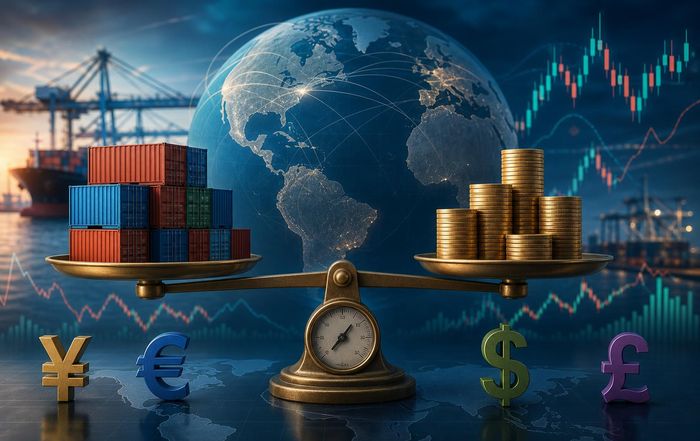
How Global Trade Imbalances Affect Currency Markets
Global trade imbalances have moved from being a technical concern of economists to a central issue shaping currency markets, capital flows and investment strategies. For readers of FinancialDailys, understanding how persistent surpluses and deficits translate into exchange rate dynamics, policy responses and portfolio risks has become essential, not only for macro strategists and corporate treasurers, but also for long-term investors and globally exposed businesses.
This article examines how trade imbalances arise, how they interact with capital flows and monetary policy, and how they ultimately influence currency valuations across developed and emerging markets. It draws on recent research from leading institutions, as well as the experience of the past two decades, to explain the mechanisms at work and to highlight the implications for finance, investing and risk management.
Understanding Global Trade Imbalances
Economists typically define a trade imbalance as a persistent gap between a country's exports and imports of goods and services. When exports exceed imports, a country runs a trade surplus; when imports exceed exports, it runs a trade deficit. These flows are captured in the current account, which also includes income from investments and transfers. According to the International Monetary Fund, global current account imbalances widened again after the pandemic shock, reflecting divergent recoveries, energy price swings and differing fiscal responses.
A key accounting identity underpins the link between trade and finance: a country that runs a trade surplus must, in aggregate, invest the corresponding excess savings abroad, while a country that runs a trade deficit must attract foreign capital to finance it. The Bank for International Settlements has repeatedly emphasized that a trade imbalance is mirrored by a financial imbalance, whether in the form of debt, equity, or reserve accumulation. This symmetry is central to understanding why currency markets are so sensitive to trade data and balance-of-payments trends.
For readers following global macro themes on FinancialDailys' economy coverage, it is helpful to distinguish between cyclical and structural drivers. Short-term imbalances can result from commodity price shocks, temporary demand surges or one-off disruptions to supply chains. Structural imbalances, by contrast, often reflect deeper factors such as demographics, productivity differentials, industrial policy, and the institutional frameworks governing savings and investment.
The Mechanics: From Trade Flows to Exchange Rates
At the most basic level, trade flows affect currency markets through demand and supply for foreign exchange. When a country exports goods, foreign buyers must obtain its currency, increasing demand for it; when it imports, it must sell its currency to buy foreign currencies, increasing supply. Over time, a sustained surplus tends to support currency appreciation, while a sustained deficit tends to exert downward pressure.
However, the real world is more complex than this textbook relationship. Exchange rates are influenced not only by trade in goods and services, but also by cross-border capital flows, interest rate differentials, expectations of future policy, and risk sentiment. The Bank of England and Federal Reserve both stress in their research that capital account movements often dwarf trade flows in daily foreign exchange turnover, meaning that trade imbalances interact with, rather than solely determine, currency outcomes.
In practice, several channels transmit trade imbalances into currency markets. First, current account surpluses often lead to the accumulation of foreign exchange reserves by central banks, particularly in export-oriented economies concerned with maintaining competitiveness. These reserves are typically invested in liquid foreign assets, including government bonds, shaping demand for reserve currencies such as the US dollar, the euro and, increasingly, some Asian currencies. Second, persistent deficits can undermine confidence in a currency if investors believe that external financing may become scarce or expensive, leading to depreciation or, in extreme cases, sudden stops in capital flows.
For those following global markets on FinancialDailys, it is therefore important to read trade data alongside interest rate expectations, credit conditions and geopolitical developments, since currency markets often respond to the combined signal rather than to trade balances in isolation.
The United States: Structural Deficits and Dollar Dominance
The United States has run a persistent trade and current account deficit for decades. According to the US Bureau of Economic Analysis, the US current account has been in deficit almost continuously since the early 1980s, reflecting high domestic consumption, relatively low household savings and a strong demand for imported goods and services. Yet the US dollar has remained the world's dominant reserve and invoicing currency, and has not experienced the kind of chronic depreciation that simple models of trade imbalances might predict.
This apparent paradox is often explained by the "exorbitant privilege" of the dollar. As highlighted in research by the European Central Bank and the Bank for International Settlements, global demand for dollar-denominated safe assets, especially US Treasuries, has allowed the United States to finance its external deficits at relatively low cost. Foreign central banks, sovereign wealth funds and institutional investors have willingly accumulated dollar assets, treating them as a global benchmark for safety and liquidity.
At the same time, the US economy's size, depth of financial markets and rule-of-law framework have supported confidence in the dollar, even during periods of domestic political uncertainty. For investors tracking US stocks and bonds on FinancialDailys, the durability of dollar dominance has major implications for valuations, funding costs and cross-border capital flows.
Nonetheless, international bodies such as the IMF and OECD have periodically warned that large and persistent US external deficits could pose long-term vulnerabilities, especially if global demand for dollar assets were to weaken or if domestic fiscal imbalances were to become harder to finance. While there is no consensus on the timing or likelihood of such a shift, currency strategists increasingly monitor structural trends such as diversification of reserves, the rise of alternative payment systems and changes in global trade invoicing patterns.
Surplus Economies: Europe and East Asia
On the other side of the global ledger stand the surplus economies, many of which are in Europe and East Asia. Germany, the Netherlands and several northern European countries have run substantial current account surpluses for years, supported by strong manufacturing exports and high domestic savings. According to Eurostat and the European Commission, these surpluses have been a source of internal debate within the euro area, as they coexist with weaker external positions in other member states.
In East Asia, economies such as China, Japan, South Korea and Singapore have also maintained significant surpluses at various times, reflecting export-oriented growth models and, in some cases, relatively constrained domestic consumption. Chinese authorities, for instance, have long pursued a strategy of gradual currency management combined with capital controls, as documented by the People's Bank of China and independent research from institutions like the Peterson Institute for International Economics. Japan's experience with a strong yen, deflationary pressures and large net foreign asset positions has been analyzed extensively by the Bank of Japan and academic economists.
These surplus positions influence currency markets in several ways. First, they tend to support capital outflows as domestic investors seek higher returns abroad, acquiring foreign bonds, equities, real estate and direct investments. Second, central banks in surplus economies often accumulate foreign reserves as a by-product of currency management, reinforcing demand for key reserve currencies. Third, the presence of large net foreign asset positions can make surplus countries' currencies behave differently in times of stress, sometimes acting as safe havens as investors anticipate repatriation of overseas assets.
Readers of FinancialDailys' trade and business pages will recognize that these patterns are not static: the pandemic, energy price shocks and evolving industrial policies in Europe and Asia have all contributed to shifts in trade balances and, by extension, to currency realignments and new policy debates.
Emerging Markets: Vulnerabilities and Opportunities
Emerging and developing economies often experience the impact of trade imbalances on currency markets more acutely than advanced economies, because they typically have less developed financial systems, more limited access to global capital markets and, in some cases, histories of external debt crises. The World Bank and UNCTAD have both documented how sudden reversals in capital flows can be triggered when investors become concerned about widening current account deficits, leading to rapid currency depreciation and financial stress.
Countries that rely heavily on commodity exports, such as Brazil, South Africa and some Southeast Asian economies, face an additional layer of volatility as terms-of-trade shocks can quickly swing trade balances from surplus to deficit or vice versa. When commodity prices fall, export revenues decline, current accounts weaken and currencies often come under pressure. Conversely, commodity booms can strengthen external positions and support currency appreciation, though this can raise concerns about "Dutch disease" and competitiveness for non-commodity sectors.
For global investors using FinancialDailys' investing resources to evaluate emerging market opportunities, the key is to analyze not only the size of current account deficits or surpluses, but also their composition and financing. Deficits funded primarily by stable long-term foreign direct investment are generally less risky than those funded by short-term portfolio flows or external bank borrowing. Similarly, countries with credible monetary policy frameworks, adequate foreign exchange reserves and flexible exchange rate regimes often navigate trade-related shocks more effectively than those with rigid pegs and limited buffers.
Institutions such as the International Monetary Fund provide regular external sector assessments that compare countries' current account positions against estimated fundamentals, offering a useful reference point for assessing whether a currency appears overvalued or undervalued in light of its trade and savings-investment balance.
Central Banks, Intervention and Exchange-Rate Regimes
The relationship between trade imbalances and currency markets is profoundly shaped by the exchange-rate regimes chosen by governments and the extent of central bank intervention. At one end of the spectrum are free-floating currencies, where market forces are allowed to determine the exchange rate, with central banks intervening only in exceptional circumstances. At the other end are fixed or heavily managed regimes, where authorities actively buy and sell foreign currency to maintain a target level or band.
The IMF's Annual Report on Exchange Arrangements and research from institutions such as the National Bureau of Economic Research show that many surplus economies have historically intervened to resist currency appreciation, motivated by concerns about export competitiveness and domestic employment. By purchasing foreign assets and accumulating reserves, these countries effectively recycle their trade surpluses into global capital markets, reinforcing demand for reserve currencies while limiting upward pressure on their own.
Deficit economies, by contrast, sometimes intervene to support their currencies when depreciation threatens to become disorderly or when it risks undermining domestic financial stability, especially where there is significant foreign-currency debt. However, such interventions can be costly and may only buy time if underlying trade and fiscal imbalances are not addressed. This dynamic has been seen across various emerging markets over the past two decades, with episodes documented by the BIS and regional central banks.
For professionals following banking and finance developments on FinancialDailys, central bank balance sheets have become a crucial data point, as large-scale foreign exchange operations can influence domestic liquidity, interest rates and the transmission of monetary policy. The interplay between trade-driven reserve accumulation, quantitative easing programs and regulatory changes has created a complex environment in which currency and bond markets are deeply intertwined.
Trade Wars, Supply Chains and Geopolitics
In recent years, trade imbalances have also become entangled with geopolitical tensions, industrial policy and debates about economic security. The trade disputes between the United States and China, which escalated through tariffs and export controls, were partly framed around concerns about bilateral trade deficits and perceived unfair trading practices. Analyses from the World Trade Organization and independent think tanks such as the Council on Foreign Relations suggest that while tariffs did alter some trade flows, they did not fundamentally resolve underlying savings-investment imbalances, and in some cases led to trade diversion rather than genuine rebalancing.
The reconfiguration of global supply chains, driven by both geopolitical considerations and lessons from pandemic-era disruptions, has implications for future trade patterns and currency markets. Near-shoring, friend-shoring and diversification strategies pursued by multinational corporations could gradually alter which countries run surpluses or deficits, and in which sectors. For example, if more manufacturing shifts to Southeast Asia, India or Mexico, these economies' external positions and currencies could strengthen over time, while traditional export powerhouses might see some moderation in their surpluses.
Readers engaging with FinancialDailys' business and tech coverage will recognize that these shifts are not solely about cost; they involve considerations of resilience, regulatory alignment and access to key technologies. As supply chains realign, trade imbalances may become more diversified across regions, potentially reducing the concentration of surpluses and deficits, but also creating new patterns of financial interdependence that currency markets will need to price.
Sustainability, Energy Transition and the Future of Trade Flows
The global push toward decarbonization and the energy transition is adding another layer of complexity to the relationship between trade imbalances and currencies. As countries invest in renewable energy, electric vehicles and low-carbon technologies, traditional patterns of fossil fuel trade are likely to evolve, affecting the external positions of major exporters and importers. Reports from the International Energy Agency and International Renewable Energy Agency indicate that while fossil fuels still dominate global energy trade, investment in clean energy infrastructure is rising sharply.
Energy importers in Europe and Asia, which have historically run substantial energy-related trade deficits, could see some relief as domestic renewable capacity expands, although the shift will take years and involves significant upfront capital expenditure. Conversely, hydrocarbon exporters may need to diversify their economies and external earnings to avoid long-term deterioration in current accounts as global demand for oil and gas plateaus or declines.
For investors and corporates tracking sustainability themes on FinancialDailys, this transition presents both risks and opportunities. Countries that successfully leverage their comparative advantages in clean technology, critical minerals or green finance may improve their trade balances and currency profiles, while those that fail to adapt could face growing external vulnerabilities. The evolution of carbon border adjustment mechanisms and climate-related trade policies, especially in the European Union and potentially in North America and Asia, will further influence trade flows and, by extension, currency markets.
Implications for Investors, Corporates and Policymakers
For the global audience of FinancialDailys, spanning investors, corporate leaders and policymakers across North America, Europe, Asia, Africa and Latin America, the interaction between trade imbalances and currency markets has concrete implications for strategy and risk management.
International investors need to incorporate external balance analysis into their currency and asset allocation decisions, recognizing that large and persistent deficits or surpluses can signal future adjustments, whether through exchange rates, domestic demand or policy changes. Resources such as the IMF's World Economic Outlook, OECD Economic Outlook and central bank reports provide valuable context for assessing whether current account positions are sustainable and how they might evolve.
Corporates engaged in cross-border trade and investment must manage currency risk proactively, using hedging strategies and operational flexibility to navigate potential volatility arising from shifts in trade balances or policy responses. For firms in sectors exposed to global value chains, from manufacturing to technology and services, close monitoring of trade policy developments, supply-chain reconfiguration and geopolitical tensions is essential. The insights available through FinancialDailys' business and trade sections can help decision-makers integrate macroeconomic signals into corporate planning.
Policymakers, meanwhile, face the challenge of balancing domestic objectives with external sustainability. Trade imbalances are not inherently problematic; they can reflect differences in demographics, growth opportunities and investment needs. However, when imbalances become excessive or are driven by distortive policies, they can fuel financial instability, political tensions and calls for protectionism. International coordination through institutions such as the G20, IMF and WTO remains crucial to address systemic risks and to promote an open, rules-based trading system.
A Strategic Lens for the Years Ahead
As the world navigates a period marked by technological disruption, demographic change, geopolitical realignment and the energy transition, global trade imbalances will continue to be a vital lens through which to interpret currency market dynamics. While the precise trajectory of individual currencies is inherently uncertain, the underlying mechanisms linking trade, capital flows and exchange rates are well established in economic theory and supported by decades of empirical evidence from institutions such as the BIS and leading academic researchers.
For readers of financialdailys, the task is to translate this macro understanding into actionable insights for finance, investing and corporate strategy. Monitoring the evolution of current account positions, reserve accumulation, capital flow patterns and policy frameworks can help investors and businesses anticipate where currency pressures may build, which economies may be poised for adjustment, and where long-term opportunities may arise as trade patterns shift.
By integrating high-quality external analysis with the in-depth coverage available across FinancialDailys' finance, markets, property, consumer and world sections, globally oriented readers can build a more resilient and forward-looking approach to navigating currency markets in an era where trade imbalances, once seen as a background condition, have become a central driver of financial outcomes.
