
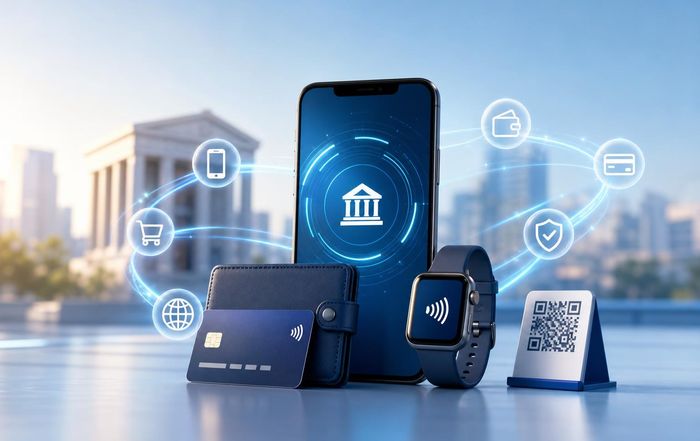
How Payment Innovation Is Changing Everyday Banking
The quiet revolution in money
Across major financial centers and emerging markets alike, everyday banking is undergoing one of the most profound transformations since the introduction of the payment card. What began with simple online banking portals has evolved into a dense ecosystem of instant payments, digital wallets, embedded finance, and programmable money, reshaping how individuals, businesses, and institutions interact with the financial system. For readers of FinancialDailys, this transformation is not only a technological story but also a structural shift in how value is stored, moved, and monetized across global markets.
In this environment, payment innovation has become a strategic battleground for banks, fintechs, technology platforms, and even central banks, as each seeks to define the next generation of everyday banking experiences. The winners are likely to be those that can combine regulatory trust, technological agility, and customer-centric design in a way that feels seamless, secure, and inclusive.
From plastic to phones: the rise of digital wallets and super-apps
Over the past decade, digital wallets have moved from the periphery to the center of consumer payments. Services such as Apple Pay, Google Pay, and Samsung Wallet have become default payment methods at point-of-sale terminals across the United States, Europe, and parts of Asia, while in China, Alipay and WeChat Pay have effectively redefined what everyday banking looks like for hundreds of millions of users. According to data from the Bank for International Settlements and the World Bank, mobile and digital wallet payments now account for a significant share of retail transactions in many advanced and emerging economies, with usage accelerating following the pandemic-driven shift toward contactless and online commerce. Readers can explore global trends in digital payments through resources such as the World Bank's Global Findex database and the BIS statistics on payments and financial market infrastructures.
This shift is not merely a matter of replacing plastic cards with smartphones. In markets like China and increasingly Southeast Asia, digital wallets are embedded within so-called "super-apps" that integrate payments, messaging, ride-hailing, food delivery, savings products, and microloans into a single interface. Grab in Southeast Asia and Gojek in Indonesia, for example, have leveraged payments as a gateway into broader financial services, offering wallet balances, installment plans, and partner lending products that resemble a modular form of everyday banking. Learn more about how super-apps are reshaping financial services in Asia through reports from institutions such as the Monetary Authority of Singapore and the Asian Development Bank.
For traditional banks, this trend has raised existential questions about who owns the primary customer relationship. Many institutions in the United States, the United Kingdom, the European Union, and Asia-Pacific have responded by integrating their cards and accounts directly into major wallet ecosystems, while simultaneously investing in their own mobile banking apps and loyalty programs. On FinancialDailys, readers tracking this convergence of finance and technology can follow developments in the tech and banking sections, where partnerships between banks, fintechs, and big tech platforms are increasingly central to competitive strategy.
Instant payments and the end of waiting for money
One of the most significant shifts in payment infrastructure has been the move from batch-based, delayed transfers to real-time or near-real-time payments. Systems such as the Single Euro Payments Area (SEPA) Instant Credit Transfer in Europe, the Faster Payments Service in the United Kingdom, PIX in Brazil, UPI (Unified Payments Interface) in India, and FedNow in the United States have dramatically reduced the time it takes for money to move between accounts, often to just a few seconds. Detailed descriptions of these schemes can be found through organizations such as the European Central Bank, the Bank of England, the Reserve Bank of India, and the Federal Reserve via the FedNow Service.
The impact on everyday banking is substantial. For consumers, instant payments mean salaries that can be accessed more quickly, peer-to-peer transfers that settle immediately, and bill payments that no longer require several days of float. For small businesses, the ability to receive funds instantly can significantly improve cash flow management, reduce reliance on short-term credit, and enable just-in-time inventory purchasing. For banks and payment providers, however, instant payments require new approaches to liquidity management, fraud detection, and risk modelling, as the traditional buffer of settlement delays is removed.
In markets such as Brazil and India, instant payment systems have also become powerful tools for financial inclusion. PIX, launched by the Central Bank of Brazil, has rapidly expanded access to low-cost, real-time transfers even for individuals without traditional credit cards, while UPI has allowed Indian consumers and small merchants to transact using simple QR codes and mobile interfaces. Reports by the International Monetary Fund and the Bank for International Settlements Innovation Hub have highlighted these systems as models for other regions contemplating their own real-time payment infrastructures.
For readers of FinancialDailys focused on macroeconomic and market implications, the spread of instant payments is closely tied to broader themes in the economy and markets, including the velocity of money, the pricing of payment services, and the competitive positioning of banks versus non-bank payment providers.
Embedded finance and the unbundling of the bank
Another powerful trend is the rise of embedded finance, where financial services such as payments, lending, insurance, and savings are integrated directly into non-financial platforms. Rather than visiting a bank website to apply for a card or line of credit, consumers now encounter financing options at the point of sale, within e-commerce checkouts, ride-hailing apps, or business software tools. This shift is enabled by banking-as-a-service (BaaS) and payments-as-a-service platforms, which provide regulated infrastructure and APIs that other companies can plug into. Industry analyses by firms such as McKinsey & Company, Boston Consulting Group, and Accenture have documented how embedded finance is unlocking new revenue streams and reshaping the economics of retail and small-business banking.
In the payments domain, this is most visible in the proliferation of "one-click" checkouts, merchant-branded wallets, and integrated invoicing tools that link directly to bank accounts or card networks. Companies like Stripe, Adyen, and Checkout.com have built global businesses by enabling merchants to accept payments in multiple currencies and channels through a single integration, while also offering value-added services such as fraud prevention, subscription billing, and cross-border settlement. More information on these developments is available through industry resources such as the European Payments Council and the Payments Innovation Alliance of Nacha.
For traditional banks, embedded finance represents both a challenge and an opportunity. On one hand, customer-facing interactions increasingly occur on third-party platforms, which can dilute brand visibility and reduce cross-selling opportunities. On the other hand, banks that provide the underlying licenses, compliance frameworks, and balance sheet capacity for these embedded solutions can tap into new fee-based revenue sources and distribution channels. FinancialDailys readers interested in this structural shift can follow analysis in the business and startups sections, where coverage often highlights how emerging fintech firms are partnering with or competing against incumbent institutions.
Buy now, pay later and the reshaping of consumer credit
The rapid growth of buy now, pay later (BNPL) services has been one of the most visible examples of payment innovation altering everyday banking behavior. Companies such as Klarna, Afterpay, and Affirm, alongside offerings from major card networks and banks, allow consumers to split purchases into interest-free installments or short-term loans that are often embedded directly into online and in-store checkout flows. Consumer protection agencies and central banks in regions including the United States, the United Kingdom, the European Union, and Australia have been closely monitoring this sector, as outlined in publications from bodies such as the UK Financial Conduct Authority, the European Banking Authority, and the Australian Securities and Investments Commission.
For everyday banking, BNPL changes how consumers think about credit cards, overdrafts, and traditional personal loans. Instead of applying for a standalone credit line, many shoppers opt for transaction-specific financing that feels more transparent and predictable, even if the underlying risk profile is similar. Some banks have responded by launching their own installment features on existing cards, while others have partnered with BNPL providers or acquired smaller players to integrate the model into their offerings.
Regulators and consumer advocates have expressed concerns about potential over-indebtedness, lack of standardized credit reporting, and the marketing of BNPL to younger or more vulnerable consumers. Studies by organizations such as the OECD and national consumer protection agencies highlight both the benefits and risks, noting that while BNPL can increase purchasing power and flexibility, it may also encourage impulse spending if not accompanied by robust affordability checks and clear disclosures. For FinancialDailys readers following consumer finance trends, the intersection of BNPL, credit scoring, and regulatory oversight is likely to remain a key theme in the consumer and finance sections.
Central bank digital currencies and the future of public money
While private-sector innovation has driven much of the change in payments, central banks are increasingly active participants through their exploration and, in some cases, implementation of central bank digital currencies (CBDCs). CBDCs are digital forms of central bank money that can be used by financial institutions (wholesale CBDCs) or the general public (retail CBDCs), potentially offering a new foundation for everyday payments. The Bank for International Settlements and the International Monetary Fund provide extensive overviews of global CBDC projects, noting that dozens of central banks are in various stages of research, pilot testing, or limited rollout.
Examples include the e-CNY pilot by the People's Bank of China, the Sand Dollar in the Bahamas, and the eNaira in Nigeria, alongside experiments in Europe, Asia, and the Americas. While designs vary, many CBDC projects aim to provide a digital complement to physical cash, enhance payment system resilience, support financial inclusion, and improve cross-border payment efficiency. At the same time, debates persist about privacy, the role of commercial banks, and the potential for disintermediation if consumers were to hold large amounts of digital currency directly with central banks rather than in bank deposits.
For everyday banking, the introduction of a widely used retail CBDC could alter how deposits, payments, and even monetary policy transmission work. Commercial banks might need to adapt their funding models and enhance the value proposition of deposit accounts through better services, higher interest rates, or integrated financial management tools. As of the time of writing, major jurisdictions such as the euro area, the United States, and the United Kingdom continue to study CBDCs carefully, with public consultations and technical experiments underway but no universal deployment. Readers can follow evolving policy discussions through central bank websites such as the European Central Bank's digital euro project and the Bank of England's work on a digital pound.
For FinancialDailys, coverage in the world and economy sections can help contextualize CBDC developments within broader themes of currency competition, financial stability, and the evolving role of public versus private money.
Open banking, data sharing, and personalized financial services
Payment innovation is not only about speed and convenience; it is also about data. The spread of open banking and open finance frameworks, particularly in the European Union, the United Kingdom, Australia, and parts of Asia, has enabled consumers and businesses to share their banking data securely with third-party providers, subject to consent and regulatory safeguards. Regulations such as the EU's PSD2 and the UK's open banking standards have allowed fintech firms to build budgeting apps, account aggregators, and alternative credit scoring models that draw on transaction histories from multiple institutions. Official information can be found through entities such as the European Commission and the UK Open Banking Implementation Entity.
For everyday banking, this means that customers are no longer locked into a single provider's digital interface. Instead, they can view and manage accounts from several banks within a single app, analyze spending patterns, set automated savings rules, and access tailored product recommendations. Banks, in turn, can leverage transaction data and artificial intelligence to offer more personalized services, such as dynamic credit limits, real-time financial coaching, and proactive alerts about potential overdrafts or unusual activity.
The evolution toward open finance, which extends data sharing beyond payments and current accounts to include investments, pensions, and insurance, is likely to deepen this personalization. However, it also raises questions about data privacy, cybersecurity, and the concentration of financial data in the hands of large technology firms or data aggregators. Regulators and industry bodies, including the Financial Stability Board and national data protection authorities, are working to balance innovation with robust consumer protections.
For readers of FinancialDailys, the implications of open banking cut across investing, stocks, and careers, as new business models emerge and demand grows for professionals with skills in data science, cybersecurity, and digital product design.
Security, fraud, and the arms race in payment protection
As payments become faster and more digital, the stakes for security and fraud prevention rise. Instant transfers leave less time to detect and reverse suspicious transactions, while the proliferation of digital channels creates more entry points for phishing, social engineering, and account takeover attacks. Organizations such as Europol, the US Federal Trade Commission, and national cyber security centers in the United Kingdom, Canada, Australia, and elsewhere have reported increasing sophistication in scams that exploit both human vulnerabilities and technological gaps. Detailed guidance is available from bodies like the European Union Agency for Cybersecurity (ENISA) and the US Cybersecurity and Infrastructure Security Agency.
In response, banks and payment providers are investing heavily in advanced authentication methods, including biometric verification, device fingerprinting, behavioral analytics, and risk-based transaction scoring. Machine learning models can analyze patterns across millions of transactions to flag anomalies in real time, while multi-factor authentication and strong customer authentication requirements (such as those under the EU's PSD2) add layers of protection. At the same time, there is a constant tension between security and user experience, as overly complex verification steps can deter customers or push them toward less secure workarounds.
For everyday banking customers, this evolving security landscape means that education and awareness are as important as technology. Many banks now provide in-app security tips, transaction alerts, and easy ways to freeze or unfreeze cards, while regulators and industry associations run public campaigns on topics such as phishing, identity theft, and safe online shopping. For FinancialDailys readers, keeping abreast of these trends is essential not only for personal financial safety but also for understanding the operational and reputational risks facing financial institutions, which can have material implications for valuations and regulatory capital requirements.
Sustainability, inclusion, and the social impact of payment innovation
Payment innovation is increasingly intertwined with broader societal goals, including financial inclusion, environmental sustainability, and equitable access to financial services. In emerging markets across Africa, Asia, and Latin America, mobile money platforms such as M-Pesa in Kenya and Tanzania have demonstrated how simple, low-cost digital payment systems can bring millions of previously unbanked individuals into the formal financial system. Organizations such as the Alliance for Financial Inclusion and the Bill & Melinda Gates Foundation have documented how such systems support small-scale entrepreneurship, remittances, and resilience against economic shocks.
In advanced economies, payment providers and banks are experimenting with tools that help consumers track the carbon footprint of their spending, round up transactions into donations for environmental or social causes, and support green financing initiatives. Some banks and fintechs partner with climate-focused organizations to allow customers to offset emissions associated with travel or consumption, while others integrate sustainability scores into merchant directories or investment platforms. Readers interested in the intersection of payments and sustainability can explore related analysis in the sustainability section of FinancialDailys and through resources such as the UN Environment Programme Finance Initiative and the Global Reporting Initiative.
However, the social impact of payment innovation is not uniformly positive. Concerns persist about digital exclusion for those without reliable internet access, smartphones, or digital literacy, particularly in rural areas and among older populations. Policymakers and central banks in Europe, North America, and Asia have emphasized the importance of preserving access to cash as a public good, even as digital payments grow. The European Commission and various national treasuries have published strategies aimed at ensuring that the transition toward digital payments remains inclusive and does not leave vulnerable groups behind.
What this means for banks, investors, and everyday users
The cumulative effect of these innovations is a redefinition of what everyday banking means. For banks, payments are no longer a low-margin utility but a strategic arena where customer loyalty, data insights, and platform partnerships are forged. Institutions that can orchestrate ecosystems-connecting merchants, consumers, fintechs, and regulators-stand to capture value not only from transaction fees but also from adjacent services such as lending, wealth management, and insurance.
For investors, the payment landscape offers both opportunities and complexities. Payment processors, card networks, fintech platforms, and infrastructure providers have become central components of many equity and private market portfolios, with valuations that reflect expectations of sustained digital growth. At the same time, regulatory shifts, competitive pressures, and technological disruption introduce significant uncertainty. In-depth coverage of these dynamics can be found in the stocks and investing sections of FinancialDailys, where analysis often examines how payment trends influence earnings, market share, and strategic positioning.
For everyday users-whether individuals managing household budgets or small businesses navigating cash flow-payment innovation offers unprecedented convenience, flexibility, and transparency. Real-time balances, instant transfers, integrated budgeting tools, and embedded credit options can make financial management more intuitive and responsive. Yet they also require greater financial literacy, as the boundaries between payments, credit, savings, and investments blur within unified digital experiences.
Looking ahead: convergence, competition, and collaboration
As the global financial system moves deeper into the digital era, the most interesting developments in payments are likely to arise at the intersections: between banks and fintechs, between public and private money, between domestic and cross-border systems, and between financial services and everyday digital life. Initiatives to improve cross-border payments, led by bodies such as the G20 and the Financial Stability Board, aim to make international transfers faster, cheaper, and more transparent, which could further reshape remittances, trade finance, and global commerce.
In parallel, advances in artificial intelligence, distributed ledger technology, and digital identity frameworks are opening new possibilities for programmable payments, automated compliance, and context-aware financial services. While some early expectations around blockchain-based payments have faced scalability and regulatory hurdles, ongoing experiments by banks, consortia, and technology firms continue to explore where these technologies can add real value. Readers can follow these evolving narratives through specialized resources such as the OECD's work on blockchain and digital assets and central bank innovation hubs.
For FinancialDailys, the task is to help readers make sense of this complex, rapidly changing landscape-connecting developments in finance, markets, banking, and tech with the real-world experiences of consumers, businesses, and investors across the United States, Europe, Asia, Africa, and the Americas. As payment innovation continues to reshape everyday banking, the central question is not whether money will become more digital, but how societies will ensure that this transformation remains secure, inclusive, and aligned with long-term economic and social goals.
In that sense, the future of everyday banking is being written not only in code and regulation, but also in the daily choices of individuals and institutions-choices about which platforms to trust, which partnerships to pursue, and which values to prioritize as money moves at the speed of software.
