
How Supply Chain Diversification Changes Business Costs
Introduction: From Single-Source Risk to Strategic Optionality
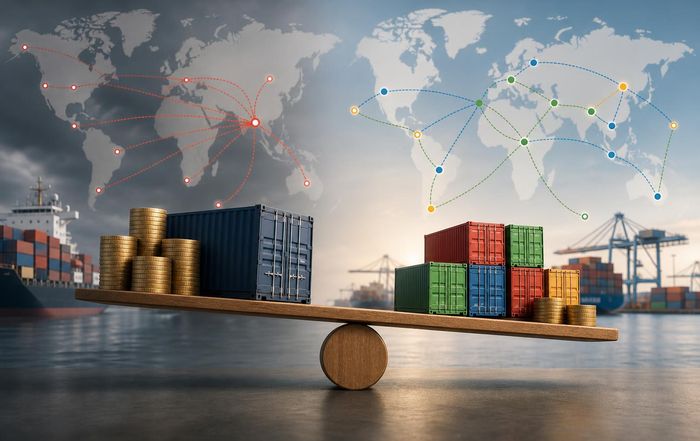
The past decade has transformed supply chain management from a largely operational discipline into a board-level strategic priority. Trade tensions, the pandemic-era shock, extreme weather events, cyberattacks, and geopolitical conflicts have exposed the vulnerabilities of concentrated sourcing and just-in-time logistics. In response, companies across sectors and geographies are re-engineering their supply networks, shifting from linear, cost-minimizing chains toward diversified, resilient ecosystems.
For readers of FinancialDailys, this shift is not an abstract logistics story; it is reshaping corporate cost structures, capital allocation, risk management, and ultimately valuation across global markets. Supply chain diversification is changing what it costs to make and move goods, where those goods are produced, how inventories are financed, and how investors price operational resilience.
This article examines how diversification alters business costs, why many firms are accepting higher near-term expenses in exchange for reduced risk, and how finance and investing professionals can interpret these changes through the lenses of profitability, balance sheet strength, and long-term competitiveness.
The Strategic Logic of Diversification
Supply chain diversification generally refers to the deliberate spread of sourcing, production, and logistics across multiple geographies, suppliers, and transport routes rather than relying heavily on a single country or vendor. Research by institutions such as the World Bank and OECD indicates that high levels of concentration, especially in critical inputs, correlate with elevated exposure to trade disruptions, tariffs, and natural disasters.
Instead of optimizing purely for unit cost, companies are increasingly optimizing for a blend of cost, resilience, and flexibility. Analysts at McKinsey & Company have described this as a move from "efficiency-only" to "efficient resilience," where firms accept a structurally higher cost base in some areas to reduce the probability and severity of catastrophic disruptions. Learn more about this evolving framework of operational resilience via McKinsey's supply chain insights.
For investors following FinancialDailys coverage of global markets, the key question is no longer whether diversification is expensive in isolation, but whether it is cheaper than the alternative: repeated, severe disruptions that erode revenue, damage brand equity, and require emergency capital injections.
Direct Cost Impacts: Sourcing, Production, and Logistics
Sourcing Costs and Supplier Economics
Diversification often begins with sourcing: moving from one or two key suppliers to a broader portfolio across different countries or regions. On the surface, this can raise procurement costs because companies may lose volume discounts or need to engage suppliers in higher-cost jurisdictions. Studies by Boston Consulting Group (BCG) suggest that shifting production from ultra-low-cost regions to "nearshore" or "friendshore" locations can increase direct labor and overhead costs, particularly in labor-intensive industries such as apparel and basic electronics. BCG's analysis of global manufacturing footprints, available through their operations and supply chain reports, illustrates that for some sectors, moving from China to Mexico, Eastern Europe, or Southeast Asia can raise per-unit costs in the short term even when logistics savings are factored in.
However, diversification also strengthens bargaining power and reduces dependence on any single supplier's pricing. When firms cultivate multiple qualified suppliers for key components, they gain the ability to shift volumes in response to price changes, quality issues, or political risk. Over time, this can moderate cost inflation and reduce the need to accept unfavorable contract terms. In addition, diversified sourcing can mitigate the impact of currency volatility by spreading exposure across multiple currencies, a factor that becomes particularly relevant for readers tracking foreign exchange and macroeconomic developments at FinancialDailys.
Production Footprint and Capital Expenditure
Diversification often entails reconfiguring the production footprint: building new plants, expanding in alternate locations, or entering joint ventures with local partners. This typically requires substantial capital expenditure, which appears as a near-term cost but may deliver long-term strategic benefits.
According to analyses by UNCTAD and the World Economic Forum, recent years have seen a notable rise in "China-plus-one" strategies, with multinational firms adding capacity in countries such as Vietnam, India, Mexico, and Poland. These investments involve not only factory construction but also workforce training, supplier development, and compliance with local regulatory standards, all of which increase upfront costs. The World Economic Forum's supply chain transformation resources at weforum.org provide a useful overview of how these investments are reshaping global trade patterns.
For investors and corporate finance teams, the key analytical task is to distinguish between one-time restructuring costs and the steady-state operating cost of the new footprint. Diversification may initially depress margins as depreciation and ramp-up inefficiencies weigh on earnings, but once new facilities reach scale, they can deliver lower logistics costs, faster lead times, and access to new markets. Readers can explore how such capital allocation decisions feed into broader corporate strategy in FinancialDailys business coverage.
Logistics and Transportation Costs
Supply chain diversification often changes the geography of shipping lanes, warehousing, and last-mile distribution. Instead of shipping from a single mega-plant to the world, companies may operate a more regionalized model with multiple hubs.
This can increase complexity and coordination costs, yet it may reduce overall freight spend and risk exposure. For example, container shipping rates, tracked by data providers such as Drewry and reported by outlets like Lloyd's List, have shown significant volatility in recent years due to port congestion, capacity constraints, and geopolitical disruptions. Companies that rely heavily on a single long-haul route are more exposed to such spikes than those able to flex between sea, air, rail, and road across different corridors.
Regionalized production can shorten average transit distances and reduce reliance on vulnerable chokepoints such as the Suez Canal or specific straits, thereby improving reliability and potentially lowering insurance premiums. Insights from International Transport Forum reports at itf-oecd.org highlight how diversified transport networks can mitigate systemic risk in global logistics.
Indirect and Hidden Costs: Complexity, Governance, and Compliance
Operational Complexity and Management Overhead
Diversification introduces complexity that is not always visible in headline cost figures. Managing a larger number of suppliers across multiple jurisdictions requires more sophisticated procurement, legal, and compliance functions. Companies must invest in contract management, quality assurance, and cross-border coordination, often supported by upgraded enterprise resource planning (ERP) and supply chain management software.
Analysts at Gartner have emphasized that diversified, multi-tier supply chains demand greater transparency and data integration to avoid fragmentation and inefficiency. Their research, accessible via Gartner's supply chain insights, notes that organizations frequently underestimate the internal staffing and technology costs required to manage diversified networks effectively.
For financial professionals, these overhead costs appear in selling, general, and administrative (SG&A) expenses, and can be misinterpreted as pure inefficiency if the strategic rationale is not fully understood. Readers of FinancialDailys can see how such shifts in cost structure affect earnings quality and valuation in the platform's stocks analysis section.
Regulatory Compliance and Trade Rules
Diversified supply chains must comply with multiple regulatory regimes, including customs rules, labor standards, environmental regulations, and data protection laws. The rise of trade agreements with complex rules of origin, such as the USMCA in North America or updated arrangements under the European Union's trade framework, means that companies must carefully document where value is added along the chain to qualify for preferential tariffs.
This documentation and compliance work can be costly, requiring specialized trade compliance teams and systems. However, when executed well, diversification can enable firms to strategically route production through jurisdictions that offer favorable trade agreements, thereby reducing tariff exposure. Institutions such as the World Trade Organization (WTO) provide public resources on evolving trade rules and dispute cases at wto.org, which can help businesses and investors assess the trade-off between compliance costs and tariff savings.
FinancialDailys readers following international trade developments will recognize that as trade policy becomes more fragmented and politically sensitive, the value of flexible, compliant supply networks increases, even if the administrative cost base rises.
Cybersecurity and Data Integration
Diversified supply chains rely heavily on digital connectivity, from shared planning platforms to real-time tracking of shipments. This interconnectedness introduces cybersecurity risks that must be managed proactively. As firms integrate more third-party systems and cloud services, they must invest in robust cybersecurity programs, incident response capabilities, and data governance frameworks.
Organizations such as ENISA in Europe and the U.S. Cybersecurity and Infrastructure Security Agency (CISA) have warned that supply chain cyberattacks, where malicious actors target software or service providers to infiltrate multiple downstream customers, are becoming more frequent. Guidance from these bodies, accessible via cisa.gov and enisa.europa.eu, underscores that effective diversification requires not only physical redundancy but also secure digital infrastructure.
These cybersecurity investments represent ongoing operating costs and, in some cases, capital expenditures for secure infrastructure. Yet they are increasingly viewed as integral to maintaining customer trust and regulatory compliance, particularly in sectors such as finance, healthcare, and critical manufacturing. This intersection between technology, risk, and cost is central to FinancialDailys coverage of technology and digital transformation.
The Cost of Risk: From Rare Shocks to Financial Metrics
Quantifying Disruption Risk
The most important, yet often least visible, cost factor in supply chain diversification is the value of reduced risk. Traditional cost accounting systems struggle to capture the benefit of avoiding a disruption that did not occur. However, events over the past several years have provided ample real-world data on the financial impact of supply chain shocks, from production stoppages and lost sales to expedited shipping and reputational damage.
Research by The Conference Board and Deloitte has attempted to quantify the profit at risk from supply chain disruptions, with estimates suggesting that severe disruptions can wipe out several percentage points of annual revenue for affected firms, particularly in industries with tight capacity and limited substitutability of components. These analyses, available via conference-board.org and deloitte.com, show that investors increasingly discount companies perceived as having fragile supply chains.
From a financial perspective, diversification can be understood as an investment that reduces the volatility of cash flows. Lower volatility can reduce the cost of capital, as lenders and equity investors demand a smaller risk premium. For FinancialDailys users engaged in corporate finance and capital structure analysis, this link between operational resilience and weighted average cost of capital (WACC) is becoming more prominent in valuation models and credit assessments.
Insurance, Hedging, and Self-Insurance through Redundancy
Companies have traditionally relied on insurance and financial hedging to manage certain supply chain risks, such as property damage, business interruption, or commodity price volatility. Diversification changes this calculus by effectively creating a form of "self-insurance" through redundancy.
Maintaining multiple suppliers, geographically dispersed facilities, and alternative transport routes means that when one node is disrupted, others can continue operating. This can reduce the need for expensive contingency measures such as last-minute air freight or spot market purchases at inflated prices. While insurance premiums may not fall immediately, insurers and reinsurers are increasingly incorporating supply chain resilience metrics into their risk models, as indicated by commentary from firms such as Swiss Re and Munich Re, whose analyses can be found at swissre.com and munichre.com.
For investors and corporate treasurers, the key is to evaluate whether the cost of building and maintaining redundant capacity is lower than the expected cost of disruptions plus traditional insurance coverage. This evaluation requires scenario analysis, stress testing, and an understanding of geopolitical and climate risks, areas that FinancialDailys explores in its global economy coverage.
Working Capital, Inventory, and Financing Costs
From Just-in-Time to Just-in-Case
One of the most visible shifts in supply chain strategy has been the move from just-in-time (JIT) inventory to more robust "just-in-case" models. Diversification often goes hand in hand with higher safety stock levels, particularly when firms are onboarding new suppliers or operating across less predictable logistics routes.
Holding more inventory increases working capital requirements and associated financing costs. Central bank interest rate decisions, tracked closely by sources such as the Bank for International Settlements (BIS) and major central banks' own communications, directly affect the cost of carrying this inventory. As interest rates rose in several advanced economies in recent years, the cost of holding excess stock became more material to corporate earnings, a trend thoroughly analyzed in FinancialDailys banking and credit coverage.
Nevertheless, many companies have concluded that the cost of stockouts, lost customer loyalty, and emergency replenishment outweighs the added financing expense. The challenge for management teams is to calibrate inventory buffers carefully, using advanced forecasting, demand sensing, and scenario planning tools.
Supply Chain Finance and Supplier Relationships
Diversified supply chains often involve a larger number of smaller suppliers, some of which may have weaker access to capital markets or bank financing. To ensure stability, large buyers may expand supply chain finance programs, allowing suppliers to receive early payment at favorable rates based on the buyer's stronger credit profile.
This can increase the buyer's overall exposure but may also secure more favorable pricing or priority allocation during periods of scarcity. Institutions such as the International Finance Corporation (IFC) and World Bank have promoted supply chain finance as a tool to strengthen emerging market suppliers, with detailed reports available at ifc.org and worldbank.org.
For FinancialDailys readers interested in investing strategies, these dynamics affect not only the balance sheets of large corporates but also the creditworthiness and growth prospects of smaller suppliers in Asia, Latin America, and Africa, where much of the new diversified capacity is being built.
Regionalization, Nearshoring, and Property Costs
Real Estate and Industrial Property Markets
Supply chain diversification is reshaping industrial property markets in North America, Europe, and parts of Asia. As companies seek to regionalize production and warehousing, demand for logistics hubs, manufacturing sites, and data-enabled distribution centers has risen in strategic locations.
Reports from JLL, CBRE, and other global real estate consultancies, available via jll.com and cbre.com, indicate that prime logistics and industrial rents have increased in many nearshoring destinations, including Mexico, Central and Eastern Europe, and key hubs in Southeast Asia. This raises occupancy costs for companies but also opens investment opportunities in industrial real estate.
Readers following FinancialDailys property and real estate coverage will recognize that this trend is part of a broader revaluation of logistics assets as strategic infrastructure rather than commoditized space. For corporates, the decision to lease versus own facilities, and to invest in automation within those facilities, becomes a critical determinant of long-term cost competitiveness.
Labor Markets and Skills
Diversification into new regions also affects labor costs and skill requirements. While some nearshoring locations offer lower wages than advanced economies, they may have higher labor costs than traditional offshore hubs. At the same time, companies may need to invest in training and local ecosystem development to ensure consistent quality and productivity.
Organizations such as the International Labour Organization (ILO) provide data on wage trends, labor standards, and skills gaps across regions at ilo.org. These factors influence not only direct labor costs but also the pace at which new facilities can reach efficient scale.
In parallel, advanced manufacturing and logistics increasingly rely on automation, robotics, and digital systems, which demand higher-skilled workers and continuous upskilling. This has implications for workforce development and career pathways, themes explored in FinancialDailys careers and labor market reporting.
Sustainability, ESG, and Long-Term Cost Curves
Environmental and Social Considerations
Diversification interacts with environmental, social, and governance (ESG) priorities in complex ways. On one hand, regionalization and nearshoring can reduce emissions from long-distance shipping, potentially lowering exposure to future carbon pricing or regulatory constraints. On the other hand, building new facilities and operating multiple smaller sites can increase energy use and resource consumption if not managed carefully.
Regulatory initiatives such as the EU's Corporate Sustainability Reporting Directive (CSRD) and proposed due diligence rules on supply chain environmental and human rights impacts are pushing companies to gain deeper visibility into their extended supply networks. Resources from the European Commission at ec.europa.eu and organizations like CDP at cdp.net outline how supply chain emissions and social risks are becoming central to corporate disclosure and investor scrutiny.
For FinancialDailys readers interested in sustainability and responsible business, the key insight is that diversified supply chains, if designed with ESG criteria in mind, can reduce long-term regulatory and reputational risk, even if they entail higher short-term compliance and reporting costs.
Green Logistics and Energy Transition
As the global economy advances through the energy transition, logistics and manufacturing systems face pressure to decarbonize. Diversified networks can facilitate this by enabling firms to locate production in regions with cleaner power grids, invest in renewable energy, and adopt low-emission transport modes such as rail or electric trucking for regional distribution.
Agencies such as the International Energy Agency (IEA), through reports at iea.org, and initiatives like the Global Logistics Emissions Council (GLEC) provide frameworks for measuring and reducing supply chain emissions. While decarbonization investments raise capital and operating costs in the short run, they may protect firms from future carbon taxes, fuel price shocks, and customer attrition as buyers increasingly favor low-carbon products.
In this context, supply chain diversification becomes not only a risk management strategy but also a vehicle for aligning operations with long-term climate and sustainability goals, themes that are central to FinancialDailys coverage of how ESG considerations intersect with global finance and the real economy.
Implications for Investors, Lenders, and Policymakers
For investors and lenders, the cost impacts of supply chain diversification require a nuanced, forward-looking approach. Traditional margin comparisons that ignore risk exposure and resilience investments can be misleading. Instead, analysts are increasingly:
Evaluating the quality and flexibility of supply chains as a core component of business risk, using disclosures, third-party assessments, and engagement with management teams.
Incorporating scenario analysis that considers geopolitical tensions, climate-related disruptions, and cyber risks, drawing on resources from bodies such as the IMF and OECD, whose analyses are available at imf.org and oecd.org.
Reassessing sector and regional allocations in light of nearshoring and friendshoring trends, which can alter the competitive positioning of countries and companies.
For policymakers, the rise of diversified supply chains presents both opportunities and challenges. Countries seeking to attract investment must offer not only competitive costs but also regulatory stability, infrastructure quality, and workforce skills. At the same time, governments are using industrial policy, trade agreements, and incentives to shape the geography of critical supply chains, particularly in sectors such as semiconductors, clean energy, and pharmaceuticals.
Readers of FinancialDailys can follow these policy shifts and their market implications through the platform's economy and world sections, which track how national strategies interact with corporate diversification decisions and capital flows.
Conclusion: Cost, Resilience, and Competitive Advantage
Supply chain diversification is reshaping business costs in ways that are complex, multidimensional, and deeply intertwined with risk management, technology, sustainability, and geopolitics. Companies that diversify their sourcing, production, and logistics often face higher direct costs in the short term, including increased capital expenditure, operational complexity, and working capital requirements. Yet these costs must be weighed against the significant, and increasingly quantifiable, benefits of reduced disruption risk, improved bargaining power, enhanced ESG performance, and closer proximity to key markets.
For the global audience of FinancialDailys, the central takeaway is that supply chain diversification should be assessed not as a binary "costly or cheap" choice but as a strategic investment in resilience and long-term competitiveness. Firms that navigate this transition thoughtfully, leveraging data, technology, and strong governance, are likely to build more robust earnings streams and stronger balance sheets, attributes that markets tend to reward over time.
As the world economy continues to evolve, the interplay between supply chain design and business costs will remain a critical theme for corporate leaders, investors, and policymakers alike, and FinancialDailys will continue to provide in-depth coverage and analysis to help readers understand and act on these transformative shifts.
