
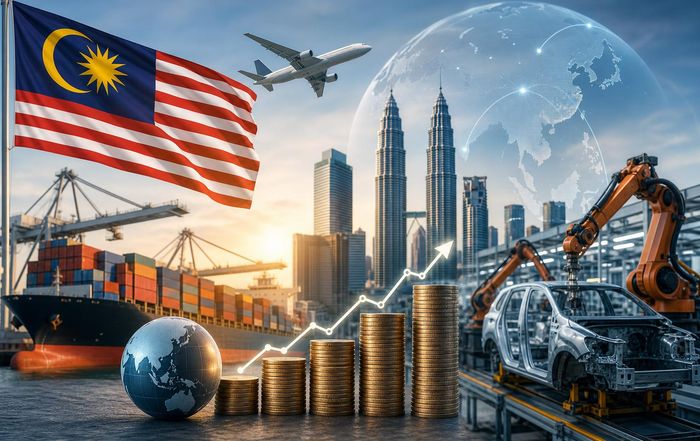
Malaysia's Trade Finance and Manufacturing Growth: A Strategic Pivot in a Fragmenting Global Economy
Malaysia's Position in the New Trade Geography
Malaysia has emerged as one of the most closely watched mid-sized economies as global trade patterns realign, supply chains diversify away from single-country concentration, and investors search for resilient manufacturing hubs. In this environment, the country's trade finance ecosystem and manufacturing sector are increasingly viewed as strategic assets, not only for domestic development but also for multinational corporations seeking stability, connectivity, and cost-effective production in Southeast Asia.
For readers of FinancialDailys, Malaysia's trajectory is particularly relevant because it sits at the intersection of several dominant themes shaping global markets and capital allocation: supply chain reconfiguration, digitalization of trade, green industrial policy, and the competition to attract high-value manufacturing. As trade flows are reshaped by geopolitical tension, regulatory change, and technology, Malaysia's ability to mobilize trade finance efficiently and to upgrade its manufacturing base is becoming a core determinant of its long-term growth prospects.
Trade Finance as a Catalyst for Real Economy Expansion
Trade finance, encompassing instruments such as letters of credit, supply chain finance, export credit insurance, and guarantees, is the lifeblood of cross-border commerce. According to the World Trade Organization and International Chamber of Commerce, a significant share of global trade is supported by trade finance instruments, and gaps in access can constrain growth for small and mid-sized exporters. Malaysia's financial system has been working to close such gaps while aligning with international standards and technological shifts.
The country's banking sector, led by institutions such as Maybank, CIMB, and RHB Bank, has progressively expanded trade finance offerings, integrating risk mitigation tools, foreign exchange solutions, and digital onboarding for exporters and importers. The Bank Negara Malaysia (BNM), the central bank, has encouraged the development of trade-related credit through prudential frameworks that support sound risk management while maintaining liquidity. Interested readers can follow broader developments in regional and global banking via FinancialDailys' dedicated banking coverage.
Malaysia's trade finance ecosystem is also influenced by regional initiatives. The Asian Development Bank has highlighted persistent trade finance gaps in emerging Asia, especially for smaller firms, and has supported risk-sharing mechanisms and capacity building in the region. At the same time, the Association of Banks in Malaysia and trade bodies such as the Malaysian International Chamber of Commerce and Industry promote best practices in documentation, compliance, and digital trade standards, which are increasingly crucial in an era of heightened anti-money laundering and sanctions screening.
Manufacturing as a Growth Engine: From Low-Cost to High-Value
Malaysia's manufacturing sector has long been a pillar of its economy, contributing a substantial share of GDP and employment. Historically, the country leveraged cost advantages and a strategic location along major shipping routes to build strengths in electronics assembly, electrical products, basic chemicals, and resource-based manufacturing. Over time, policy frameworks such as the Industrial Master Plans and incentives from the Malaysian Investment Development Authority (MIDA) have sought to move the sector up the value chain, emphasizing technology, skills, and innovation.
The electronics and electrical (E&E) segment, in particular, has become a critical component of Malaysia's export profile. Global technology companies and contract manufacturers have established significant operations in Penang and other industrial corridors, making the country a key node in semiconductor packaging, testing, and related activities. Analysts from organizations such as McKinsey & Company and Boston Consulting Group have noted that the reconfiguration of global electronics supply chains, driven by both demand growth and geopolitical diversification, has tended to benefit multi-hub ecosystems in Southeast Asia, with Malaysia playing a central role.
This shift has implications for investors tracking global markets and sector-specific equities. Listed Malaysian manufacturers and regional suppliers integrated into global value chains often serve as proxies for broader themes such as semiconductor cycle dynamics, industrial automation, and reshoring or "friendshoring" trends. Understanding how trade finance supports these companies' working capital, capital expenditure, and export strategies can provide deeper insight into risk and opportunity across related stocks.
Policy Frameworks and National Industrial Strategy
Malaysia's manufacturing growth is underpinned by a series of policy documents and strategies that aim to align industrial development with technological progress and sustainability. The New Industrial Master Plan 2030 (NIMP 2030), for example, sets out ambitions to transform Malaysia into a high-tech, high-income industrial economy by focusing on complexity, resilience, and green transition. It emphasizes upgrading existing clusters, fostering new growth areas such as advanced electronics, aerospace, and medical devices, and driving greater participation of local firms in global supply chains.
The Ministry of International Trade and Industry (now MITI, with expanded mandates in investment and industry) has been actively promoting investment in high-value manufacturing and services, while agencies like MIDA provide targeted incentives, facilitation, and aftercare for multinational and domestic investors. Readers seeking to understand how industrial policy interacts with broader macroeconomic conditions can consult FinancialDailys' economy section, which frequently explores fiscal, monetary, and structural reform developments.
Trade policy also plays a critical role. Malaysia is a member of the Regional Comprehensive Economic Partnership (RCEP) and has ratified the Comprehensive and Progressive Agreement for Trans-Pacific Partnership (CPTPP), thereby gaining preferential access to key markets across Asia-Pacific and beyond. Information from the World Bank and OECD indicates that such agreements can help reduce tariffs, harmonize standards, and facilitate investment, although the distribution of benefits depends heavily on domestic capacity and the ability of firms to meet rules-of-origin and compliance requirements.
Digitalization and the Transformation of Trade Finance
One of the most significant developments reshaping Malaysia's trade finance landscape is digitalization. The traditional paper-heavy, manual processes that have long characterized trade transactions are increasingly being replaced by electronic documentation, digital platforms, and data-driven risk assessment tools. This transformation is being driven by both global initiatives and domestic innovation.
Internationally, frameworks such as the UNCITRAL Model Law on Electronic Transferable Records (MLETR) and efforts by organizations like the International Chamber of Commerce and SWIFT aim to standardize digital trade documentation and messaging, making it easier for banks, corporates, and logistics providers to interact seamlessly. Malaysia has been exploring legal and regulatory adjustments to enable wider acceptance of electronic bills of lading and other digital instruments, in line with global best practice.
Domestically, banks and fintech firms are rolling out platforms that integrate trade finance, logistics tracking, and compliance checks. The Malaysia Digital Economy Corporation (MDEC) has promoted digital trade and e-commerce initiatives, while the Securities Commission Malaysia has encouraged the development of digital investment platforms and alternative financing tools that can complement traditional bank-based trade finance. Those interested in the intersection of technology and financial services can explore FinancialDailys' tech coverage, which regularly highlights how digital infrastructure is reshaping capital flows and business models.
Supply chain finance solutions, which enable suppliers to receive early payment based on the creditworthiness of large buyers, are gaining traction among Malaysian corporates and SMEs. International banks and platforms are increasingly integrating Malaysian suppliers into global programs, which can help improve liquidity and reduce financing costs. However, regulators and industry bodies are also mindful of the need for transparency and responsible practices, given international debates over the accounting treatment and risk implications of certain supply chain finance structures.
SMEs, Inclusivity, and the Trade Finance Gap
While Malaysia's large corporates and multinational subsidiaries generally have good access to trade finance, smaller firms often face greater challenges. Surveys by entities such as the Asian Development Bank and International Finance Corporation suggest that SMEs across emerging markets encounter constraints related to collateral, documentation, compliance requirements, and limited credit histories, which can result in unmet demand for trade-related working capital.
Malaysia has taken steps to address these issues through credit guarantee schemes, development finance institutions, and targeted SME programs. The Credit Guarantee Corporation Malaysia (CGC), for example, provides guarantees that help viable but collateral-constrained SMEs secure financing from banks. Government-linked banks and agencies have launched export promotion and financing initiatives, sometimes in collaboration with export credit agencies and multilateral institutions. For readers of FinancialDailys focused on startups and entrepreneurial ventures, these mechanisms are increasingly relevant in evaluating the scalability and internationalization potential of young companies.
Digital platforms that aggregate trade, logistics, and financial data also hold promise for expanding access. By using transaction histories, shipping records, and verified invoices, fintech firms can help build alternative credit profiles for SMEs, enabling more accurate risk assessment and potentially lowering barriers to financing. Nonetheless, the adoption of such solutions depends on digital literacy, regulatory clarity, and cybersecurity safeguards, areas where Malaysia continues to invest and evolve.
Integration into Global Value Chains and "China+1" Dynamics
As multinational corporations adjust their supply strategies in response to geopolitical tensions, tariffs, and pandemic-era disruptions, many have pursued a "China+1" or "China+Many" approach, diversifying production and sourcing across multiple countries. Malaysia has emerged as one of the beneficiaries of this trend, particularly in electronics, industrial components, and certain consumer goods.
Reports from sources such as UNCTAD, the World Bank, and private-sector research groups indicate that foreign direct investment into Southeast Asia has remained resilient, with Malaysia attracting projects in semiconductors, data centers, automotive components, and medical equipment. The country's relatively well-developed infrastructure, English-speaking workforce, and established manufacturing clusters make it an attractive option for companies seeking to balance cost, capability, and risk.
Participation in global value chains, however, requires more than simply hosting assembly operations. It demands continuous upgrading of skills, adherence to international quality and sustainability standards, and the ability to integrate with global logistics and digital systems. Trade finance plays an enabling role by providing the liquidity and risk mitigation needed for firms to manage cross-border procurement, inventory, and sales. Investors examining cross-border trade trends can gain additional insight by tracking how Malaysian firms are positioning themselves within these evolving networks.
Sustainability, ESG, and Green Trade Finance
Sustainability considerations are increasingly central to both manufacturing strategy and trade finance. Global buyers, investors, and regulators are demanding greater transparency on environmental, social, and governance (ESG) performance, while climate-related risks and opportunities are reshaping industrial policy and capital allocation. Malaysia has begun to align its manufacturing and trade frameworks with these global shifts.
The Securities Commission Malaysia and Bursa Malaysia have introduced guidelines and frameworks for sustainability reporting, green bonds, and ESG disclosures, encouraging listed companies to improve transparency and adopt more sustainable practices. The Bank Negara Malaysia has also issued guidance on climate risk management and is engaging with financial institutions to integrate climate considerations into lending and investment decisions. Readers can explore broader developments in sustainable finance and corporate responsibility through FinancialDailys' sustainability section.
Green trade finance is an emerging area where banks provide preferential terms or specialized products for transactions that meet environmental criteria, such as renewable energy equipment, energy-efficient machinery, or low-carbon logistics solutions. Internationally, organizations like the International Finance Corporation and European Bank for Reconstruction and Development have pioneered such instruments, and Malaysian banks are gradually exploring similar offerings, often aligned with global standards like the Green Loan Principles and Sustainability-Linked Loan Principles developed by the Loan Market Association and partners.
For manufacturing firms, the shift toward sustainability is both a challenge and an opportunity. Upgrading to more energy-efficient processes, investing in cleaner technologies, and ensuring compliance with global environmental standards can require significant capital, but trade finance and green credit lines can help bridge the gap. Moreover, as consumers and regulators in key export markets such as the European Union and North America tighten requirements around carbon footprints and supply chain due diligence, Malaysian exporters that move early may secure competitive advantages.
Real Estate, Logistics, and Industrial Infrastructure
Manufacturing growth and trade expansion inevitably intersect with property markets, logistics infrastructure, and industrial real estate. Malaysia has invested heavily in ports, industrial parks, and transport corridors, including facilities such as Port Klang, Port of Tanjung Pelepas, and free trade zones that facilitate efficient import and export operations. The development of specialized industrial parks for electronics, automotive, and other sectors reflects a strategy to create integrated ecosystems that combine manufacturing, logistics, and services.
For investors tracking property trends, industrial and logistics real estate in Malaysia offers exposure to structural themes such as e-commerce growth, supply chain diversification, and nearshoring of certain production stages. International real estate service providers and local developers have noted rising interest in warehouses, distribution centers, and data centers, driven by both domestic consumption and export-oriented activity.
Trade finance interacts with this infrastructure through mechanisms such as warehouse financing, inventory-backed lending, and project finance for logistics facilities. As digital tools enable more granular tracking of goods in transit and in storage, lenders can better assess and monitor collateral, potentially expanding access to working capital for firms that operate within well-structured logistics networks.
Human Capital, Skills, and the Future of Work
No discussion of Malaysia's manufacturing and trade finance growth would be complete without considering human capital. The shift from low-cost assembly to high-value manufacturing requires a workforce equipped with technical, digital, and managerial skills. Institutions such as Universiti Malaya, Universiti Teknologi Malaysia, and various technical and vocational education and training (TVET) centers play an important role in supplying engineers, technicians, and specialists capable of operating advanced machinery, managing quality systems, and integrating digital tools into production processes.
Government programs and private-sector initiatives are increasingly focused on reskilling and upskilling workers to meet the demands of Industry 4.0, including automation, robotics, data analytics, and artificial intelligence. For professionals and students considering career paths in finance, manufacturing, or trade, FinancialDailys' careers coverage can provide insights into evolving skill requirements, compensation trends, and sectoral opportunities.
Trade finance itself is undergoing professional transformation, as banks and corporates seek talent that combines traditional credit and documentation expertise with knowledge of digital platforms, compliance technology, and ESG standards. This convergence of skills underscores the broader trend toward integrated, technology-enabled financial services that support real economy activity.
Implications for Investors and Policy Makers
For global and regional investors, Malaysia's evolving trade finance and manufacturing landscape offers multiple angles of engagement. Equity investors can analyze listed manufacturers, banks, and logistics providers that are positioned to benefit from supply chain diversification, digital trade, and green industrial transformation. Fixed-income investors may find opportunities in corporate bonds, sukuk, and green or sustainability-linked instruments issued by Malaysian entities. Those interested in portfolio construction and asset allocation can explore FinancialDailys' investing insights and broader finance coverage to contextualize these opportunities within global market conditions.
Policy makers, meanwhile, face the task of ensuring that regulatory frameworks keep pace with technological change, that SMEs are not left behind in the digital and green transitions, and that macroeconomic stability is maintained even as the economy becomes more integrated into volatile global value chains. Coordination between central banking, fiscal policy, trade policy, and industrial strategy will be crucial to sustain momentum and manage risks.
International organizations such as the International Monetary Fund, World Bank, and Asian Development Bank regularly assess Malaysia's macroeconomic performance, structural reforms, and financial sector resilience. Their analyses, combined with local data from Department of Statistics Malaysia and Bank Negara Malaysia, provide a foundation for evidence-based decision-making, which is essential in an environment characterized by rapid technological change and geopolitical uncertainty.
A Forward-Looking Perspective
As the world moves deeper into an era of fragmented globalization, digital interdependence, and climate-conscious investing, Malaysia's experience illustrates how a mid-sized, open economy can adapt and seek advantage. The country's progress in strengthening its trade finance architecture, upgrading its manufacturing base, and aligning with global sustainability and digitalization trends offers a case study in pragmatic, opportunity-oriented policy and business strategy.
For FinancialDailys and its readers, the Malaysian story is not just a regional narrative but a lens on broader forces reshaping global finance, trade, and industry. It highlights the importance of resilient financial infrastructure, the value of diversification in supply chains and markets, and the potential for emerging and middle-income economies to climb the value chain through targeted investment in skills, technology, and sustainability.
As global investors, corporate leaders, and policy makers continue to navigate uncertainty, Malaysia's evolving role in trade and manufacturing will remain a key area to watch. By following developments across business, markets, world affairs, and sector-specific innovation, the FinancialDailys community can stay informed about how this strategically located nation is shaping, and being shaped by, the future of global commerce.
