
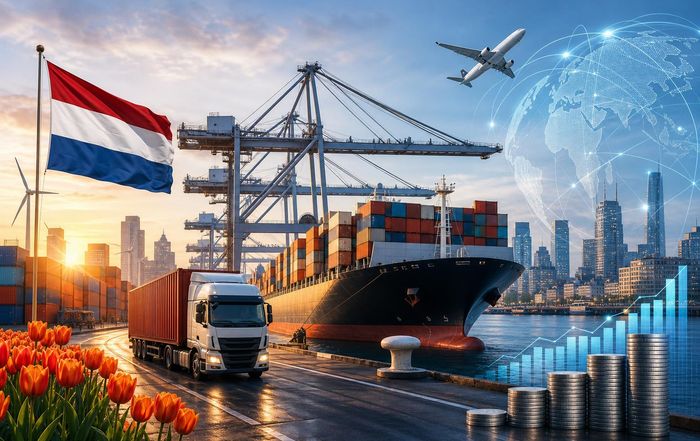
Netherlands Logistics Growth and Trade Finance: Building a Global Gateway for the Next Decade
The Dutch Gateway: Why Logistics Matters More Than Ever
The Netherlands has long been recognized as one of the world's most efficient and strategically positioned logistics hubs, serving as a primary gateway to Europe for global trade. With deep-water ports, advanced inland waterways, high-capacity rail and road networks, and a sophisticated financial and regulatory ecosystem, the country has leveraged its geography at the mouth of the Rhine-Meuse-Scheldt delta to become a central node in global supply chains.
For readers of FinancialDailys, the Dutch logistics story is not only about ships, warehouses, and containers, but increasingly about integrated trade finance, digital platforms, and sustainable investment flows that connect exporters, importers, banks, and institutional investors. As global trade patterns evolve in response to geopolitical shifts, nearshoring, and the reconfiguration of supply chains, the Netherlands is positioning itself as a resilient, digitally enabled, and green logistics-finance ecosystem that can support businesses worldwide.
Rotterdam and Schiphol: Twin Engines of European Trade
The Port of Rotterdam, operated by the Port of Rotterdam Authority, is the largest seaport in Europe and one of the most advanced globally. According to publicly available port statistics, Rotterdam consistently handles hundreds of millions of tonnes of cargo annually, with container, liquid bulk, and dry bulk flows connecting Europe with Asia, the Americas, the Middle East, and Africa. The port's Maasvlakte terminals, developed on reclaimed land in the North Sea, host some of the world's most automated container facilities, where remote-controlled cranes and automated guided vehicles operate around the clock. Learn more about the port's infrastructure and digital initiatives on the Port of Rotterdam website.
Complementing Rotterdam at sea, Amsterdam Airport Schiphol has evolved into one of Europe's leading cargo and passenger hubs. Schiphol's cargo operations, supported by dedicated logistics parks and specialized cold-chain facilities, are crucial for time-sensitive sectors such as pharmaceuticals, electronics, and fresh produce. The airport collaborates closely with customs authorities and logistics companies to streamline processes through digital pre-clearance and data sharing, as described by the Royal Schiphol Group on the Schiphol cargo portal.
For international investors and corporates following global trade and markets via FinancialDailys, the combined strength of Rotterdam and Schiphol underpins the Netherlands' status as a multimodal gateway, capable of supporting complex just-in-time supply chains and omnichannel distribution models across Europe.
An Integrated Logistics Ecosystem: Infrastructure, Innovation, and Regulation
The Dutch logistics advantage is not built on ports and airports alone. It is the result of a tightly integrated infrastructure and regulatory framework that emphasizes connectivity, predictability, and innovation.
The country's dense network of inland waterways, including the Rhine and other major rivers, allows barges to move large volumes of goods efficiently and with relatively low emissions deep into Germany, France, Switzerland, and beyond. This inland shipping capacity, supported by organizations such as Inland Navigation Europe, complements rail corridors like the Betuweroute freight line, which links Rotterdam to the German hinterland. More information on European freight corridors is available from the European Commission's transport pages.
On the regulatory side, Dutch customs authorities work within the European Union framework while also investing in digital tools to reduce administrative burdens and improve transparency. Initiatives such as the EU's Customs Data Model, the Union Customs Code, and electronic documentation have been actively implemented in Dutch ports and airports. Businesses considering cross-border operations can explore the EU customs environment through the European Commission's taxation and customs union site.
This combination of physical infrastructure, digital integration, and regulatory predictability reinforces the Netherlands as a preferred distribution and consolidation hub for multinational companies in sectors ranging from automotive and chemicals to e-commerce and life sciences. Readers interested in broader business implications can explore global business trends on financialdailys.
Trade Finance at the Heart of the Dutch Gateway
Behind every container movement or air freight shipment lies a web of financial flows, risk management tools, and compliance checks. The Netherlands has developed a sophisticated trade finance ecosystem that connects logistics operations with banking, insurance, and capital markets.
Major Dutch financial institutions such as ING Group, ABN AMRO, and Rabobank have long-standing expertise in trade and commodity finance, supply chain finance, and working capital solutions. These banks provide instruments such as letters of credit, documentary collections, guarantees, and structured trade finance facilities that enable exporters and importers to manage payment risk and optimize cash flow. For an overview of trade finance concepts, readers can consult educational resources from the International Chamber of Commerce.
Beyond the large domestic banks, international players including HSBC, Deutsche Bank, and BNP Paribas maintain significant trade finance operations in the Netherlands, reflecting the country's role as a hub for European and global trade. This concentration of expertise supports corporates operating through Dutch logistics corridors, whether they are shipping consumer goods from Asia into European distribution centers or exporting high-tech equipment and agricultural products to North America and Asia.
For professionals monitoring banking sector developments on FinancialDailys, the Dutch market offers a case study in how traditional trade finance is being re-engineered through digitalization, sustainability criteria, and data-driven risk assessment.
Digitalization and Data: From Port Community Systems to Trade Platforms
A defining feature of the Netherlands' logistics and trade finance landscape is the rapid adoption of digital platforms and data-sharing frameworks. The Port of Rotterdam Authority has invested heavily in its Port Community System and the broader Portbase platform, which connects shipping lines, terminal operators, freight forwarders, customs, and inland transport providers through standardized data exchanges. This enables real-time tracking of containers, predictive planning for terminal operations, and streamlined customs procedures. More details can be found on the Portbase website.
In parallel, Dutch banks and fintechs are experimenting with digital trade finance solutions that replace paper-based documentation with electronic bills of lading, smart contracts, and blockchain-based trade records. While some early blockchain consortia have evolved or been restructured over time, the underlying drive toward interoperable digital trade documents has continued, supported by organizations such as the International Trade and Forfaiting Association (ITFA) and industry initiatives aligned with the Digital Standards Initiative backed by the ICC.
The Netherlands has also been an active participant in discussions around the legal recognition of electronic trade documents, in line with frameworks such as the UNCITRAL Model Law on Electronic Transferable Records. These developments are critical for reducing fraud risk, accelerating payment cycles, and improving transparency across complex global supply chains. For readers of FinancialDailys tracking technology trends in finance and logistics, the Dutch experience illustrates how digital infrastructure can transform both operational and financial flows.
Sustainability and the Green Transition in Logistics and Finance
Sustainability has become a central pillar of Dutch logistics strategy, in line with broader European climate objectives and growing investor demand for environmental, social, and governance (ESG) performance. The Port of Rotterdam has publicly committed to becoming a carbon-neutral port area by mid-century, pursuing initiatives such as shore power for vessels, hydrogen and ammonia corridors, carbon capture and storage projects, and the development of bio-based and circular industrial clusters. Additional information on these initiatives is available through the Port of Rotterdam's energy transition pages.
Similarly, Schiphol and other Dutch logistics hubs are investing in more efficient aircraft operations, sustainable aviation fuels, and low-emission ground handling equipment, in line with broader European aviation decarbonization efforts. The International Air Transport Association (IATA) provides further context on sustainable aviation strategies on its sustainability portal.
On the financial side, Dutch banks and institutional investors are increasingly integrating sustainability into trade and supply chain finance. This includes sustainability-linked loans and trade facilities where pricing is tied to ESG performance indicators, as well as green trade finance structures that support renewable energy equipment, low-carbon transportation, and circular economy solutions. The European Investment Bank (EIB) and other multilateral institutions are active in supporting such initiatives, as described on the EIB climate and environment pages.
For FinancialDailys readers focused on sustainability in business and finance, the Netherlands offers a laboratory for how green logistics and sustainable trade finance can reinforce each other. As shipping lines adopt cleaner fuels and ports invest in green corridors, trade financiers are developing products that reward low-carbon supply chains and help companies align with the European Green Deal and global climate commitments.
The Role of Startups and Innovation in Dutch Trade and Logistics
Beyond established players, the Dutch logistics and trade finance ecosystem benefits from a vibrant startup and scale-up community. Technology firms based in Amsterdam, Rotterdam, and other cities are developing solutions for freight visibility, route optimization, warehouse robotics, customs automation, and digital trade finance marketplaces. These startups often collaborate with corporates, ports, and banks through innovation hubs and accelerator programs.
Organizations such as Holland International Distribution Council (HIDC) and InnovationQuarter highlight cases where digital platforms enable small and medium-sized enterprises (SMEs) to access global logistics networks and financing tools that were once reserved for large multinationals. Entrepreneurs can explore broader startup dynamics in the region through FinancialDailys' coverage of startups and innovation.
The Dutch government and regional authorities have supported this innovation ecosystem with targeted funding, regulatory sandboxes, and public-private partnerships. These initiatives aim to accelerate the adoption of technologies such as artificial intelligence, Internet of Things (IoT) devices, and digital twins in ports and logistics corridors, while also ensuring that regulatory frameworks keep pace with new business models. Additional context on European innovation policies can be found via the European Innovation Council.
Managing Risk in an Era of Geopolitical and Economic Uncertainty
Global supply chains have faced a series of disruptions in recent years, ranging from pandemic-related shocks to geopolitical tensions, sanctions, and changing trade agreements. The Netherlands, as a major transit and distribution hub, sits at the intersection of these forces and must constantly adapt to maintain resilience.
From a logistics perspective, Dutch ports and logistics service providers have worked to diversify routes, increase storage flexibility, and improve contingency planning for events such as congestion at major canals or disruptions in key manufacturing regions. The World Bank's Logistics Performance Index and similar benchmarks have consistently ranked the Netherlands among the top performers, reflecting its ability to manage complexity; more details can be found through the World Bank logistics resources.
From a trade finance standpoint, Dutch and international banks operating in the Netherlands must navigate a rapidly evolving landscape of sanctions, export controls, and anti-money laundering regulations. Compliance functions have expanded, supported by advanced analytics, know-your-customer (KYC) utilities, and shared data platforms. Institutions also increasingly rely on guidance from bodies such as the Financial Action Task Force (FATF), whose recommendations are outlined on the FATF website.
For readers following global economic and trade developments through FinancialDailys, the Dutch experience underscores the importance of combining operational resilience with robust financial risk management. As trade patterns shift, the ability to reconfigure supply chains, adjust financing structures, and comply with complex regulatory regimes becomes a competitive advantage.
Real Estate, Logistics Property, and Investment Opportunities
The rise of e-commerce, omnichannel retail, and just-in-time manufacturing has driven strong demand for logistics real estate in the Netherlands. Distribution centers, urban fulfillment hubs, and cold storage facilities around Rotterdam, Schiphol, and inland logistics clusters have attracted significant investment from domestic and international real estate funds, pension funds, and insurance companies.
Institutional investors view Dutch logistics property as a way to gain exposure to resilient income streams linked to global trade and domestic consumption. At the same time, they are increasingly scrutinizing assets for energy efficiency, location relative to low-emission transport corridors, and potential for on-site renewable energy generation. For investors and analysts tracking property and real estate markets via FinancialDailys, the Netherlands provides a reference market where logistics real estate, infrastructure, and trade finance intersect.
However, this growth also raises questions around land use, environmental impact, and community integration. Dutch authorities and developers must balance the need for modern logistics facilities with spatial planning goals, biodiversity protection, and local quality of life. This has encouraged more multi-story warehouses, brownfield redevelopment, and integrated logistics parks that combine warehousing with value-added services and intermodal connections.
The Netherlands in the Global Trade Finance Network
The Dutch logistics and trade finance ecosystem does not operate in isolation; it is deeply embedded in global networks that span Europe, Asia, the Americas, and Africa. Rotterdam serves as a primary European hub for trade between Asia and the continent, with major shipping alliances routing services through the port. Schiphol and other Dutch logistics platforms handle flows of high-value and time-sensitive goods between North America, Europe, and Asia.
In trade finance, Dutch banks are active participants in international syndications, risk participation agreements, and secondary markets for trade assets. They collaborate with export credit agencies, multilateral development banks, and local banks in emerging markets to support cross-border transactions. The World Trade Organization (WTO) provides extensive background on global trade finance gaps and initiatives to bridge them, accessible on the WTO trade finance pages.
For companies in North America, Asia, or Africa considering European expansion or restructuring of supply chains, the Netherlands often emerges as a compelling base due to its combination of logistics capabilities, financial services, legal stability, and multilingual workforce. Readers can explore broader international trade dynamics through FinancialDailys' global trade coverage and world news.
Talent, Skills, and the Future of Work in Dutch Logistics and Finance
As logistics and trade finance become more digital, data-driven, and sustainability-focused, talent requirements in the Netherlands are evolving. The sector increasingly needs professionals who can combine operational knowledge with expertise in data analytics, risk management, ESG assessment, and regulatory compliance. Universities and vocational institutions across the country are adapting curricula to reflect these shifts, offering specialized programs in supply chain management, maritime economics, and financial technology.
Industry associations and employers are also investing in upskilling and reskilling programs, recognizing that automation and artificial intelligence will change job profiles in warehouses, ports, and finance back offices. At the same time, there is a growing emphasis on diversity and inclusion, as companies seek to attract international talent and reflect the global nature of their operations. Those interested in how these trends affect career paths can consult career-focused insights on FinancialDailys.
The ability of the Netherlands to maintain its leadership in logistics and trade finance will depend not only on infrastructure and regulation, but also on its success in nurturing a workforce capable of navigating increasingly complex, technology-enabled, and sustainability-oriented value chains.
Outlook: A Strategic Gateway for a Changing World
Looking ahead, the Netherlands is poised to remain a central node in global logistics and trade finance, even as the world economy undergoes profound transformation. The ongoing digitalization of trade documentation, the rise of data-driven supply chain management, and the integration of ESG criteria into financing decisions will continue to reshape how goods and capital move through Dutch gateways.
For readers of FinancialDailys, the Dutch model offers several key lessons. First, strategic investment in multimodal infrastructure, combined with a clear regulatory framework and strong public-private collaboration, can create durable competitive advantages in global trade. Second, integrating logistics with sophisticated trade finance and risk management capabilities enables businesses to operate more efficiently and securely across borders. Third, embedding sustainability and innovation into both physical and financial flows is no longer optional, but essential for long-term resilience and investor confidence.
As companies reassess supply chains in response to geopolitical realignments, technological change, and climate imperatives, the Netherlands' experience underscores the value of adaptable, transparent, and well-financed logistics ecosystems. For investors, corporates, and policymakers following developments through FinancialDailys' finance, investing, and stocks channels, the Dutch gateway will remain a critical reference point in understanding how trade, capital, and innovation converge in an increasingly interconnected global economy.
