
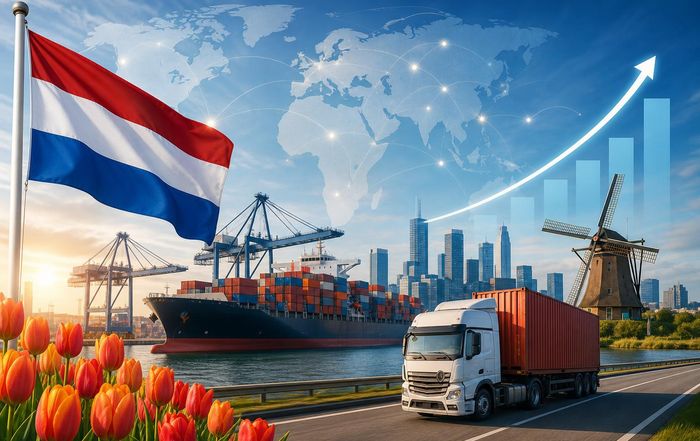
Netherlands Trade Trends and Business Growth in 2026
The Netherlands at the Crossroads of Global Commerce
In 2026, the Netherlands stands once again at a pivotal point in global commerce, combining centuries of trading heritage with a forward-looking digital and sustainable economy that continues to attract investors, corporates, and innovators from around the world. For readers of Financialdailys.com, the Dutch economy offers a compelling case study in how a relatively small country, with a population of just over 17 million, can leverage geography, infrastructure, regulatory clarity, and technological sophistication to punch far above its weight in international trade, logistics, finance, and innovation-driven growth. The country's role as a gateway to Europe, its deep integration into global value chains, and its rapidly evolving policy stance on climate and digitalization are reshaping trade flows and business models in ways that matter for decision-makers across the finance, markets, and corporate strategy landscape.
The Netherlands' strategic position at the mouth of the Rhine-Meuse-Scheldt delta, its world-class port and airport infrastructure, and its dense network of trade agreements have historically underpinned its status as a trading powerhouse. In 2026, this foundation is being tested and redefined by shifting supply chains, heightened geopolitical uncertainty, and the accelerating twin transition toward decarbonization and digitalization. For companies and investors monitoring global markets and trade dynamics, understanding the evolving Dutch trade profile is increasingly essential, not only for European exposure but as a barometer of broader international trends.
Trade Structure and Macroeconomic Context
The Dutch economy remains heavily trade-dependent, with exports of goods and services representing a substantial share of GDP, and the country consistently ranking among the world's top exporters relative to its size. According to the World Bank, the Netherlands has maintained a strong track record of openness, with relatively low trade barriers and robust institutional quality supporting its commercial environment. Learn more about the broader economic structure and performance of advanced economies. This openness has meant that Dutch growth is closely tied to global economic cycles, with particular sensitivity to demand conditions in Germany, France, the United Kingdom, the United States, and increasingly, China and other Asian economies.
In recent years, the Netherlands has navigated a complex macroeconomic environment characterized by post-pandemic normalization, inflationary pressures, and tightening financial conditions, as central banks including the European Central Bank recalibrated monetary policy to contain price growth. For a detailed overview of euro area monetary policy, the ECB provides extensive analysis and data on interest rates, inflation, and credit conditions, which remain critical for Dutch businesses and investors. Explore the latest monetary policy insights on the European Central Bank website. These macro factors have influenced corporate investment decisions, trade financing conditions, and the cost structures of Dutch exporters and importers.
For readers of Financialdailys.com, the Dutch macro backdrop matters because it directly shapes asset pricing, currency movements, and risk premia in European and global portfolios. Those monitoring macro-driven investment opportunities increasingly view the Netherlands as a bellwether for the health of European trade and industrial activity, given its role as a logistics and distribution hub.
Sectoral Trade Trends: From Traditional Strengths to Future Engines
The Netherlands' export basket has long been anchored in a combination of high-value manufacturing, refined petroleum products, chemicals, agri-food products, and sophisticated logistics and business services. In 2026, these pillars remain central, but the composition and growth dynamics within them are shifting as global demand patterns evolve and sustainability and digitalization reshape competitive advantages.
In manufacturing, the Netherlands has consolidated its position as a critical node in high-tech value chains. ASML, the Dutch semiconductor equipment giant, has become emblematic of the country's role in advanced manufacturing and global technology supply chains. The company's extreme ultraviolet (EUV) lithography machines are essential for leading-edge chip production worldwide, and its export profile has increasingly intersected with geopolitical debates around technology transfer and strategic autonomy. For those seeking deeper analysis of semiconductor supply chains and their macroeconomic implications, the OECD offers detailed research on global value chains and technology trade. Learn more about global value chains and technology-intensive industries.
At the same time, the Netherlands remains one of the world's largest exporters of agricultural and food products, despite its small land area, thanks to intensive, technology-driven farming and advanced agri-tech. Greenhouse horticulture, precision farming, and logistics excellence enable Dutch producers to supply fresh produce, dairy, and processed foods across Europe and beyond. The Food and Agriculture Organization of the United Nations (FAO) regularly highlights the Netherlands as a leading example of high-yield, sustainable agriculture in practice. Learn more about global agri-food trade and productivity trends.
Dutch services trade has also expanded, particularly in logistics, professional services, and ICT-related services, as multinational corporations use the Netherlands as a base for European and global operations. For investors following sector-specific opportunities in technology and services, the steady growth of Dutch digital services exports offers a window into how advanced economies can pivot from traditional goods trade toward knowledge-intensive activities while still leveraging physical infrastructure strengths.
The Gateway Role: Ports, Logistics, and Supply Chains
The Netherlands' status as Europe's gateway is most visibly embodied by the Port of Rotterdam, Europe's largest seaport, and Amsterdam Airport Schiphol, one of the continent's leading air cargo and passenger hubs. These assets, combined with an extensive inland waterway, rail, and road network, underpin the country's role as a critical transit and distribution platform for goods entering and leaving the European Union, particularly for Germany, Belgium, France, and the broader Central and Eastern European region.
The Port of Rotterdam Authority has been at the forefront of digitalization and sustainability initiatives, investing in smart port technologies, data platforms, and energy transition infrastructure. Learn more about port digitalization and energy transition initiatives. These efforts aim to maintain the port's competitive edge in an environment where shipping lines, logistics providers, and multinational shippers increasingly demand real-time visibility, efficiency, and lower emissions across the supply chain. For corporate logistics and procurement executives reading Financialdailys.com, the evolution of Dutch port infrastructure is a key variable in routing decisions, cost optimization, and resilience planning.
Schiphol Airport plays a complementary role, connecting the Netherlands to global passenger and cargo networks and supporting high-value, time-sensitive trade in pharmaceuticals, electronics, and perishables. Aviation decarbonization, capacity constraints, and regulatory debates over noise and environmental impact have introduced new strategic questions for the airport and its airline partners, including KLM Royal Dutch Airlines. The International Air Transport Association (IATA) provides extensive analysis on aviation trends and decarbonization pathways that directly affect hubs like Schiphol. Learn more about aviation sustainability and traffic forecasts.
For businesses and investors monitoring global trade and logistics, the Netherlands' infrastructure investments, regulatory decisions, and digitalization strategies will continue to shape how goods flow into and through Europe, influencing lead times, inventory strategies, and overall supply chain resilience.
Sustainability, Climate Policy, and the Green Trade Transition
Sustainability has moved from the periphery to the core of Dutch trade and business strategy. The Netherlands, as a low-lying delta country highly exposed to climate risk, has long been a leader in water management and climate adaptation, but in the 2020s it has increasingly positioned itself as a hub for green innovation, circular economy practices, and low-carbon logistics. For readers of Financialdailys.com who are tracking sustainable business and investment trends, the Dutch experience offers a concrete example of how climate policy can intersect with competitiveness.
The Dutch government has aligned its climate policies with the broader European Green Deal, which seeks to make the EU climate-neutral by 2050 and has introduced a suite of regulations affecting energy, transport, industry, and agriculture. The European Commission outlines detailed measures including the Carbon Border Adjustment Mechanism (CBAM), emissions trading reforms, and sustainable finance regulations that directly affect Dutch exporters, importers, and financial institutions. Learn more about European climate and energy policy frameworks. These policies are reshaping trade patterns by altering the relative cost of carbon-intensive goods, incentivizing clean technologies, and encouraging companies to reconfigure supply chains to minimize environmental impact.
The Netherlands has also emerged as a leader in offshore wind development, hydrogen infrastructure, and circular economy initiatives, creating new trade opportunities in green technologies, engineering services, and climate-adaptation solutions. The International Energy Agency (IEA) provides in-depth assessments of energy transitions and the role of countries like the Netherlands in renewable power and hydrogen value chains. Learn more about energy transition and clean technology trade. As global investors increasingly integrate environmental, social, and governance (ESG) criteria into portfolio construction, Dutch companies and assets that are aligned with these trends may benefit from lower funding costs and stronger valuation support.
For businesses considering expansion, supply chain partnerships, or capital allocation in the Netherlands, the interplay between climate regulation, innovation incentives, and infrastructure planning is becoming a central strategic factor. Readers seeking to align portfolios with these shifts can find broader context in Financialdailys.com coverage of sustainable finance and green investment.
Digitalization, Technology, and Innovation Ecosystems
Alongside sustainability, digitalization is the second defining megatrend shaping Dutch trade and business growth. The Netherlands boasts one of Europe's most advanced digital infrastructures, with high broadband penetration, extensive data center capacity, and a vibrant ecosystem of technology firms, startups, and research institutions. This digital backbone supports not only e-commerce and digital services exports but also the transformation of traditional sectors such as logistics, manufacturing, and agriculture through data analytics, automation, and artificial intelligence.
The Dutch technology ecosystem benefits from strong universities, including Delft University of Technology, Eindhoven University of Technology, and University of Amsterdam, which collaborate closely with industry on applied research and innovation. The European Innovation Council and other EU programs provide funding and support for high-potential startups and scale-ups, many of which choose the Netherlands as a base for their European or global operations. Learn more about European innovation and startup support programs.
In areas such as fintech, digital payments, and regtech, Dutch firms are increasingly visible players within the broader European and global financial technology landscape. For readers following banking and financial innovation, the Dutch market offers insights into how established banks, such as ING Group and ABN AMRO, are partnering with or competing against nimble fintech startups that leverage open banking, digital identity, and data analytics to reshape customer journeys and financial intermediation.
The government and industry bodies have also invested in digital trade facilitation, including electronic customs processes, blockchain-based logistics documentation, and digital platforms that connect shippers, carriers, and freight forwarders. The World Trade Organization (WTO) has highlighted the importance of such digital trade facilitation measures in reducing transaction costs and enabling SMEs to participate in global trade. Learn more about digital trade and e-commerce policy. Dutch initiatives in this space aim to sustain the country's logistics leadership while creating new value-added services that can be exported globally.
For the Financialdailys.com audience, which closely tracks technology, startups, and careers, the Dutch innovation landscape is increasingly relevant as a source of deal flow, partnership opportunities, and talent mobility within Europe and beyond.
Trade Policy, Regulation, and Geopolitical Realignment
The Netherlands operates within the trade policy framework of the European Union, which negotiates trade agreements and sets common external tariffs on behalf of its member states. Over the past decade, the EU has pursued a network of free trade agreements with partners in Asia, Latin America, and North America, seeking to diversify trade relationships and reduce dependence on any single region. For Dutch exporters and importers, these agreements open new markets and reduce barriers, while also introducing complex rules of origin, standards, and compliance requirements.
Geopolitical tensions, particularly between major powers such as the United States and China, have added layers of complexity to trade policy, especially in sensitive sectors like advanced technology, telecommunications, and semiconductors. The Netherlands has found itself at the center of some of these debates due to the strategic importance of ASML and its advanced lithography equipment. For analysis of the intersection between trade, technology, and security, think tanks such as the Centre for Strategic and International Studies (CSIS) provide detailed commentary and scenario analysis. Learn more about technology geopolitics and trade policy.
Sanctions regimes, export controls, and investment screening mechanisms have become more prominent in Dutch and European policy, affecting how companies structure supply chains, sales strategies, and cross-border investments. The European Council maintains up-to-date information on EU sanctions and related measures that directly impact trade flows and corporate risk management. Learn more about EU sanctions and foreign policy instruments. For risk managers, compliance officers, and corporate strategists reading Financialdailys.com, staying abreast of these evolving frameworks is now an essential component of operational resilience and reputational risk mitigation.
Investment Climate, Corporate Finance, and Capital Markets
The Netherlands continues to rank highly in international benchmarks for ease of doing business, institutional quality, and investor protection, which supports its attractiveness for foreign direct investment (FDI) and cross-border M&A activity. A stable legal framework, sophisticated financial services sector, and the presence of numerous multinational headquarters have created a deep ecosystem of legal, tax, and advisory expertise.
The Dutch Authority for the Financial Markets (AFM) and De Nederlandsche Bank (DNB) play central roles in supervising financial markets and institutions, ensuring stability and investor confidence. For those seeking to understand regulatory developments in Dutch and European capital markets, the European Securities and Markets Authority (ESMA) offers extensive resources on market structure, transparency, and investor protection. Learn more about European capital markets regulation. These frameworks influence how Dutch companies raise capital, list securities, and engage with international investors.
For equity and fixed-income investors following stocks and capital market trends, Dutch-listed companies in sectors such as technology, consumer goods, industrials, and financials provide diversified exposure to both domestic and global growth themes. The interplay between the Netherlands' trade orientation and its corporate earnings profiles means that global macro and trade developments are often rapidly reflected in asset prices, creating both risks and opportunities for active managers.
Private equity and venture capital activity in the Netherlands has also grown, particularly in technology, healthcare, and sustainable infrastructure, supported by both domestic funds and international investors seeking to tap into the country's innovation ecosystem and stable regulatory environment. For Financialdailys.com readers focused on investing and portfolio diversification, the Dutch market offers a mix of mature blue-chip exposures and high-growth private opportunities.
Real Estate, Infrastructure, and Urban Economic Hubs
Trade and business growth in the Netherlands are closely linked to developments in real estate and infrastructure, particularly in major urban hubs such as Amsterdam, Rotterdam, The Hague, Utrecht, and Eindhoven. These cities function as nodes in international business networks, hosting corporate headquarters, R&D centers, logistics facilities, and service clusters.
Commercial property markets in logistics, office, and data center segments have been influenced by both trade dynamics and structural shifts such as e-commerce growth, hybrid work patterns, and the expansion of cloud computing. The Royal Institution of Chartered Surveyors (RICS) provides global perspectives on commercial real estate trends, including logistics and data center demand that are highly relevant to Dutch markets. Learn more about commercial property and infrastructure trends.
For investors and corporates considering Dutch real estate exposures, the balance between strong demand in prime locations and regulatory and environmental constraints, including nitrogen emissions rules and spatial planning, is a critical consideration. Readers of Financialdailys.com can contextualize these developments within broader property and infrastructure coverage, which highlights how real assets intersect with trade flows, logistics strategies, and corporate location decisions.
Labor Market, Skills, and the Future of Work
The Netherlands' capacity to sustain trade-led growth increasingly depends on its labor market, skills base, and ability to attract and retain international talent. A relatively flexible labor market, high levels of educational attainment, and strong English-language proficiency have historically supported the country's competitiveness. However, tight labor markets, demographic aging, and the rapid pace of digital and green transitions are creating new challenges and opportunities.
Dutch policymakers and employers are investing in reskilling and upskilling initiatives, particularly in digital skills, engineering, and sustainability-related competencies, to ensure that the workforce can support evolving business models and technologies. The Organisation for Economic Co-operation and Development (OECD) regularly analyzes skills, education, and labor market policies in member countries, including the Netherlands, offering benchmarks and best practices. Learn more about skills, education, and the future of work.
For professionals and executives considering career moves or regional responsibilities tied to Dutch operations, understanding the local talent landscape, immigration policies, and work culture is increasingly important. The Financialdailys.com audience can connect these insights with broader careers and workplace trends, as multinational corporations recalibrate their European footprints and talent strategies.
Strategic Outlook: What Netherlands Trade Means for Global Business
Looking ahead from the vantage point of 2026, the Netherlands appears poised to remain a central player in global trade and business, yet the configuration of its strengths is evolving in ways that matter deeply for corporate strategy, investment decisions, and policy analysis. Its traditional comparative advantages-geography, infrastructure, openness, and institutional quality-are being augmented and, in some cases, reshaped by its leadership in sustainability, digitalization, and high-tech manufacturing.
For international companies, the Netherlands will continue to serve as a critical gateway to European markets and a hub for logistics, distribution, and regional headquarters functions. However, the bar for success is rising, as regulatory complexity, environmental constraints, and geopolitical tensions require more sophisticated risk management, compliance, and stakeholder engagement. Those who understand the nuances of Dutch climate policy, digital infrastructure, and innovation ecosystems will be better positioned to leverage the country's strengths while mitigating emerging risks.
For investors, Dutch assets-whether equities, bonds, real estate, or private market opportunities-offer exposure to some of the most dynamic themes in the global economy, from semiconductor equipment and green energy to digital logistics and circular economy models. The interplay between trade flows, regulatory frameworks, and technological change will continue to shape earnings trajectories, valuation multiples, and capital allocation decisions.
For policymakers and analysts, the Netherlands provides a valuable laboratory for observing how an advanced, open economy navigates the pressures of decarbonization, digitalization, and geopolitical realignment while maintaining competitiveness and social cohesion. The lessons drawn from this experience will be relevant not only for European peers but for economies across North America, Asia, Africa, and South America that are grappling with similar challenges and opportunities.
As Financialdailys.com continues to track developments across finance, business, trade, and the world economy, the Netherlands will remain a focal point in coverage of how global trade trends and business growth intersect. For readers seeking to anticipate the next wave of change in international commerce, monitoring Dutch policy shifts, infrastructure investments, and corporate strategies offers not just regional insight, but a window into the future architecture of global trade itself.
