
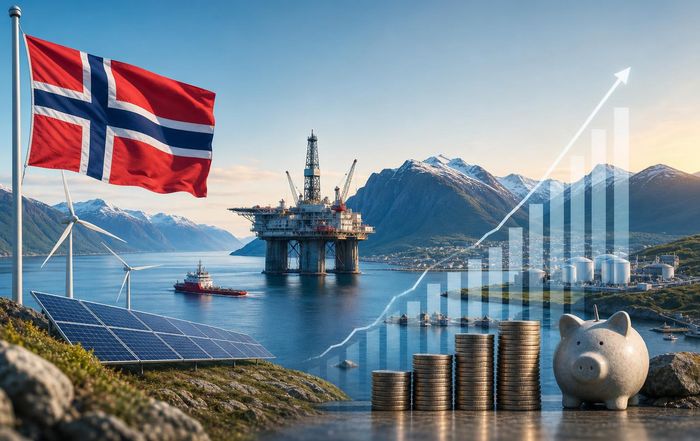
Norway's Energy Investment And Fiscal Resilience: A Model Under Pressure And Renewal
Introduction: A Small Country With Outsized Energy Influence
Norway occupies a unique position in the global economy. With a population of just over 5.5 million, it is simultaneously a mature oil and gas producer, a leading exporter of natural gas to Europe, a pioneer in renewable energy and electric mobility, and the steward of the world's largest sovereign wealth fund. For readers of FinancialDailys, Norway's experience offers a powerful case study in how a resource-rich economy can pursue long-term fiscal resilience while navigating the complex transition from fossil fuels to low-carbon energy.
The country's approach intertwines three pillars: a disciplined fiscal framework built around the Government Pension Fund Global, a pragmatic but increasingly climate-aligned energy policy, and a willingness to invest heavily in both legacy hydrocarbons and emerging green technologies. In an era marked by energy security concerns, volatile commodity prices, and accelerating climate policy, Norway's evolving strategy provides lessons for policymakers, institutional investors, and corporate leaders worldwide.
The Oil And Gas Legacy: From Resource Windfall To Financial Buffer
Norway's modern economic story is inseparable from petroleum. Oil was first discovered in the North Sea in the late 1960s, and production ramped up rapidly through the 1970s and 1980s. Today, according to data from Norwegian Petroleum and Statistics Norway, oil and gas still account for a substantial share of exports, government revenues, and investment, even as the relative weight of the sector in GDP has gradually declined.
Crucially, Norway chose early on to treat petroleum revenues as a national inheritance rather than a short-term windfall. The state took significant direct ownership in resources through Equinor (formerly Statoil) and the state's direct financial interest (SDFI), while establishing a high but predictable tax regime on petroleum activities. Instead of allowing oil revenue to flow directly into the domestic economy, policymakers created what is now known as the Government Pension Fund Global (GPFG), often referred to as the "oil fund."
Managed by Norges Bank Investment Management under the oversight of the Ministry of Finance, the GPFG invests surplus petroleum revenues entirely abroad in equities, fixed income, and real assets. According to official figures from Norges Bank Investment Management and the Norwegian Ministry of Finance, the fund has grown into a multi-trillion-dollar portfolio, making it the largest sovereign wealth fund in the world by asset value. Its role as a buffer against commodity price cycles and demographic pressures is central to Norway's fiscal resilience.
For readers following global markets and asset allocation strategies on FinancialDailys Investing, Norway's sovereign fund illustrates how a disciplined, rules-based approach can transform volatile resource income into a diversified financial asset base that supports long-term public spending without overheating the domestic economy.
The Fiscal Rule: Anchoring Stability In A Volatile World
At the heart of Norway's resilience is the so-called fiscal rule, introduced in 2001. Under this framework, the government is allowed to spend only the estimated real return on the GPFG each year, while all net petroleum revenues are transferred to the fund. The estimated long-term real return has been set at around 3 percent, and non-oil budget deficits are financed by transfers from the fund up to this limit.
This rule serves several purposes. It shields the domestic economy from the full impact of swings in oil and gas prices, reduces the risk of Dutch disease by limiting demand pressures, and preserves wealth for future generations. Independent assessments, including analysis from the International Monetary Fund and OECD, have generally praised the framework as a model of prudent resource management, while also noting the political pressures that can arise when large accumulated assets coexist with growing spending demands.
During periods of crisis, such as the global financial crisis and the COVID-19 pandemic, Norway has temporarily allowed higher structural non-oil deficits, drawing more heavily on the fund to support households and businesses. This flexibility illustrates that the fiscal rule is not a rigid legal constraint but a widely accepted policy anchor, supported by cross-party consensus. As energy markets have become more turbulent in recent years, this framework has helped stabilize public finances even as petroleum revenues have surged and then moderated.
For readers of FinancialDailys Finance and FinancialDailys Economy, Norway's experience underscores the importance of transparent fiscal rules, independent institutions, and credible long-term planning in maintaining investor confidence and macroeconomic stability.
Norway's Role In European Energy Security
The geopolitical and energy landscape shifted dramatically after Russia's full-scale invasion of Ukraine in 2022, which triggered a deep reconfiguration of European gas supply. As Russian pipeline volumes plummeted, Norway emerged as the largest supplier of natural gas to the European Union and the United Kingdom. According to Eurostat and the European Commission, Norwegian gas has become critical for maintaining energy security, particularly in Germany, the Netherlands, the UK, and other major European economies.
Norway's offshore gas fields, connected via an extensive pipeline network, were already well-established, but the crisis increased the strategic importance of these assets. The Norwegian government, working with Equinor and other operators, focused on maximizing uptime, optimizing field management, and modestly increasing output where technically and environmentally feasible. At the same time, authorities emphasized that production decisions must align with long-term reservoir management and climate commitments.
This dual role-supporting European allies with reliable gas supplies while pledging to reduce global emissions-illustrates the complexity of energy policy in the current decade. For financial markets and energy investors tracking developments on FinancialDailys Markets and FinancialDailys Stocks, Norwegian gas assets continue to represent both a source of cash flow and a potential transition risk as European climate policies tighten.
Managing Hydrocarbon Investment In A Decarbonizing World
Norway's offshore oil and gas sector remains technologically advanced, with high recovery factors and stringent safety and environmental regulations. The state's strategy has been to maintain a competitive, predictable framework for investment, even as it gradually tightens climate policy. Licensing rounds continue in mature and frontier areas, and large projects such as Johan Sverdrup have extended the production horizon on the Norwegian Continental Shelf.
However, the policy debate has intensified over how much new exploration and development is compatible with national and global climate goals. Independent analyses, including reports by the International Energy Agency and UNEP, have suggested that achieving the Paris Agreement's temperature objectives would require a sharp reduction in new fossil fuel developments over time. Climate advocates in Norway have argued that continued exploration is inconsistent with these pathways, while industry and parts of the political spectrum emphasize the need for secure energy supplies and the relative carbon efficiency of Norwegian production compared to many other sources.
The government has responded with a mix of measures. It has retained petroleum taxes and licensing but has also increased the carbon price in line with broader European policies, and it has promoted electrification of offshore platforms using hydropower from shore to reduce operational emissions. This approach aims to make Norwegian production among the lowest-emission in the world per unit of output, even as overall global emissions remain the crucial metric.
For global investors and corporate leaders, this illustrates a broader tension: how to manage existing hydrocarbon portfolios responsibly while redirecting capital toward low-carbon opportunities. The Norwegian case, followed closely by analysts and commentators on FinancialDailys Business, shows that nuanced, data-driven policy can coexist with robust public debate and evolving social expectations.
The Renewable Powerhouse: Hydropower, Wind, And Emerging Technologies
While oil and gas dominate export headlines, Norway's domestic energy system is overwhelmingly renewable. More than 90 percent of its electricity is generated from hydropower, according to Norwegian Water Resources and Energy Directorate (NVE) and IEA country statistics. This abundance of low-carbon electricity has underpinned energy-intensive industries, from aluminum smelting to data centers, and created a foundation for electrification across the economy.
In recent years, Norway has begun to expand its portfolio of renewable technologies. Onshore wind power has grown, though it has faced local opposition related to land use, visual impact, and indigenous rights, leading to more stringent planning and consultation processes. Offshore wind is emerging as a major strategic priority, with the government launching auctions for areas in the North Sea and Norwegian companies seeking to leverage decades of offshore engineering expertise. These developments are tracked closely by international observers, including BloombergNEF and IRENA, which see Norway as well-positioned to become a regional hub for floating offshore wind technology.
Hydrogen and carbon capture and storage (CCS) are also central to Norway's transition strategy. The Longship CCS project, supported by the Norwegian state and involving partners such as Equinor, Shell, and TotalEnergies, aims to develop a full-scale value chain from industrial CO₂ capture to offshore storage in the North Sea. Independent assessments from Bellona and Global CCS Institute highlight Longship as one of the most advanced CCS initiatives in Europe, though cost, scalability, and regulatory frameworks remain areas of ongoing discussion.
These investments signal a long-term commitment to remain an energy exporter in a decarbonized world, not only through molecules such as hydrogen and ammonia but also through technology, services, and expertise. For readers of FinancialDailys Tech and FinancialDailys Sustainability, Norway's innovation agenda demonstrates how traditional energy producers can pivot toward climate solutions while leveraging existing strengths.
Electric Mobility And The Domestic Transition
Norway has become globally recognized for its rapid adoption of electric vehicles (EVs). Through a combination of tax exemptions, toll reductions, and other incentives, the country has seen EVs capture the majority of new car sales for several years, as documented by the Norwegian Road Federation (OFV) and the International Council on Clean Transportation. This transformation has significantly reduced emissions from the transport sector and created a testbed for grid integration, charging infrastructure, and consumer behavior.
The EV revolution interacts with Norway's energy system in several ways. It increases electricity demand, but because the grid is already largely decarbonized, the net effect on emissions is strongly positive. It also offers new opportunities for demand response and storage, as vehicle batteries can eventually participate in more flexible power markets. For financial institutions and technology companies observing these developments through platforms such as IEA Global EV Outlook, Norway provides evidence that rapid electrification is feasible when policy, infrastructure, and consumer incentives are aligned.
This domestic transition complements Norway's international stance. By demonstrating that a high-income, cold-climate country can operate a largely electric vehicle fleet powered by renewables, Norway strengthens its credibility in climate diplomacy and supports the export potential of Nordic cleantech solutions.
The Sovereign Wealth Fund: Stewardship, ESG, And Global Influence
The Government Pension Fund Global is not only a fiscal buffer; it is also one of the most influential institutional investors in the world. With holdings in thousands of companies across more than 70 countries, it exerts significant influence on corporate governance, environmental standards, and market practices. The fund operates under clear ethical guidelines set by the Norwegian parliament, with the Council on Ethics recommending exclusion or observation of companies involved in severe environmental damage, human rights violations, corruption, and certain other activities.
Over the past decade, the fund has increasingly integrated climate risk into its strategy. It has divested from some coal-intensive companies, strengthened expectations on corporate climate disclosure, and published detailed reports on its own portfolio emissions, as noted in public documents from NBIM and analysis by organizations such as PRI. While the fund remains broadly market-weighted and does not pursue a fully thematic "green" strategy, its engagement and voting practices send powerful signals to global boards and executives.
For readers of FinancialDailys, this raises important questions about the evolving role of sovereign investors in shaping the energy transition. The Norwegian fund's approach suggests that long-term financial returns and responsible investment can be mutually reinforcing, provided that governance is transparent and mandates are clearly articulated. It also highlights the need for robust data, scenario analysis, and risk management tools when navigating systemic climate risks.
Startups, Innovation, And The Next Generation Of Energy Businesses
Beyond large incumbents and state institutions, Norway has seen a growing ecosystem of startups and scale-ups focused on energy technology, digitalization, and sustainability. From battery materials and maritime electrification to data-driven optimization of wind farms and grid operations, Norwegian entrepreneurs are building on the country's engineering heritage and access to clean power.
Innovation clusters such as Oslo's cleantech hubs, maritime technology centers in Bergen, and energy-oriented ecosystems in Stavanger and Trondheim are supported by a mix of public funding, venture capital, and corporate partnerships. Reports and databases from Innovation Norway and Nordic Innovation document a growing pipeline of companies targeting both regional and global markets.
For readers exploring entrepreneurial opportunities and venture trends through FinancialDailys Startups and FinancialDailys Careers, Norway offers an example of how a resource-based economy can cultivate new growth sectors around digital energy services, offshore wind engineering, CCS solutions, and green shipping. The challenge, as in many advanced economies, is to ensure that regulatory frameworks, capital markets, and talent development keep pace with technological change.
Housing, Infrastructure, And The Domestic Investment Landscape
Energy investment in Norway does not occur in isolation from broader economic and property dynamics. The country has experienced a long period of rising house prices, supported by low interest rates, high incomes, and strong population growth in urban areas. As documented by Norges Bank and Bank for International Settlements, this has raised concerns about household debt and financial stability.
Public investment in infrastructure, including power grids, transport systems, and digital networks, is increasingly evaluated in light of both climate goals and resilience to physical risks such as flooding and extreme weather. Norway's mountainous terrain and long coastline present particular challenges for transmission and distribution, making grid reinforcement and modernization a significant area of capital expenditure.
For real estate and infrastructure investors following developments via FinancialDailys Property and FinancialDailys Banking, Norway's regulatory prudence and strong institutional framework are reassuring, though they do not eliminate cyclical risks. The interplay between energy policy, housing markets, and infrastructure spending will remain a key determinant of long-term macroeconomic stability.
International Trade, Climate Diplomacy, And Industrial Policy
Norway's energy strategy is deeply intertwined with its international trade relationships and climate diplomacy. As a member of the European Economic Area (EEA) but not the European Union, Norway adopts a large share of EU energy and climate legislation while retaining some autonomy in areas such as taxation and resource management. This arrangement has allowed it to participate in the EU's internal energy market and emissions trading system, while also negotiating specific arrangements on issues like cross-border power cables and gas supply.
On the global stage, Norway has been an active participant in UN climate negotiations and has pledged significant climate finance, particularly for forest conservation and renewable energy in developing countries. Organizations such as UNFCCC and World Bank have documented Norway's contributions to climate funds and multilateral initiatives, though debates continue about the balance between domestic emissions reductions and international offsets.
At the same time, the rise of industrial policy in major economies, including the United States and the European Union, is reshaping the competitive landscape for clean energy manufacturing and technology deployment. Norway must navigate this environment carefully, leveraging its strengths in offshore engineering, maritime industries, and digitalization while ensuring that its regulatory and tax frameworks remain attractive for investment.
Readers exploring trade dynamics and global policy shifts through FinancialDailys Trade and FinancialDailys World will recognize that Norway's experience is emblematic of a broader trend: mid-sized, open economies seeking to position themselves as reliable energy partners and innovation hubs in a fragmented, decarbonizing world.
Lessons For Fiscal Resilience And Energy Transition
Norway's journey offers several insights for policymakers, investors, and business leaders worldwide. First, strong institutions and transparent rules can transform volatile resource revenues into a stable foundation for long-term prosperity. The fiscal rule and the Government Pension Fund Global demonstrate how disciplined governance can mitigate the boom-bust cycles that have afflicted many resource-rich countries.
Second, a credible commitment to environmental standards and climate policy does not preclude continued participation in energy markets, but it does require continuous adjustment of strategy. Norway's efforts to reduce the carbon intensity of its oil and gas production, expand renewables, and invest in CCS and hydrogen show that transition pathways are complex and incremental rather than binary.
Third, domestic policy coherence matters. The combination of a largely renewable power system, rapid electrification of transport, and strong social safety nets has allowed Norway to pursue ambitious climate measures while maintaining broad public support. For those following policy innovations through FinancialDailys Sustainability and FinancialDailys Economy, this underlines the importance of integrating social, environmental, and economic objectives.
Finally, Norway's experience highlights that even the most advanced models are not static. Debates over new exploration, land use for wind power, the role of CCS, and the appropriate pace of fiscal spending from the sovereign fund continue to evolve. Independent analysis from institutions such as CICERO Center for International Climate Research and academic research from University of Oslo and NHH Norwegian School of Economics contribute to a rich evidence base, but policy choices ultimately reflect societal values and democratic processes.
Conclusion: A Living Laboratory For The Future Of Energy And Finance
For the global readership of FinancialDailys, Norway stands out as a living laboratory for the intersection of energy investment, fiscal resilience, and climate responsibility. It shows that a country can be a major petroleum exporter, a leader in renewable power, and a pioneer in responsible sovereign investment at the same time, provided that it maintains strong institutions, embraces transparency, and remains willing to adapt.
As the world continues to grapple with energy security challenges, climate risks, and shifting geopolitical alliances, Norway's evolving strategy will remain closely watched by markets, policymakers, and civil society. Its experience will not be perfectly replicable elsewhere, given its unique resource endowment and institutional history, but the underlying principles-prudence, diversification, long-term thinking, and openness to innovation-are widely applicable.
Readers seeking to understand how energy policy, financial markets, and macroeconomic strategy intersect can follow ongoing coverage and analysis on FinancialDailys across dedicated sections including Finance, Markets, Investing, Business, and Sustainability. Norway's story is still being written, and its next chapters will offer further insight into how resilient, forward-looking economies can navigate the profound transformations reshaping global energy and finance.
