
Norway's Energy Wealth and Investment Outlook in 2026
Norway's transformation from a relatively modest post-war economy into one of the world's wealthiest and most stable nations is, in many ways, a story written in hydrocarbons, hydropower and institutional discipline. As global investors reassess portfolio strategies amid higher-for-longer interest rates, accelerating decarbonisation and geopolitical fragmentation in 2026, Norway's energy wealth and its evolving investment landscape have become central reference points for understanding how a resource-rich, advanced economy can navigate the transition from fossil-fuel dependence to a more diversified, sustainable growth model. For readers of Financialdailys.com, this evolution is not merely a Nordic case study; it is a live laboratory for assessing sovereign resilience, energy-transition risks and long-term opportunity across asset classes and regions.
The Foundations of Norway's Energy Wealth
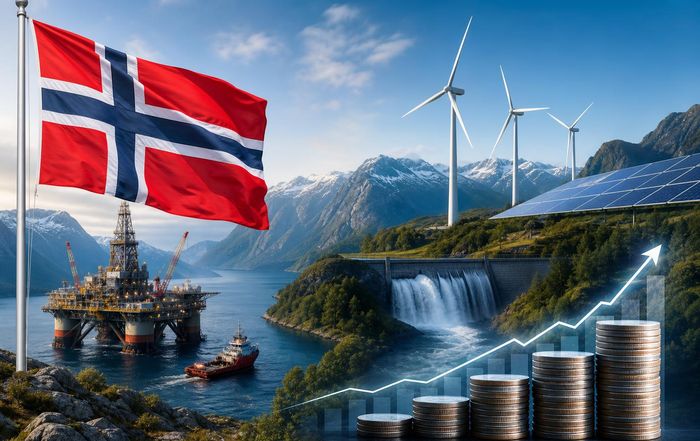
Norway's modern prosperity rests on three pillars: offshore oil and gas, abundant hydropower and a robust institutional framework that has converted resource rents into financial assets rather than short-term political spending. Since the discovery of the Ekofisk field in the North Sea in 1969, successive Norwegian governments have pursued a cautious, technocratic approach to petroleum development, combining strict licensing regimes, high taxation of resource profits and state participation through Equinor (formerly Statoil) and the state's direct financial interest scheme. According to historical data from the Norwegian Petroleum Directorate, petroleum activities have generated trillions of Norwegian kroner in revenues, underwriting an extensive welfare state, world-class infrastructure and a uniquely large sovereign wealth fund.
Hydropower has played an equally strategic role, albeit with less global visibility. More than 90% of Norway's domestic electricity production comes from hydropower, providing households and industry with relatively low-cost, low-carbon energy. This structural advantage has supported energy-intensive sectors such as aluminium, fertilisers and data centres, while also positioning Norway as an early mover in electrification and green technologies. Learn more about Norway's energy mix and hydropower dominance through the International Energy Agency at iea.org.
For investors, the key insight is that Norway's energy wealth has never been treated as a windfall to be consumed, but as a finite resource to be transformed into enduring financial capital. That discipline underpins Norway's current macroeconomic resilience and frames the investment outlook across equities, fixed income, real assets and alternative strategies, themes that are explored in depth across the finance coverage on Financialdailys.com.
The Government Pension Fund Global: Engine of Long-Term Capital
The centrepiece of Norway's energy-to-finance transformation is the Government Pension Fund Global (GPFG), commonly known as the "Oil Fund." Managed by Norges Bank Investment Management on behalf of the Ministry of Finance, the fund has grown into one of the world's largest sovereign wealth portfolios, with assets well above USD 1.5 trillion by 2026, invested in thousands of companies and bonds worldwide. Detailed information on mandate, holdings and performance is available from Norges Bank at nbim.no.
The GPFG is governed by a fiscal rule that allows the Norwegian government to spend only the expected real return of the fund each year, estimated at around 3%. This rule effectively decouples day-to-day fiscal policy from volatile oil and gas revenues, smoothing the economic cycle and limiting political pressure to overspend during commodity booms. It also anchors the fund's investment horizon firmly in the long term, making it a reference investor for global markets from the United States and United Kingdom to Germany, Japan and Singapore.
From an investment perspective, the GPFG's asset allocation offers a window into Norway's strategic view of risk and return. The fund maintains a high allocation to global equities, diversified across developed and emerging markets, with additional exposure to fixed income and a growing allocation to unlisted real estate and renewable infrastructure. For readers tracking global markets and cross-border capital flows, the GPFG's portfolio shifts often signal broader institutional sentiment about regional growth prospects, inflation trajectories and the energy transition.
Oil and Gas in a Decarbonising World
Norway's oil and gas sector remains a cornerstone of its export earnings and fiscal revenues in 2026, yet it now operates in a markedly different environment from the pre-2020 era. The combination of the Paris Agreement, more stringent climate policies in the European Union, the rise of electric vehicles and rapid growth in renewables has begun to reshape long-term demand expectations for fossil fuels. The International Energy Agency has outlined multiple scenarios in which global oil demand plateaus or declines over the coming decades, even as short-term supply constraints and geopolitical tensions can still drive price spikes.
For Norway, which supplies a substantial share of Europe's natural gas, particularly to countries such as Germany, France, Italy, Spain and the Netherlands, the post-2022 energy-security realignment has been a double-edged sword. On one hand, Europe's urgent need to diversify away from Russian gas has increased demand for Norwegian gas exports and reinforced Norway's role as a reliable supplier. On the other hand, accelerated EU decarbonisation policies, including the European Green Deal and the Fit for 55 package, imply a structural decline in fossil gas demand over the medium to long term. Investors can follow these regulatory developments via the European Commission at ec.europa.eu.
Major Norwegian energy companies such as Equinor are therefore under pressure to balance continued investment in profitable oil and gas projects, particularly in the Barents and North Sea, with expanding portfolios in offshore wind, carbon capture and storage (CCS) and hydrogen. Learn more about corporate climate commitments and transition plans from initiatives such as the Task Force on Climate-related Financial Disclosures at fsb-tcfd.org. For equity and credit investors, the critical question is whether Norway's energy companies can maintain attractive returns on capital while progressively reducing the carbon intensity of their portfolios, a theme that aligns closely with the investing insights regularly analysed on Financialdailys.com.
The Rise of Renewable Energy and Green Industrial Strategy
Norway's abundant hydropower has long given it one of the lowest carbon electricity grids in the world, but the country is now leveraging this base to expand into new renewable segments, particularly offshore wind and grid interconnections. The government's licensing rounds for offshore wind in the North Sea and Norwegian Sea, including both bottom-fixed and floating projects, are attracting consortia that combine Norwegian expertise with global developers from United Kingdom, Denmark, Germany and South Korea. For an overview of global offshore wind trends, readers can consult the Global Wind Energy Council at gwec.net.
In parallel, Norway is positioning itself as a hub for green industrial activity, from battery production and critical minerals processing to low-carbon shipping and data centres powered by renewable energy. Government support schemes, state-backed financing through entities such as Export Finance Norway, and collaborations with European partners are all aimed at anchoring high-value manufacturing and technology development within the country. These initiatives dovetail with broader European industrial strategies for clean technologies and strategic autonomy in supply chains, themes that are increasingly prominent in business and trade coverage.
For global investors looking at infrastructure, private equity and green bonds, Norway's renewable and green industrial pipeline presents a growing set of opportunities. However, these are not without risk, as project economics depend on electricity prices, regulatory stability, supply-chain resilience and local acceptance. The International Renewable Energy Agency at irena.org provides useful context on cost trajectories and deployment trends for key technologies, which can help investors benchmark Norwegian projects against global peers in regions such as Asia, North America and South America.
Managing Volatility: Macro Policy, Currency and Rates
Norway's macroeconomic framework is designed to buffer the domestic economy from commodity price volatility and external shocks. The combination of the fiscal rule governing GPFG withdrawals, an inflation-targeting central bank and a flexible exchange rate has generally succeeded in smoothing growth and stabilising public finances. The Norges Bank sets policy rates with a dual eye on domestic inflation and global financial conditions, particularly developments in the Federal Reserve, European Central Bank and Bank of England. For comparative central bank analysis, readers may follow updates from the Bank for International Settlements at bis.org.
The Norwegian krone (NOK) has historically been sensitive to oil prices and risk sentiment, often weakening during global risk-off episodes. However, the presence of the GPFG, which invests predominantly in foreign assets, introduces a structural counterbalance, as foreign-currency inflows from petroleum revenues are effectively sterilised through outward investment. This mechanism reduces upward pressure on the krone during booms and helps mitigate the risk of "Dutch disease," where resource inflows crowd out other tradable sectors. For investors in currency and fixed income markets, Norway thus offers a relatively transparent and rule-based framework, albeit one still exposed to global risk cycles and shifts in energy prices, themes frequently discussed in the economy section of Financialdailys.com.
In 2026, with global interest rates settling at higher levels than the ultra-low regime of the 2010s, Norway's government bond yields and corporate spreads offer more attractive nominal and real returns than in previous years, while still benefiting from strong credit fundamentals and low sovereign risk. International investors evaluating Nordic fixed income allocations often view Norwegian debt as a high-quality diversifier, alongside bonds from countries such as Sweden, Denmark, Finland and Switzerland.
Equity, Sector and Thematic Opportunities
Norway's equity market, anchored by the Oslo Børs, remains heavily influenced by energy, shipping and maritime services, but the sector mix has been gradually diversifying. Traditional oil and gas producers, offshore service firms and shipping companies continue to play a central role, yet investors are increasingly paying attention to renewable energy developers, aquaculture firms, technology-enabled industrials and financial institutions. For comprehensive insights into listed Norwegian companies and sector dynamics, investors can consult the Oslo Børs at euronext.com.
Energy transition themes are particularly prominent. Companies involved in offshore wind components, subsea engineering, CCS technologies and battery materials are drawing interest from both domestic and international investors who are seeking exposure to decarbonisation value chains, but who also recognise the execution and policy risks inherent in early-stage technologies. The intersection of maritime expertise and clean technologies, for example in low-emission shipping and autonomous vessels, is another area where Norway is building a competitive niche, relevant to investors tracking global logistics and supply chains across Asia, Europe and Africa.
Financials, including banks and insurance companies, are also an important part of the Norwegian market. The country's banks are generally well capitalised, with conservative lending practices and strong regulatory oversight, though they remain exposed to the domestic property market and household leverage. Learn more about global banking stability from the International Monetary Fund at imf.org. For readers of Financialdailys.com, the interplay between Norwegian banks' energy exposures, property lending and digital transformation strategies provides a rich field of analysis, complementing broader banking and stocks coverage.
Property, Urbanisation and Infrastructure
Norway's property market has experienced significant price appreciation over the past two decades, driven by low interest rates, strong income growth, urbanisation and constrained housing supply in key cities such as Oslo, Bergen, Stavanger and Trondheim. While macroprudential measures and higher interest rates have cooled some of the most overheated segments, concerns about affordability and household debt remain part of the policy debate. The OECD provides comparative data on housing markets and financial stability at oecd.org.
Commercial real estate and infrastructure assets are also attracting increased investor attention, especially as Norway invests in transport, energy grids, digital infrastructure and climate-resilient projects. The country's commitment to electrification, including widespread adoption of electric vehicles and expansion of charging networks, is reshaping urban planning and logistics. For investors in real assets, these trends create opportunities in sectors such as logistics hubs, data centres, renewable energy infrastructure and sustainable urban development, themes that align with the property and sustainability coverage on Financialdailys.com.
However, investors must also consider regulatory risk, environmental requirements and community engagement, particularly for large-scale infrastructure and energy projects. Norway's planning processes and environmental standards are stringent, reflecting strong public expectations for conservation and responsible development, especially in sensitive regions such as the Arctic and coastal ecosystems.
Startups, Technology and Human Capital
Beyond its traditional strengths in energy and maritime industries, Norway is cultivating a growing startup and technology ecosystem that leverages its high levels of digitalisation, strong education system and robust public finances. The country consistently ranks highly in global innovation and competitiveness indices, supported by significant public and private investment in research and development. The World Intellectual Property Organization provides innovation rankings and analysis at wipo.int.
Norwegian startups are particularly active in fintech, clean technology, ocean technology, software-as-a-service and healthtech, often drawing on domain expertise from established industries. The presence of large, sophisticated corporates such as Equinor, Telenor and leading shipping groups creates a fertile environment for corporate venture capital, partnerships and pilot projects. This ecosystem is increasingly integrated into broader Nordic and European networks, with capital and talent flows connecting Norway to hubs in Sweden, Denmark, Germany, the United Kingdom and beyond.
For international investors and corporates, Norway offers a stable, predictable environment for venture and growth investments, with strong legal protections and a high-quality talent pool. At the same time, the relatively small domestic market means that successful Norwegian startups typically adopt a global mindset from inception, targeting customers across Europe, North America, Asia and Oceania. Readers interested in entrepreneurial and innovation trends can find complementary analysis in the startups and tech sections of Financialdailys.com.
Labour Market, Skills and the Future of Work
Norway's labour market is characterised by high participation rates, relatively low unemployment and strong social protections, underpinned by a tradition of tripartite cooperation among government, employers and trade unions. This model has supported wage coordination, skills development and industrial peace, contributing to Norway's competitiveness and social cohesion. Comparative labour market indicators are available from the International Labour Organization at ilo.org.
However, the energy transition and digitalisation are reshaping skill requirements and career trajectories, particularly in regions heavily dependent on oil and gas-related employment. The reallocation of labour from traditional petroleum activities to renewable energy, technology and services requires substantial investment in reskilling, vocational training and higher education. Public programmes, university-industry partnerships and corporate initiatives are all geared toward smoothing this transition, yet the pace of change presents challenges, especially for mid-career workers and specialised technical roles.
For international investors and multinational corporations considering operations or partnerships in Norway, the country's human capital strengths, high levels of English proficiency and collaborative work culture are significant advantages. At the same time, relatively high labour costs and strict employment protections necessitate careful planning and productivity-enhancing strategies. The careers coverage on Financialdailys.com frequently explores how these dynamics influence corporate decisions and talent strategies, both within Norway and across comparable advanced economies such as Canada, Australia and New Zealand.
Sustainability, Governance and Global Influence
Norway's approach to sustainability and governance extends beyond its domestic policies to its role as a global investor and diplomatic actor. The GPFG has become an influential voice in corporate governance and responsible investment, with exclusion lists, active ownership strategies and engagement on climate, human rights and anti-corruption issues. The fund's ethical guidelines, overseen by the Ministry of Finance and an independent Council on Ethics, have led to divestments from companies involved in severe environmental damage, coal, unacceptable greenhouse gas emissions and certain weapons. Learn more about global standards in responsible investment from the UN Principles for Responsible Investment at unpri.org.
Norway is also an active participant in international climate negotiations and development finance, contributing to initiatives that support forest conservation, renewable energy deployment and climate adaptation in emerging and developing economies across Asia, Africa and South America. This dual role as both a fossil-fuel exporter and a climate financier creates inherent tensions, but it also gives Norway a unique vantage point in global energy dialogues, where balancing energy security, affordability and sustainability has become increasingly complex.
For investors and corporate leaders, Norway's emphasis on environmental, social and governance (ESG) criteria is not merely a reputational consideration; it has tangible implications for capital allocation, regulatory expectations and stakeholder engagement. The integration of ESG into mainstream investment processes, which Financialdailys.com tracks closely in its world and sustainability coverage, is reshaping how energy wealth is managed and how future returns are generated.
Strategic Outlook for Investors in 2026
By 2026, Norway's energy wealth and investment outlook present a nuanced picture of opportunity and transition. On one level, the country remains a high-income, low-risk jurisdiction with strong institutions, substantial net foreign assets and a sophisticated financial ecosystem. Its role as a major energy supplier to Europe, combined with a world-leading sovereign wealth fund, ensures that Norway will continue to be a pivotal player in global finance and energy markets for years to come.
On another level, the structural shifts underway in global energy demand, climate policy, technology and demographics mean that Norway cannot rely indefinitely on oil and gas revenues to sustain its prosperity. The success of its green industrial strategy, renewable energy expansion, innovation ecosystem and human capital development will determine whether it can convert its existing energy wealth into a diversified, future-proof economic model. For investors, this implies that Norwegian assets should be evaluated not only on current income streams and balance-sheet strength, but also on their adaptability to a lower-carbon, more digital and more fragmented global economy.
For the international audience of Financialdailys.com, spanning markets from the United States and United Kingdom to China, Brazil, South Africa, Malaysia and beyond, Norway offers both a benchmark and a bellwether. It is a benchmark for institutional quality, fiscal prudence and long-term investing through the GPFG, and a bellwether for how advanced resource economies manage the complex trade-offs of the energy transition. Monitoring Norway's policy choices, corporate strategies and capital flows can therefore provide valuable insights into broader global trends in finance, energy, technology and sustainability.
As capital allocators refine their strategies in this new environment, Norway's experience underscores the importance of disciplined governance, diversified portfolios and forward-looking investment in human and physical capital. Those principles, which guide much of the analysis and reporting on Financialdailys.com, will remain essential for navigating the evolving landscape of global energy wealth and its investment implications well beyond 2026.
