
Smart Ways to Build an Emergency Fund Without Cutting Essentials
Building a meaningful emergency fund has become one of the central financial priorities for households around the world, yet for many people the traditional advice of "cut back hard on expenses" feels unrealistic, demoralizing, or even impossible. Rent, food, healthcare, childcare, transport and debt payments already absorb a large share of income in most advanced and emerging economies, and in many cases those costs have risen faster than wages according to data from organizations such as the OECD and World Bank. Against this backdrop, FinancialDailys readers are increasingly looking for practical strategies that protect their financial security without sacrificing essentials or quality of life.
This article explores evidence-based, sustainable and psychologically realistic ways to build an emergency fund, drawing on research from central banks, consumer finance regulators and leading financial education organizations. The focus is on incremental gains, intelligent use of technology, better financial structures and modest income enhancements rather than extreme frugality. The goal is to help individuals and families create a buffer that can cover several months of essential expenses, while still supporting long-term goals such as investing, retirement planning and career development, which are central themes across the finance and investing coverage at financialdailys.
Why Emergency Funds Matter More Than Ever
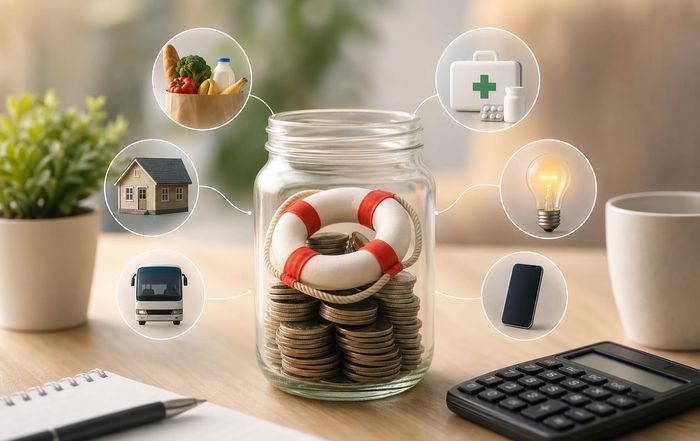
The concept of an emergency fund is simple: a liquid, easily accessible pool of money reserved solely for unexpected events such as job loss, medical bills, urgent home or car repairs, or sudden care responsibilities. Institutions like the Consumer Financial Protection Bureau (CFPB) in the United States and the Money and Pensions Service in the United Kingdom consistently highlight that even a relatively small cash buffer substantially reduces financial stress and reliance on high-cost credit. Research published by the Federal Reserve and the Bank of England has shown that households with even a few hundred dollars in savings are less likely to fall behind on bills or resort to payday loans when faced with shocks.
Historically, many financial planners recommended three to six months of essential living expenses as a target. More recent analyses from organizations such as Vanguard and Fidelity suggest that the appropriate size depends on employment stability, sector risk, family structure, health status and access to credit. A dual-income household with secure public-sector jobs may reasonably aim for a smaller buffer than a self-employed worker in a cyclical industry. In practice, the most important step is often to move from zero to something, building momentum and resilience over time rather than waiting until one can save a perfect amount.
For readers of FinancialDailys, who often balance investing in markets with managing real-world obligations, an emergency fund also plays a crucial role in protecting long-term portfolios. By maintaining a separate safety buffer, investors are less likely to liquidate stocks or other assets during market downturns, a behavior that studies by Morningstar and J.P. Morgan Asset Management have shown to be one of the most damaging to long-term returns. In this way, a robust emergency fund acts as a shield for both daily life and strategic wealth-building.
Rethinking "Cutting Back": From Deprivation to Optimization
Traditional personal finance advice frequently centers on aggressive cost-cutting: cancel subscriptions, stop eating out, avoid all non-essentials. While there is value in reviewing discretionary spending, this approach can backfire psychologically, leading to a sense of scarcity and burnout that undermines consistency. Behavioral economists at institutions like Harvard University and London School of Economics have documented how extreme restriction often leads to "financial dieting" cycles, where people save intensely for a short period and then revert to old habits.
A more sustainable approach focuses on optimization rather than deprivation. Instead of asking what can be cut, households can ask where money is unintentionally leaking or being used inefficiently. For instance, research from McKinsey & Company and Deloitte indicates that many consumers overpay for telecom services, insurance or utility plans because they do not regularly shop around or negotiate. Adjusting these structural costs does not require giving up essentials; it simply aligns spending with actual usage and current market offers.
The editorial stance at FinancialDailys emphasizes that financial resilience is not about living the most austere life possible but about making deliberate, informed choices. By reframing the question from "What must be sacrificed?" to "Where can systems be improved?" individuals can build an emergency fund while preserving the core elements that sustain their health, work capacity and relationships.
Automating Savings: Turning Inertia into an Advantage
One of the most powerful tools for building an emergency fund without constant willpower is automation. Behavioral finance research, including work by Nobel laureate Richard Thaler and the Center for Advanced Hindsight at Duke University, has repeatedly shown that people are far more likely to save when the process is automatic and requires no repeated decision-making.
Many banks and fintech platforms now allow customers to set up automatic transfers from checking accounts to dedicated savings accounts on a weekly or monthly basis. Even modest amounts, such as the equivalent of a few coffees each week, can accumulate significantly over the course of a year, especially when held in high-yield savings accounts offered by reputable institutions. In multiple countries, comparison tools maintained by central banks or consumer associations help identify competitive rates; for example, NerdWallet, Ratehub, Finder and MoneySavingExpert provide regularly updated overviews of savings products in their respective markets.
The key is to treat the emergency fund contribution as a non-negotiable "bill to self," scheduled immediately after income is received. This mirrors the "pay yourself first" principle that underpins many retirement savings systems, such as automatic enrollment in employer pension or 401(k) plans, which has been studied extensively by organizations like the OECD and National Bureau of Economic Research. By moving money out of everyday spending accounts before it can be subconsciously allocated to other uses, savers harness their natural inertia in a positive way.
Readers can deepen their understanding of such structural strategies through the broader finance and banking coverage on financialdailys, where automated solutions and digital tools are frequently analyzed in the context of broader economic trends.
Micro-Saving and "Rounding Up" Without Feeling the Pinch
Beyond fixed automated transfers, micro-saving techniques have become an increasingly popular way to build an emergency fund almost invisibly. Several banks and fintech firms, including Chime in the United States, Monzo and Revolut in Europe, and various regional digital banks in Asia-Pacific, offer "round-up" features that automatically round card purchases to the nearest unit of currency and sweep the difference into savings. While each individual transaction contributes only a small amount, the cumulative effect over hundreds of purchases can be meaningful.
Studies by organizations such as Common Cents Lab and Financial Health Network suggest that micro-saving works precisely because it operates below the threshold of perceived sacrifice. People typically do not feel deprived by an extra small amount being set aside, yet they experience a positive psychological impact when they periodically check and see that their emergency fund has grown. This reinforces a sense of progress and control, which is critical for long-term adherence.
In some markets, apps also allow users to set "trigger-based" savings rules, such as saving a small sum every time they visit a particular store or spend on a specific category. These tools can be especially helpful for younger savers and those with irregular incomes, who may find it difficult to commit to large fixed transfers. As digital banking continues to evolve, FinancialDailys pays close attention to how such technologies intersect with broader tech and consumer trends, including data privacy, open banking and financial inclusion.
Optimizing Fixed Costs Without Undermining Essentials
While the objective is to avoid cutting true essentials, there is often room to optimize how those essentials are purchased or financed. Housing, insurance, utilities, telecommunications and transportation together make up a substantial portion of household expenditure in most advanced economies according to data from Eurostat, the U.S. Bureau of Labor Statistics and Statistics Canada. Small percentage reductions in these categories can free up meaningful cash flow without reducing basic consumption.
For housing, refinancing a mortgage to a lower rate, where feasible and cost-effective, can reduce monthly obligations, though the benefits depend heavily on interest rate environments and transaction costs. In rental markets, some tenants have success negotiating modest reductions or incentives at lease renewal, especially in areas with rising vacancy rates, as noted in reports from CBRE and JLL. In the utilities space, switching providers where competition is allowed, or enrolling in time-of-use pricing plans, can lower bills without reducing usage, particularly when combined with simple efficiency measures.
Insurance is another area where regular review can yield savings. Consumer advocates and regulators, including the Financial Conduct Authority (FCA) in the UK and ASIC in Australia, have emphasized the importance of comparing policies and ensuring that coverage matches current needs. Over-insurance or outdated add-ons can quietly inflate premiums. By using impartial comparison sites such as Policygenius, Compare the Market or government-backed resources where available, consumers can often maintain essential protection at a lower cost.
In each of these categories, the savings realized can be redirected systematically into an emergency fund. The process aligns closely with the type of structural financial analysis often highlighted in the property and economy sections of financialdailys, where housing affordability, energy prices and regulatory changes are tracked as part of the broader macroeconomic landscape.
Leveraging Banking Products Strategically and Safely
The choice of where to hold an emergency fund is as important as the decision to build one. The primary requirements are safety, liquidity and reasonable yield. Most experts, including those at FINRA, the Securities and Exchange Commission (SEC) and national deposit insurance agencies, recommend keeping emergency funds in insured accounts such as savings accounts, money market deposit accounts, or in some jurisdictions, government-backed premium bonds or similar instruments.
High-yield savings accounts offered by reputable banks and credit unions can provide interest rates that are significantly higher than traditional branch-based accounts, although yields fluctuate with central bank policy. Money market mutual funds, regulated under frameworks such as Rule 2a-7 in the United States, may offer slightly higher yields but typically do not have the same government-backed deposit insurance, so they are more appropriate for those comfortable with a modest additional layer of risk and complexity.
Importantly, emergency funds should not be heavily invested in volatile assets such as equities or long-duration bonds, even when markets appear stable. Historical analyses from BlackRock and Bank for International Settlements (BIS) show that market downturns can be sudden and severe, and being forced to sell at a loss to cover an emergency undermines the very purpose of the fund. For those interested in market exposure, it is usually more prudent to build a separate investment portfolio, a topic explored extensively in the stocks and markets coverage at FinancialDailys.
Gentle Income Enhancement: Side Earnings Without Burnout
When essentials already consume most of a paycheck, creating an emergency fund solely through spending adjustments can feel slow. In such cases, modest and sustainable income enhancements can make a meaningful difference, provided they are approached strategically and do not compromise health or primary job performance. The rise of remote work, digital platforms and flexible arrangements has opened new avenues for supplementary income in many countries.
Professional freelancing in areas such as writing, design, software development, consulting or tutoring can be facilitated through reputable platforms, though individuals should be cautious about fees, contract terms and local tax implications. Organizations such as the International Labour Organization (ILO) and think tanks like Brookings Institution have studied the gig economy, highlighting both opportunities and challenges. For some, occasional weekend or evening work aligned with existing skills can generate a steady trickle of income that is earmarked entirely for the emergency fund.
In other cases, employees may be able to increase income by seeking internal promotions, skill-based pay adjustments or performance bonuses. Investing in upskilling through credible online platforms such as Coursera, edX or LinkedIn Learning, particularly in high-demand fields like data analysis, project management or cloud computing, can improve earning potential over time. The link between skills development and financial resilience is a recurring theme in the careers reporting at financialdailys, where labor market trends and education pathways are examined in depth.
The critical principle is to avoid overextending. Medical and psychological research, including work published by The Lancet and American Psychological Association, has documented the health risks associated with chronic overwork. A carefully chosen, limited side activity that aligns with personal strengths is far more sustainable than a relentless schedule that erodes well-being.
Behavioral Techniques: Making Saving Feel Rewarding
Financial behavior is rarely driven by spreadsheets alone; emotions, habits and identity play powerful roles. Behavioral science research from institutions like MIT Sloan School of Management and Behavioral Insights Team suggests that small design changes and mental framing can significantly increase the likelihood of sticking to savings goals, including emergency funds.
One effective technique is goal visualization. Instead of viewing the emergency fund as an abstract number, individuals can define specific scenarios it would protect against, such as covering three months of rent in case of job loss or paying for an unexpected medical procedure. This makes the fund feel purposeful rather than restrictive. Some financial apps now allow users to name sub-accounts with concrete labels ("safety net," "family security") and display progress bars, which can enhance motivation.
Another strategy involves "commitment devices," where people voluntarily impose gentle constraints on their future selves. For example, choosing an account that is slightly less convenient to access, such as at a different bank or without an attached debit card, can reduce the temptation to spend impulsively while still allowing withdrawals in genuine emergencies. Research from Yale University and World Bank field experiments in several countries has shown that such devices can significantly increase savings rates among diverse populations.
Social support also matters. Sharing savings goals with a trusted friend or family member, or participating in community-based saving circles, can create accountability and encouragement. In various regions, community saving and credit cooperatives, supervised by national regulators, provide structured environments for collective saving and borrowing, often with financial education components. These models, analyzed by organizations like CGAP and World Council of Credit Unions, demonstrate that social structures can complement individual discipline.
Readers who follow FinancialDailys across its business and world sections will recognize similar behavioral dynamics at play in corporate decision-making and policy design, where incentives, narratives and institutional frameworks shape economic outcomes.
Integrating Emergency Funds with Broader Financial Strategy
An emergency fund does not exist in isolation; it is one component of a comprehensive financial strategy that includes debt management, investing, insurance and retirement planning. The sequence in which these elements are addressed can significantly influence long-term outcomes. Many financial educators, including those at National Endowment for Financial Education (NEFE) and Money Advice Trust, recommend first building a small starter emergency fund, then focusing on paying down high-interest unsecured debt, before gradually expanding the fund to a more robust level.
For investors, a common question is how to balance contributions to an emergency fund with contributions to retirement accounts or other investment vehicles. The answer depends on factors such as employer matching, tax advantages and risk tolerance. Where employer-sponsored retirement plans offer substantial matching contributions, it may be beneficial to contribute at least enough to capture the full match while simultaneously building a modest emergency buffer. Over time, as the emergency fund approaches its target size, additional surplus can flow more heavily into long-term investments.
The editorial perspective at FinancialDailys emphasizes that these decisions should be informed by both quantitative analysis and personal context. Articles in the investing and finance sections often highlight the importance of diversification, risk management and time horizon, all of which intersect with the role an emergency fund plays. By insulating everyday life from short-term shocks, the fund allows investors to remain disciplined in their long-term strategies, even during periods of market volatility or economic uncertainty.
Building Resilience in an Uncertain World
The global economic landscape in recent years has underscored how quickly conditions can change, from public health crises and supply chain disruptions to inflation surges and shifts in labor markets. Institutions such as the International Monetary Fund (IMF) and World Economic Forum (WEF) continue to stress the importance of household financial resilience as a foundation for broader economic stability and social cohesion. Emergency funds are a practical expression of this resilience at the individual level.
For readers of FinancialDailys, who track developments across markets, economy, trade and sustainability, the message is clear: while macroeconomic forces are often beyond personal control, the structure and habits of one's own finances are not. By combining automation, micro-saving, cost optimization, prudent use of financial products, modest income enhancements and behavioral techniques, it is possible to build an emergency fund without stripping life of its essentials or aspirations.
The path is incremental rather than dramatic, grounded in evidence rather than quick fixes. Each small transfer, each optimized bill, each thoughtful decision about where to hold cash contributes to a buffer that can transform how individuals experience uncertainty. Instead of facing every unexpected expense with anxiety or debt, households can respond with confidence and flexibility, preserving both financial health and long-term goals.
In this way, the emergency fund becomes more than just a number in a savings account; it becomes a cornerstone of personal financial stability, supporting informed participation in the broader financial world that FinancialDailys is dedicated to analyzing and explaining.
