
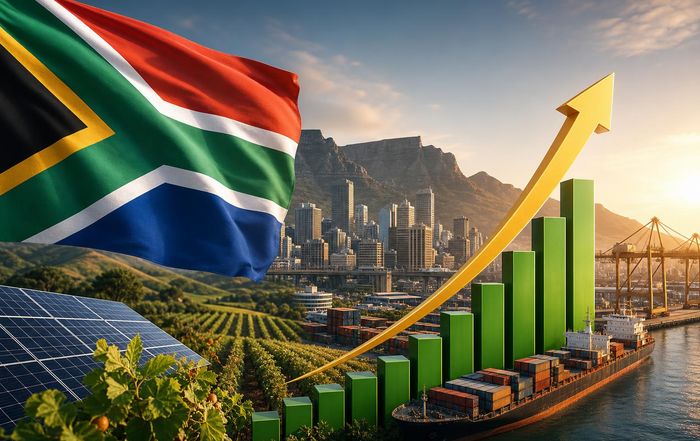
South Africa's Markets and Growth Opportunities in 2026
South Africa stands at a pivotal moment in 2026, balancing structural challenges with a breadth of emerging opportunities that are drawing renewed interest from global investors, multinationals and regional champions alike. As a diversified, middle-income economy with deep capital markets, sophisticated financial services and a strategic geographic position, the country remains a critical gateway to Africa and an increasingly relevant testbed for innovation. For the readership of FinancialDailys.com, whose focus spans global finance, markets, investing, business strategy and sustainability, South Africa's evolving story offers a nuanced case study in risk-aware opportunity seeking, where experience, expertise, authoritativeness and trustworthiness are essential filters for decision-making.
Macroeconomic Landscape and Policy Direction
By 2026, South Africa's growth profile reflects a gradual, if uneven, recovery from the shocks of the early 2020s, with real GDP growth modest but positive and inflation largely contained within the official target band. The South African Reserve Bank (SARB) continues to uphold its reputation as one of the more credible central banks in emerging markets, maintaining an inflation-targeting regime that is closely watched by global investors tracking international monetary policy trends. The country's macroeconomic framework is anchored by prudent, if constrained, fiscal management, with the National Treasury pursuing a delicate balance between consolidation, social spending and growth-enhancing investment.
For readers tracking macro dynamics on FinancialDailys' economy coverage, South Africa's policy trajectory illustrates the interplay between structural reform and cyclical realities. The government's medium-term expenditure frameworks, debt management strategies and public-private partnership initiatives are increasingly scrutinised not only by rating agencies such as Moody's, S&P Global and Fitch, but also by long-term institutional investors seeking clarity on sovereign risk. While debt-to-GDP ratios remain elevated by emerging-market standards, the authorities' commitment to fiscal transparency and the gradual rationalisation of state-owned enterprises continue to underpin a cautiously constructive narrative.
International institutions such as the International Monetary Fund and the World Bank have repeatedly highlighted South Africa's potential dividend from structural reforms in energy, logistics and labour markets. For those who wish to explore how these reforms compare with other emerging markets, resources such as the IMF's regional outlooks and the World Bank's country diagnostics provide useful context. South Africa's membership of the G20 and the expanded BRICS grouping further embeds it in global economic governance, enhancing its visibility to multinational corporations reassessing their global footprints.
Financial Markets: Depth, Liquidity and Reform
South Africa's financial markets remain among the deepest and most liquid in the developing world, anchored by the Johannesburg Stock Exchange (JSE), a sophisticated banking system and robust regulatory institutions. The JSE continues to serve as a hub for equity, bond and derivative trading in Africa, with listings that span mining, financial services, consumer goods, technology and increasingly renewable energy and infrastructure. International investors monitoring global equity markets often treat South Africa as both a proxy for African risk and a distinct allocation within emerging-market portfolios.
For readers of FinancialDailys' markets section, the key point is that South Africa's capital markets offer a combination of breadth and regulatory sophistication that is rare on the continent. The Financial Sector Conduct Authority (FSCA) and the Prudential Authority operate within a "twin peaks" regulatory model that aligns closely with global best practice and is frequently referenced in comparative studies by organisations such as the Bank for International Settlements and the OECD. This framework supports a high degree of investor protection, transparency and market integrity, which in turn underpins the country's role as a regional financial hub.
Bond markets, both sovereign and corporate, are well developed, with an active yield curve that facilitates pricing of risk across maturities. South Africa is included in major global bond indices, and while episodes of volatility have been pronounced at times of domestic or external stress, liquidity has generally remained resilient. For investors exploring fixed income and currency exposures, FinancialDailys' finance coverage can serve as a complementary lens to global sources such as Bloomberg and Reuters, offering context on local drivers including fiscal policy announcements, regulatory changes and political developments.
Banking, Fintech and the Evolution of Financial Services
The South African banking sector is dominated by a cluster of large, well-capitalised institutions, including Standard Bank, FirstRand, Absa and Nedbank, which are frequently cited by the Bank for International Settlements and the Financial Stability Board as examples of advanced risk management and regulatory compliance within emerging markets. Non-performing loan ratios have remained manageable, capital adequacy is strong, and digital innovation has accelerated, particularly in retail banking and payments.
Simultaneously, a vibrant fintech ecosystem has emerged, with players such as TymeBank, Discovery Bank and a growing cohort of startups leveraging mobile technology, data analytics and alternative credit scoring to expand financial inclusion. South Africa's high mobile penetration and relative sophistication in digital financial services position it as a laboratory for scalable solutions that can be exported across Africa and beyond. Those interested in deeper sectoral analysis can reference global fintech insights alongside FinancialDailys' banking coverage, where the intersection of regulation, innovation and consumer behaviour is increasingly central.
The regulatory environment has been progressively adapted to accommodate digital banks, open banking initiatives and fintech sandboxes, while maintaining stringent anti-money laundering and counter-terrorist financing standards aligned with the Financial Action Task Force (FATF). Although South Africa has faced scrutiny and remedial action in this domain, the direction of travel is towards greater transparency and compliance, which is essential for maintaining correspondent banking relationships and international investor confidence.
Equity Opportunities: Sectoral Leaders and Structural Themes
Equity investors looking at South Africa in 2026 encounter a market that combines mature blue-chip names with emerging growth stories. Resource-linked companies such as Anglo American, BHP, Glencore (via secondary listings) and Sibanye-Stillwater continue to reflect global demand cycles for commodities, including platinum group metals, gold, coal and increasingly battery-related minerals. For those tracking global commodity dynamics, South Africa's miners offer leveraged exposure to trends in decarbonisation, electric vehicles and industrial metals.
Beyond resources, South Africa's consumer and financial sectors present opportunities aligned with demographic shifts and rising middle-class aspirations across Africa. Retailers such as Shoprite, Woolworths Holdings and Pick n Pay have pan-African footprints, while telecommunications groups like MTN Group and Vodacom connect South Africa to high-growth markets in West and East Africa. On FinancialDailys' stocks page, these companies are often analysed not only for their domestic performance but also for their role in regional expansion strategies that mirror the ambitions of corporations in Europe, Asia and North America seeking frontier growth.
The technology and innovation landscape, while smaller than in the United States or China, is increasingly visible. JSE-listed technology and media firms, combined with a growing venture capital ecosystem, are nurturing startups in fintech, healthtech, edtech and software-as-a-service. International observers can benchmark these developments against global innovation hubs using resources like the World Intellectual Property Organization's innovation index and the World Economic Forum's competitiveness reports, while FinancialDailys' tech coverage contextualises how these trends intersect with local regulatory, infrastructure and talent dynamics.
Real Economy: Logistics, Manufacturing and Trade Corridors
South Africa's real economy is anchored by a diversified base spanning mining, manufacturing, agriculture and services, with trade corridors that connect the Atlantic and Indian Oceans and link landlocked neighbours to global markets. Major ports such as Durban, Cape Town and Ngqura, along with key rail and road networks, form the backbone of regional logistics, even as they have faced operational challenges and capacity constraints.
For businesses evaluating trade and supply chain strategies, South Africa's location on the key East-West routes and its role in the African Continental Free Trade Area (AfCFTA) present both strategic advantages and operational considerations. Companies in Europe, Asia and North America viewing Africa as a growth frontier increasingly assess South Africa as a potential base for regional headquarters, manufacturing and distribution. Resources such as UNCTAD's trade and development reports and WTO analyses provide comparative perspectives, while FinancialDailys' trade coverage highlights how evolving customs regimes, infrastructure investments and regional politics shape practical opportunities.
Manufacturing sectors such as automotive, chemicals and food processing remain important employers and export earners. Original equipment manufacturers including BMW, Mercedes-Benz, Volkswagen and Toyota operate significant production facilities in South Africa, leveraging trade agreements with the European Union, the United Kingdom and other partners. The automotive industry illustrates how targeted industrial policy, skills development and integration into global value chains can generate durable economic benefits, even amid global shifts towards electric vehicles and changing consumer preferences.
Property, Urbanisation and Real Asset Investment
The South African property market in 2026 reflects both cyclical headwinds and structural shifts. Commercial real estate, particularly office space, has been reshaped by hybrid work models, while industrial and logistics properties have benefited from the rise of e-commerce, regional trade and near-shoring. Residential markets are characterised by strong demand in well-located urban and peri-urban areas, alongside affordability constraints and infrastructure gaps.
For investors and corporates considering real asset exposure, the country's Real Estate Investment Trust (REIT) sector offers a transparent vehicle with established regulatory oversight. The interplay between interest rates, economic growth and demographic trends is critical, and global benchmarks from organisations such as MSCI Real Estate and RICS can be used to contextualise South African valuations and yields. Within FinancialDailys.com, the property section provides ongoing coverage of market dynamics, including the impact of infrastructure upgrades, municipal governance and changing consumer preferences on asset performance.
Urbanisation continues to be a defining trend, with major metropolitan areas such as Johannesburg, Cape Town, Durban and Pretoria driving demand for housing, retail, transport and digital infrastructure. Smart-city initiatives, mixed-use developments and public-private partnerships in transport and utilities are gradually reshaping the built environment, offering opportunities for engineering firms, developers, institutional investors and global infrastructure funds.
Startups, Innovation and the Entrepreneurial Ecosystem
South Africa's startup ecosystem, while not yet rivaling the scale of Silicon Valley, London or Berlin, has matured significantly, with Cape Town and Johannesburg often cited among the leading innovation hubs in Africa. A combination of experienced founders, access to technical talent, relatively advanced financial markets and growing pools of venture and growth capital has supported the emergence of high-potential companies across fintech, e-commerce, enterprise software, healthtech and renewable energy solutions.
International investors and corporates seeking exposure to African innovation increasingly view South Africa as both a source of deal flow and a gateway to regional markets. Comparative data from platforms like Crunchbase and PitchBook can be combined with local insights from FinancialDailys' startups section, which tracks funding rounds, exits, regulatory developments and sector-specific trends. The presence of global accelerators, corporate venture arms and development finance institutions further strengthens the ecosystem's capital base and mentorship networks.
Policy initiatives aimed at supporting small and medium-sized enterprises, including tax incentives, innovation grants and public procurement reforms, are gradually improving the operating environment, though challenges around red tape, late payments and infrastructure reliability remain. For entrepreneurs and investors with a long-term perspective, the opportunity lies in building resilient, scalable business models that can navigate volatility while tapping into continental demand for digital services, financial inclusion and productivity-enhancing technologies.
Labour Market, Skills and Career Opportunities
The South African labour market is characterised by a dual reality: high structural unemployment, particularly among youth, alongside pockets of acute skills shortages in sectors such as technology, engineering, healthcare and advanced manufacturing. This divergence creates both social pressures and opportunities for companies that invest in training, upskilling and partnerships with universities and technical colleges.
For global corporates and investors evaluating South Africa as a base for regional operations, the availability of English-speaking talent, a strong professional services sector and globally recognised qualifications in fields such as accounting, law and engineering are significant advantages. Organisations such as PwC, Deloitte, EY and KPMG maintain substantial operations in the country, reflecting its role as a hub for auditing, consulting and tax advisory services across Africa. Insights from the International Labour Organization and OECD skills reports can be used to benchmark South Africa's human capital profile against peer economies.
For professionals and graduates, FinancialDailys' careers coverage offers a window into evolving demand for skills, sectoral hiring trends and the impact of automation and digital transformation on employment. As global companies expand shared-services centres, business process outsourcing and remote-first teams, South Africa's time zone alignment with Europe, language capabilities and cost competitiveness position it as an attractive location for knowledge-intensive services.
Sustainability, Energy Transition and ESG-Driven Investment
Sustainability is an increasingly central theme in South Africa's economic narrative, reflecting both domestic imperatives and global investor expectations. As one of the more carbon-intensive economies due to its reliance on coal-fired power, South Africa faces a complex energy transition that must reconcile climate commitments with energy security, affordability and employment in affected sectors. The government's Just Energy Transition plans, supported by partners such as the European Union, United States, United Kingdom, France and Germany, aim to mobilise significant climate finance for renewable energy, grid modernisation and economic diversification in coal-dependent regions.
For investors prioritising environmental, social and governance (ESG) criteria, South Africa presents both challenges and opportunities. The country's corporate governance standards, shaped by the King IV Report on Corporate Governance and enforced by regulators and institutional investors, are often cited as a regional benchmark. At the same time, environmental and social risks related to water scarcity, biodiversity, inequality and community relations require rigorous due diligence and ongoing engagement. Resources such as the UN Principles for Responsible Investment and Task Force on Climate-related Financial Disclosures provide frameworks that are increasingly applied by South African corporates and asset managers.
Within FinancialDailys.com, the sustainability section explores how climate risk, regulatory shifts and stakeholder expectations are reshaping capital allocation, corporate strategy and innovation. Investors and companies that understand South Africa's specific sustainability context can position themselves to support and benefit from the growth of renewable energy, green infrastructure, circular economy initiatives and sustainable agriculture, while contributing to long-term resilience.
Global Integration and Geopolitical Positioning
South Africa's role in the global economy extends beyond trade and finance to encompass diplomacy, multilateral engagement and regional leadership. As a member of the G20, BRICS, the African Union and the Southern African Development Community (SADC), the country often acts as a bridge between advanced and developing economies on issues ranging from climate finance and trade rules to digital governance and health security. This positioning can create both strategic opportunities and geopolitical complexity for businesses and investors.
The expansion of BRICS, evolving relationships with major powers such as the United States, China and the European Union, and debates around global supply chain diversification all shape the context in which South African markets operate. For readers tracking these dynamics, resources such as the Brookings Institution and Chatham House offer analytical depth, while FinancialDailys' world coverage focuses on how global shifts translate into concrete risks and opportunities for South African and international stakeholders.
South Africa's participation in the African Continental Free Trade Area is particularly significant, as it promises to reduce barriers, harmonise standards and create a larger, more integrated market across the continent. Companies that establish strong operational and partnership footprints in South Africa may be well placed to leverage this integration, using the country's financial, legal and logistics infrastructure to scale across borders.
Strategic Considerations for Investors and Businesses
For the global audience of FinancialDailys.com, the central question is how to approach South Africa's markets and growth opportunities with a disciplined, informed and forward-looking strategy. The answer lies in combining a clear understanding of macroeconomic and political risk with granular sectoral analysis, robust governance frameworks and a long-term perspective on structural trends.
Investors considering equity, fixed income or alternative assets can benefit from integrating local expertise, scenario planning and ESG analysis into their decision-making processes. Corporates evaluating South Africa as a base for regional operations should weigh factors such as infrastructure reliability, regulatory stability, talent availability and partnership ecosystems, while recognising the potential upside from participating in Africa's long-term growth story.
For readers exploring investing opportunities or broader business strategies, South Africa in 2026 offers a complex but compelling proposition: a market with deep financial infrastructure, sophisticated institutions and significant human capital, navigating a challenging but potentially transformative period of reform, innovation and integration. Those who approach it with experience, expertise, authoritativeness and a commitment to trust-based engagement are likely to be best positioned to identify and realise sustainable value in the years ahead.
