
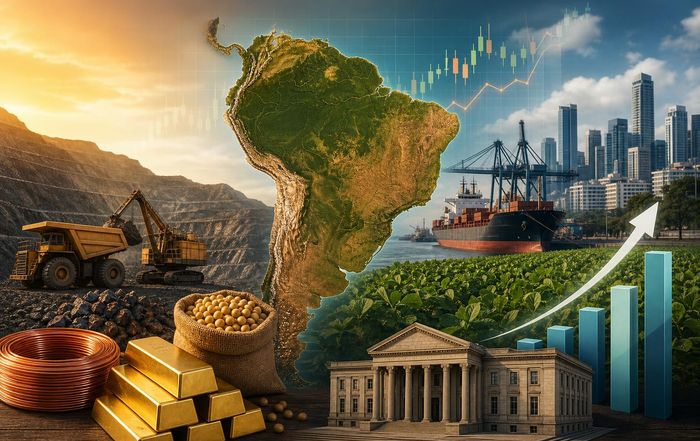
South America's Commodity Cycles and the Quest for Fiscal Stability
Introduction: A Region Shaped by Booms and Busts
South America's modern economic story is inseparable from the rise and fall of commodity prices. From copper and iron ore to soybeans, oil, lithium and beef, the region's fortunes have often moved in tandem with global demand and the pricing power of its vast natural resource base. For readers of FinancialDailys, this connection between commodity cycles and fiscal stability is not merely an academic question; it is a central driver of sovereign risk, currency performance, equity valuations, and long-term investment opportunity across emerging and frontier markets.
In the years surrounding the global commodity super-cycle of the 2000s and early 2010s, many South American economies experienced rapid growth, falling public debt ratios, and a sense that long-standing structural constraints might finally be loosening. When the cycle turned, fiscal fragilities, institutional weaknesses, and over-reliance on raw material exports were exposed. Since then, policymakers, multilateral institutions, and private investors have been engaged in a complex process of reassessing how South America can harness its resource wealth while building more resilient, counter-cyclical fiscal frameworks.
This article examines how commodity cycles have historically shaped fiscal outcomes in South America, how leading economies are seeking to stabilize their public finances, and what the evolving global environment-marked by decarbonization, technological change, and shifting trade patterns-means for future cycles. Throughout, the emphasis is on experience, evidence and practical implications for those following markets, investing, and policy developments in the region.
The Anatomy of South American Commodity Cycles
South America is one of the world's most commodity-dependent regions. According to data from the World Bank and UNCTAD, primary commodities account for a large share of merchandise exports in countries such as Chile (copper and lithium), Peru (copper, gold, zinc), Brazil (iron ore, soy, oil, beef), Argentina (soy complex, corn, wheat, lithium), Colombia (oil, coal, coffee), and Ecuador (oil, bananas, shrimp). In some cases, commodities represent more than half of total export revenues, and in several economies they are a major source of fiscal income through royalties, export taxes, and corporate income taxes.
The commodity super-cycle that began in the early 2000s was driven by strong global growth, particularly from China, rapid industrialization, and a surge in demand for metals, energy and agricultural products. Studies by the International Monetary Fund and Bank for International Settlements have documented how this boom translated into higher terms of trade, stronger exchange rates, and robust government revenues across much of Latin America. Governments in South America saw budget deficits narrow or turn into surpluses, debt-to-GDP ratios fall, and reserves accumulate, especially between approximately 2003 and 2011.
However, this period also exposed a recurring vulnerability: the tendency for pro-cyclical fiscal policy. When prices were high, public spending rose substantially, often on current expenditures such as wages and subsidies rather than on productivity-enhancing investment. In several cases, tax systems became more reliant on volatile commodity-related revenues, while underlying non-commodity tax bases and institutional capacity lagged. When global commodity prices declined after around 2011-2013, the region experienced slower growth, currency depreciation, and a deterioration of fiscal metrics, as documented by the IMF and OECD.
For readers of FinancialDailys, this cyclical pattern has had direct implications for sovereign bond spreads, equity valuations in resource-linked sectors, and the performance of local currencies. Investors who closely tracked global commodity indices alongside South American fiscal and external balances have seen how closely these variables move together. Understanding this dynamic remains critical for anyone analyzing stocks, sovereign risk, or the broader economy of the region.
Fiscal Frameworks: Learning from Past Booms
One of the most significant policy lessons to emerge from the last two decades is the importance of robust fiscal frameworks that can smooth the impact of commodity price swings. Several South American countries have adopted or strengthened fiscal rules, stabilization funds, and medium-term expenditure frameworks to address this challenge.
Chile is often cited by the IMF, World Bank, and independent think tanks such as the Inter-American Dialogue and Brookings Institution as a leading example in the region. Its structural balance rule, introduced in the early 2000s, aims to base fiscal policy on estimates of long-term copper prices and potential output rather than on current, often volatile, revenues. An independent committee provides reference prices for copper and long-term growth, and the government targets a structural fiscal balance over the cycle. The creation of sovereign wealth and stabilization funds, such as the Economic and Social Stabilization Fund, has allowed Chile to save during boom periods and draw down reserves during downturns, helping to cushion the budget and the economy.
Peru has implemented its own fiscal rule framework with ceilings on deficits and debt, and has accumulated buffers in the form of international reserves and public sector deposits. Institutions like the Inter-American Development Bank have highlighted Peru's relatively prudent fiscal stance over the past two decades, which has helped maintain market confidence even amid political volatility.
Brazil, Latin America's largest economy, has historically struggled with more rigid public expenditure structures and higher debt levels, but has nonetheless made efforts to anchor expectations through fiscal rules. The spending cap introduced in 2016, which limited the growth of federal primary spending to inflation, was one such attempt, though it has been revised in subsequent years. In its place, Brazilian authorities have worked on a new fiscal framework that aims to link spending growth to revenue performance while targeting a gradual improvement in the primary balance. Analysts at Banco Central do Brasil, Ipea, and various private research houses have debated the credibility and flexibility of these frameworks, but they represent an important recognition that commodity-driven revenues cannot be treated as permanent.
These experiences underline a broader theme: countries that combine commodity wealth with strong institutions, transparent rules, and credible medium-term anchors tend to achieve more stable fiscal outcomes and enjoy lower risk premia. For readers of FinancialDailys following finance and sovereign bonds, the institutional architecture of fiscal policy has become as important as the headline commodity story.
Case Studies: Brazil, Chile, Peru, Argentina and Colombia
The diversity of South American experiences offers valuable insights into how different policy choices interact with commodity cycles.
Chile remains the region's benchmark for counter-cyclical fiscal management. Despite facing social unrest, constitutional uncertainty, and external shocks, it has maintained relatively moderate public debt and preserved market access on favorable terms, in part due to its institutionalized approach to saving windfalls and managing copper revenues. Analysts at Moody's, S&P Global Ratings, and Fitch Ratings have often cited Chile's institutional strength as a key support for its credit profile, even when growth has disappointed.
Peru, heavily dependent on mining, has also managed to keep public debt relatively contained while using its fiscal and external buffers to respond to shocks. Nonetheless, social tensions around mining projects, environmental concerns, and political instability have created challenges for project execution and revenue predictability. Reports from organizations such as ECLAC and Oxfam highlight how distributional issues and community relations can influence both investment and fiscal stability, underscoring that macro frameworks must be complemented by inclusive and sustainable development strategies.
Brazil illustrates how a large, diversified economy can still be heavily influenced by commodity cycles. The country is a major exporter of iron ore, soybeans, oil and agricultural products, and thus benefited significantly from the 2000s boom. However, high mandatory spending, a complex tax system, and governance challenges have constrained its ability to save during good times. The subsequent downturn revealed structural fiscal weaknesses, leading to rising debt and a loss of investment-grade status in the mid-2010s. Ongoing debates around tax reform, expenditure rules, and the role of state-owned enterprises such as Petrobras remain central to Brazil's fiscal trajectory and its attractiveness to investors.
Argentina showcases a more severe interaction between commodity cycles, macroeconomic instability, and institutional fragility. As a major exporter of soybeans and related products, Argentina's fiscal and external balances have been highly sensitive to agricultural prices and weather shocks. At the same time, chronic inflation, capital controls, repeated debt restructurings, and policy volatility have undermined the country's ability to translate commodity booms into lasting stability. Reports from the IMF, following Argentina's large financing arrangements and subsequent renegotiations, emphasize the need for consistent macro frameworks, credible monetary policy, and structural reforms to reduce reliance on volatile external conditions.
Colombia offers a case where oil and coal have long been central to fiscal revenues and exports, but where authorities have sought to diversify the tax base and strengthen non-commodity revenues. Tax reforms over the past decade, while politically contentious, have aimed to broaden the base, reduce exemptions, and increase collection from sectors beyond hydrocarbons. The OECD, which Colombia joined in 2020, has encouraged further tax modernization and institutional strengthening.
For FinancialDailys readers tracking banking, sovereign spreads, and corporate credit, these country-specific trajectories highlight the importance of differentiating among South American issuers based not only on resource endowments, but also on fiscal rules, governance quality, and the political economy of reform.
The New Commodity Landscape: Energy Transition and Critical Minerals
While traditional commodities such as oil, copper, iron ore and soybeans remain central to South America's export profile, the global push towards decarbonization and clean energy technologies is reshaping the commodity landscape. This evolving environment presents both opportunities and risks for fiscal stability.
The region is exceptionally well positioned in critical minerals essential for the energy transition. The "lithium triangle" spanning parts of Chile, Argentina, and Bolivia holds a significant share of the world's lithium resources, a key input for electric vehicle batteries and energy storage. Chile and Argentina in particular have attracted substantial investment interest from global mining companies and automakers, as documented by industry analyses from sources such as S&P Global and IEA. At the same time, debates around resource nationalism, environmental standards, and community consent have intensified, raising questions about the pace and stability of project development.
Copper, another cornerstone of the energy transition due to its role in electrification, renewable energy infrastructure, and electric vehicles, continues to be a major revenue source for Chile and Peru. The International Energy Agency and World Bank have projected rising demand for copper under most climate policy scenarios, although there is uncertainty around the exact magnitude and timing of this increase, given technological advances, recycling, and potential substitution. This suggests that while the long-term outlook for copper is generally positive, price volatility and cyclical swings are likely to persist.
Oil-exporting countries in South America face a more complex transition. Colombia, Ecuador, Venezuela and Brazil must navigate a world where long-term demand for fossil fuels is under pressure from climate policies, while short-term price cycles remain influenced by geopolitical developments and OPEC+ decisions. The International Energy Agency has outlined scenarios where oil demand peaks in the coming decades, but there is no consensus on the exact trajectory, and some industry players foresee more resilient demand. For fiscal planners, this uncertainty complicates long-term revenue projections and investment strategies for national oil companies.
For FinancialDailys and its audience, these shifts create a new layer of analysis when evaluating business models, sovereign risk, and corporate valuations in South America. The interplay between traditional commodity cycles and the emerging "green" commodity cycle will shape not only export earnings, but also the fiscal and regulatory frameworks that govern resource extraction and revenue distribution.
Building Fiscal Resilience: Policy Innovations and Institutional Strength
In response to the lessons of past cycles and the evolving commodity environment, South American policymakers and institutions have been experimenting with new tools to enhance fiscal resilience.
Several countries have moved towards more transparent and rules-based fiscal frameworks. Independent fiscal councils, medium-term fiscal plans, and greater public reporting of budget assumptions and risks have become more common. Organizations such as the IMF, OECD, and Inter-American Development Bank have supported these efforts through technical assistance and policy advice, emphasizing the importance of credible anchors that can withstand political cycles.
There has also been an increased focus on diversifying tax bases away from commodity-linked revenues. This includes reforms to value-added taxes, income taxes, and efforts to improve tax administration and reduce evasion. While politically challenging, especially in societies with high inequality and limited trust in public institutions, these reforms are critical for creating more stable revenue streams that are less exposed to external price shocks.
On the expenditure side, some governments have sought to improve the quality and efficiency of public spending, prioritizing investments in infrastructure, education, health, and digitalization that can boost long-term growth. Better targeting of subsidies, rationalization of public sector wage bills, and performance-based budgeting are among the tools being discussed and, in some cases, implemented. Independent evaluations by organizations such as ECLAC and academic institutions highlight that progress is uneven but that the direction of travel is increasingly towards more sustainable and inclusive fiscal policy.
For readers following property markets, consumer demand, and corporate earnings, these reforms matter because they influence both macro stability and the environment for private investment. Countries that can credibly signal a commitment to sustainable fiscal paths, even in the face of commodity volatility, are more likely to attract long-term capital, reduce borrowing costs, and support steady growth in sectors beyond extractives.
Markets, Investors and the Pricing of Fiscal Risk
Global investors have become more sophisticated in how they assess the interaction between commodity cycles and fiscal stability in South America. Sovereign bond markets, credit default swaps, and currency markets increasingly differentiate among issuers based on institutional quality, debt dynamics, and policy credibility, rather than treating the region as a homogeneous "commodity play."
Research from major investment banks, asset managers, and institutions like the Bank for International Settlements shows that countries with stronger fiscal frameworks and lower debt burdens tend to experience smaller increases in risk premia when commodity prices fall, and are better able to capitalize on favorable conditions when prices rise. This differentiation is evident in the spread behavior of Chilean, Peruvian, Brazilian, Colombian and Argentine bonds over the past decade.
Equity markets in the region also reflect this nuanced view. While resource-linked sectors remain prominent in local indices, investors are increasingly attentive to diversification, corporate governance, and exposure to domestic demand. For example, the growth of technology, fintech, and consumer-oriented companies in Brazil and elsewhere has created new opportunities that are less directly tied to commodity cycles, although macro stability still plays a crucial role in valuation and performance. Readers of FinancialDailys who follow tech, startups and consumer trends in the region will recognize how macro-fiscal conditions can amplify or dampen these growth stories.
At the same time, environmental, social and governance (ESG) considerations have become more central to investment decisions, especially in Europe and North America. Organizations such as the PRI (Principles for Responsible Investment) and Climate Bonds Initiative have encouraged investors to scrutinize how resource-rich countries manage environmental impacts, community relations, and governance risks. This adds another dimension to the relationship between commodity cycles and fiscal stability, as poor management of environmental and social issues can lead to project delays, legal liabilities, and reputational damage, all of which can affect revenues and borrowing costs.
Towards More Sustainable and Inclusive Growth
A recurring theme in the analysis of South American commodity cycles is that fiscal stability cannot be fully secured by macro rules alone; it must be underpinned by broader economic diversification, social inclusion, and sustainable development. Institutions like ECLAC, the World Bank, and regional think tanks have argued that South America's long-term prosperity depends on moving up value chains, investing in human capital, and harnessing technological change.
This implies leveraging commodity revenues to finance structural transformation rather than simply funding current consumption. Examples include investing in renewable energy infrastructure, supporting innovation and research in mining technologies and sustainable agriculture, and building logistics and digital networks that facilitate trade in higher-value goods and services. Learn more about sustainable business practices through organizations such as the World Business Council for Sustainable Development and UN Global Compact, which provide frameworks for integrating sustainability into corporate and national strategies.
For FinancialDailys, which serves readers interested in trade, sustainability, and careers in finance and business, this agenda is not only about risk mitigation but also about opportunity. The rise of green finance, sustainable bonds, and impact investing creates new channels for capital to support projects that strengthen resilience, diversify economies, and reduce the volatility associated with traditional commodity cycles.
Outlook: Navigating Future Cycles with Greater Resilience
As the world continues to adapt to technological change, climate imperatives, and shifting patterns of globalization, South America's commodity-rich economies face a complex but promising landscape. The region's abundant natural resources, strategic position in critical minerals, and significant agricultural capacity mean that commodities will remain central to its economic model for the foreseeable future. However, the experience of past booms and busts has driven a deeper appreciation of the need for robust fiscal institutions, diversified tax bases, and prudent macroeconomic management.
In the mid-2020s, policymakers, investors, and citizens across South America are engaged in a collective effort to reshape how resource wealth is managed and how fiscal policy responds to external shocks. Progress is uneven and challenges remain, including political polarization, social demands, and the lingering effects of global crises. Yet there are also clear signs of learning and adaptation, from the strengthening of fiscal rules in countries like Chile and Peru, to ongoing debates over tax reform and expenditure quality in Brazil, Colombia and elsewhere.
For readers of FinancialDailys following world developments and regional dynamics, the key takeaway is that South America's fiscal future will be determined not only by the direction of global commodity prices, but by the quality of its institutions, the inclusiveness of its growth models, and the strategic choices it makes about how to invest its resource wealth. Those who understand both the cyclical forces at play and the structural reforms underway will be best positioned to navigate the opportunities and risks that South America's commodity cycles continue to present.
