
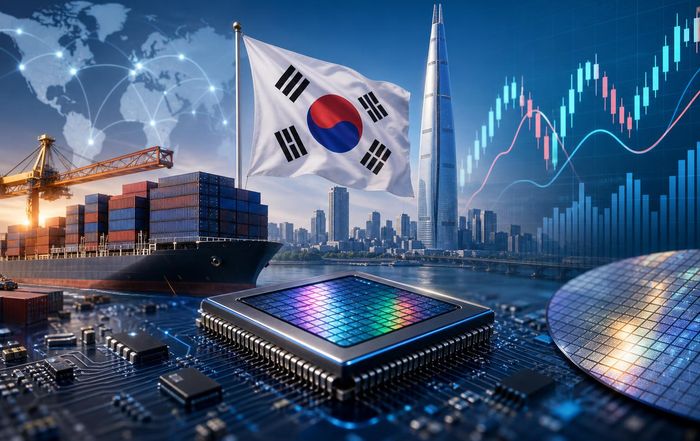
South Korea's Semiconductor Exports and the Logic of Market Cycles
South Korea's ascent as a semiconductor powerhouse is one of the defining stories of the modern global economy. From memory chips that power cloud data centers and smartphones, to advanced logic chips that underpin artificial intelligence and high-performance computing, the country's chipmakers sit at the heart of global value chains. For readers of FinancialDailys, understanding South Korea's semiconductor exports is not simply an exercise in industrial analysis; it is a window into how technology, macroeconomics, and capital markets interact across cycles, and how investors can navigate a sector characterized by both structural growth and pronounced volatility.
The Strategic Role of Semiconductors in South Korea's Economy
Semiconductors are often described by policymakers as the "rice of industry," a foundational input to modern production. Nowhere is this metaphor more apt than in South Korea. According to data from Bank of Korea and Korea International Trade Association, semiconductors have consistently been the country's largest single export item in recent years, often accounting for close to one-fifth of total exports by value. This export concentration has deep implications for national income, foreign exchange earnings, employment in high-value manufacturing, and, critically for investors, the performance of South Korea's equity and currency markets.
The dominance of Samsung Electronics and SK hynix in dynamic random-access memory (DRAM) and NAND flash memory has given the country outsized influence in global pricing and supply conditions. Industry reports from organizations such as IC Insights and TrendForce regularly show these two firms controlling a majority share of the global DRAM market and a significant share of NAND. This concentration has historically allowed the South Korean industry to respond to downturns by cutting capital expenditure and moderating supply, thereby accelerating recoveries in pricing and margins.
For readers tracking broader macro indicators on FinancialDailys' economy section, it is important to recognize that semiconductor export cycles often lead or amplify cycles in industrial production, current account balances, and even fiscal projections. When chip exports surge, South Korea's trade surplus tends to expand, supporting the won and improving risk sentiment toward Korean assets; when they contract, the reverse is often true.
Understanding the Semiconductor Cycle: Demand, Supply, and Technology
The semiconductor industry is inherently cyclical, reflecting the interplay of demand fluctuations, long investment lead times, and rapid technological change. The classic memory cycle, which has shaped South Korea's fortunes for decades, is driven by periods of strong demand and high prices that trigger aggressive capacity expansion, followed by oversupply and price collapses, then consolidation and recovery.
Demand is closely tied to end-markets such as smartphones, personal computers, servers, and, increasingly, cloud and edge computing for artificial intelligence. When global growth is robust, corporate IT spending rises and consumer electronics sales improve, leading to stronger chip demand. Conversely, downturns in global manufacturing or consumer sentiment, such as those documented by institutions like the OECD and IMF, typically coincide with inventory corrections and weaker chip orders.
On the supply side, South Korean firms' capital expenditure cycles play a decisive role. Memory fabs require multibillion-dollar investments and multi-year construction timelines. Data from SEMI, the global industry association for semiconductor equipment, shows that South Korea has been one of the largest markets for semiconductor manufacturing equipment, particularly in years preceding upcycles in memory pricing. The time lag between investment decisions and completed capacity tends to exacerbate cyclicality: by the time new fabs come online, demand may already be slowing, creating oversupply.
Technological transitions further shape these cycles. Node shrinks, new memory architectures, and process innovations can temporarily constrain supply or alter cost structures. For instance, the move from planar NAND to 3D NAND, and the ongoing race to increase layer counts, have required significant retooling and capital outlays, which in some phases have limited effective supply even as nominal capacity expanded. Reports from Gartner and McKinsey & Company emphasize that these technology transitions often create windows where leading firms can command premium pricing, while laggards suffer margin compression.
For FinancialDailys readers focused on markets and stocks, appreciating this cyclical and technological interplay is fundamental. Equity valuations in South Korean chipmakers frequently anticipate turns in the cycle by several quarters, as investors discount future earnings based on capex plans, inventory data, and leading indicators from end-markets such as smartphones, PCs, and cloud infrastructure.
The AI and Data Center Supercycle: Structural Tailwinds Amid Volatility
In the mid-2020s, the rise of generative artificial intelligence and large-scale data analytics has added a new dimension to South Korea's semiconductor narrative. Hyperscale data center operators, cloud service providers, and leading AI companies require vast quantities of high-bandwidth memory (HBM), DRAM, and advanced storage solutions. SK hynix, in particular, has emerged as a key supplier of HBM used alongside advanced GPUs produced by companies such as NVIDIA, while Samsung Electronics remains a major provider of both DRAM and NAND for servers and enterprise storage.
Industry analyses from IDC and Boston Consulting Group suggest that AI-related semiconductor demand is likely to grow significantly faster than traditional PC and smartphone segments over the coming years, even as those mature markets continue to cycle. This AI-driven demand is more data-center centric, which tends to be less sensitive to short-term consumer sentiment and more tied to long-horizon investment programs by technology platforms and enterprises.
However, the notion of an uninterrupted "supercycle" must be treated with caution. Historical experience, documented by market observers and regulators such as the U.S. Securities and Exchange Commission, shows that narratives of secular upswings often coexist with intense short-term volatility. Capital flows into AI infrastructure can overshoot, leading to temporary overcapacity in memory or server components. Furthermore, any regulatory constraints on data usage, energy consumption in data centers, or export controls on advanced chips can quickly alter demand trajectories.
For investors using FinancialDailys' investing coverage, the key is to distinguish between long-term structural growth in data-centric computing and the timing of cyclical peaks and troughs. While AI and cloud demand provide a powerful underpinning for DRAM and NAND consumption, pricing and profitability will still be shaped by inventory cycles, competitive dynamics, and macroeconomic conditions.
Geopolitics, Export Controls, and Supply Chain Realignment
Semiconductors have become a focal point of geopolitical competition and industrial policy, and South Korea is at the center of this realignment. Tensions between the United States and China, export controls on advanced chipmaking equipment, and national strategies to promote domestic semiconductor production in regions such as the United States, Europe, and Japan have all reshaped the landscape in which Korean chipmakers operate.
The U.S. CHIPS and Science Act, detailed by the U.S. Department of Commerce, provides substantial subsidies and tax incentives for semiconductor manufacturing within the United States. Samsung Electronics has responded by investing in advanced fabs in Texas, while exploring additional capacity expansions. At the same time, SK hynix has been evaluating overseas investments in both manufacturing and advanced packaging. These moves are designed to secure access to key markets, benefit from incentives, and mitigate geopolitical risk.
On the other side, export controls targeting advanced logic and memory technologies shipped to China have introduced uncertainty into the revenue outlook for South Korean firms. Publicly available notices from the U.S. Bureau of Industry and Security outline restrictions on certain equipment and technologies, which can affect Korean firms' ability to upgrade or expand Chinese fabs. Meanwhile, Chinese policy initiatives, supported by entities such as China's National Integrated Circuit Industry Investment Fund, aim to accelerate domestic memory and logic development, potentially altering competitive dynamics in the medium term.
For readers of FinancialDailys tracking world trade and policy developments, this evolving environment underscores how export-oriented industries like semiconductors must navigate complex regulatory regimes. South Korea's government has responded by deepening cooperation with partners such as the United States, the European Union, and Japan, while also seeking to preserve critical trade ties with China, its largest single export market.
Domestic Industrial Policy and the "K-Semiconductor" Strategy
Recognizing the strategic importance of semiconductors, South Korea has pursued an ambitious national strategy to consolidate its leadership. Government documents and statements from the Ministry of Trade, Industry and Energy (MOTIE) describe a "K-Semiconductor Belt" concept, envisioning a dense cluster of fabs, materials suppliers, equipment makers, and research institutions stretching across key industrial regions. The aim is to create an ecosystem that supports both scale and innovation, while anchoring high-value jobs and intellectual property within the country.
Policy measures have included tax incentives for capital expenditure, support for research and development in next-generation memory and logic technologies, and initiatives to strengthen the domestic supply base for critical materials and components. Reports from Korea Semiconductor Industry Association (KSIA) highlight efforts to reduce reliance on a small number of foreign suppliers, particularly after earlier trade frictions with Japan over exports of photoresists and etching gases underscored supply chain vulnerabilities.
For business leaders and entrepreneurs following FinancialDailys' business and startups coverage and startups section, this policy environment presents both opportunities and challenges. On one hand, there is growing demand for specialized materials, equipment, design services, and software tools that can plug into the semiconductor value chain. On the other, the capital intensity and technical sophistication required to compete in this ecosystem are formidable, necessitating close collaboration between large conglomerates, smaller firms, universities, and public research institutes.
Labor, Skills, and the Human Capital Dimension
Behind the cleanrooms and advanced lithography tools lies a critical human capital story. South Korea's semiconductor success rests on a highly educated workforce, with strong engineering and science programs at leading universities. Yet as technology nodes shrink and process complexity increases, companies face mounting pressure to attract, train, and retain specialized talent in fields such as device physics, materials science, software for design automation, and fab operations.
Analyses by organizations like the OECD and World Economic Forum have highlighted global shortages of semiconductor engineers and technicians, a challenge that affects South Korea as much as other advanced manufacturing hubs. To address this, the South Korean government has expanded scholarship programs, encouraged industry-academia partnerships, and promoted specialized tracks in semiconductor engineering at universities and vocational institutions.
For professionals considering career paths, resources like FinancialDailys' careers section can help contextualize how semiconductor expertise intersects with broader trends in automation, AI, and advanced manufacturing. The sector offers high-value employment opportunities, but also demands continuous upskilling as technologies evolve and fabs adopt more automation, data analytics, and AI-driven process optimization.
Sustainability, Energy Use, and ESG Considerations
As global investors increasingly integrate environmental, social, and governance (ESG) factors into decision-making, the semiconductor industry's environmental footprint has come under closer scrutiny. Advanced fabs are energy-intensive, rely on large volumes of ultra-pure water, and use chemicals that must be carefully managed to minimize environmental impact. South Korean chipmakers, aware of both regulatory expectations and investor priorities, have set ambitious goals for reducing greenhouse gas emissions, improving energy efficiency, and increasing the use of renewable power.
Sustainability reports from Samsung Electronics and SK hynix, along with assessments by organizations such as CDP and the Global Reporting Initiative (GRI), provide detailed data on emissions, water use, and waste management. These firms have signed long-term renewable energy purchase agreements, invested in water recycling facilities, and adopted more stringent environmental controls in new fabs. Nevertheless, as demand for chips grows, absolute energy and resource use remains a critical issue.
For readers interested in how sustainable finance and industrial decarbonization intersect, FinancialDailys' sustainability coverage offers broader context on how large manufacturers are aligning with climate goals. In semiconductors, there is growing collaboration across the value chain, involving equipment makers, materials suppliers, and end-customers, to develop lower-carbon processes and to improve the transparency of Scope 3 emissions.
Implications for Global Investors and Financial Markets
The cyclical and strategic nature of South Korea's semiconductor exports has direct implications for portfolio construction, risk management, and macro strategy. For equity investors, Korean semiconductor stocks often serve as leveraged plays on the global technology cycle, with earnings and share prices that can move sharply in response to changes in DRAM and NAND pricing, capex guidance, and macro indicators such as global manufacturing PMIs.
Institutional research from firms tracked by Bloomberg and Refinitiv frequently emphasizes the importance of monitoring leading indicators such as inventory levels at PC and smartphone OEMs, cloud capex plans disclosed by major hyperscalers, and order trends reported by semiconductor equipment companies. These data points help investors anticipate inflection points in the memory cycle, which in turn can signal broader shifts in technology equity sentiment.
For fixed-income and currency investors, South Korea's chip export performance can influence sovereign spreads, corporate credit conditions, and the won's exchange rate. When semiconductor exports falter, concerns about the current account and growth outlook can weigh on the currency and on credit spreads; when exports surge, improved external balances and stronger corporate earnings can enhance South Korea's appeal as part of emerging Asia or developed Asia allocations, depending on classification methodologies.
Readers of FinancialDailys can complement this sector-specific analysis with broader coverage of finance and banking, particularly as domestic lenders' exposure to large industrial borrowers, capital market activity tied to semiconductor capex, and the health of corporate balance sheets all interact with the chip cycle.
Property, Infrastructure, and Regional Development
Semiconductor expansion has tangible effects on property and regional development within South Korea. The construction of new fabs and R&D centers drives demand for industrial land, commercial real estate, and residential housing in surrounding areas. Municipal governments often compete to host large projects, offering infrastructure support and zoning accommodations, while local communities weigh the economic benefits against environmental and congestion concerns.
Real estate market analyses from firms such as CBRE and JLL have highlighted how semiconductor clusters can reshape local property markets, increasing land values and stimulating ancillary development in logistics, retail, and services. For investors and analysts following FinancialDailys' property coverage, the semiconductor sector thus serves as a key driver of regional property cycles, particularly in established industrial corridors.
Infrastructure requirements extend beyond real estate. Advanced fabs require robust power grids, reliable water supply, and efficient transportation links for both materials and personnel. National and local authorities, in coordination with utilities and private investors, must ensure that these infrastructure needs are met, especially as multiple large projects come online in relatively concentrated geographies.
South Korea in the Global Semiconductor Ecosystem
While South Korea is a dominant player in memory, it operates within a broader global ecosystem that includes design powerhouses in the United States, manufacturing leaders in Taiwan, equipment specialists in the United States, Europe, and Japan, and rapidly growing markets across Asia and beyond. Organizations such as World Semiconductor Trade Statistics (WSTS) and World Semiconductor Council (WSC) provide data and forums that reflect this interdependence.
South Korea's strategy increasingly recognizes the importance of moving up and across the value chain. In addition to memory, Korean firms are investing in logic foundry services, advanced packaging, and system-level solutions that integrate memory, logic, and software. Partnerships with global technology leaders, joint ventures, and cross-border R&D collaborations play a central role in this evolution.
For readers of FinancialDailys' tech coverage and world news, this positioning underscores how South Korea's semiconductor exports are not merely a bilateral story with any single market, but rather a multi-node narrative that spans North America, Europe, and Asia. The country's ability to maintain competitiveness will depend on continued innovation, supply chain resilience, and deft navigation of international regulatory and geopolitical currents.
Looking Ahead: Opportunity, Resilience, and Informed Participation
As the world moves deeper into an era defined by digitalization, AI, and interconnected devices, the underlying demand for semiconductors is expected by most credible industry forecasts to continue growing over the long term, even as short-term cycles remain pronounced. South Korea's semiconductor exporters, led by Samsung Electronics and SK hynix, are well positioned to benefit from this trajectory, particularly in memory and AI-related segments, provided they continue to invest in technology, talent, and sustainable operations.
For policymakers, the challenge is to sustain a supportive ecosystem that balances industrial competitiveness with environmental stewardship, social considerations, and national security concerns. For corporate leaders and entrepreneurs, the sector presents avenues for collaboration, innovation, and value creation across design, materials, equipment, and supporting services. For the global investment community, including the readership of financialdailys, the task is to engage with this sector not only as a source of cyclical opportunity but also as a structural pillar of the modern economy.
By following developments in South Korea's semiconductor exports and market cycles through resources such as FinancialDailys' markets, stocks, economy, and investing coverage, investors and professionals can make more informed decisions, grounded in a nuanced appreciation of both the risks and the enduring potential of one of the world's most critical industries.
