
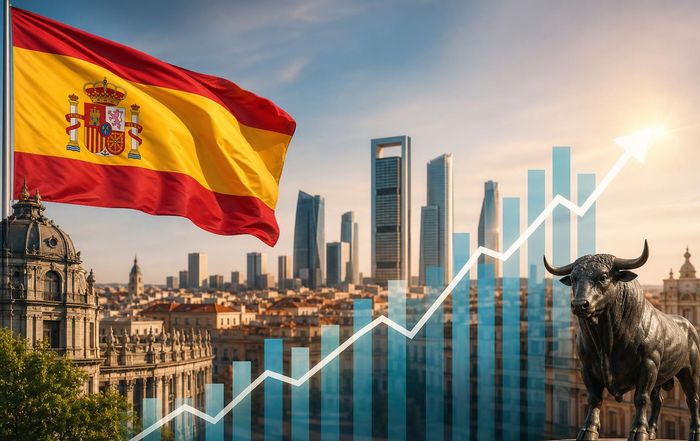
Spain's Markets and the Path to Recovery
A Decade of Disruption: How Spain Reached Its 2026 Inflection Point
By 2026, Spain has entered a new phase in its economic and financial evolution, emerging from a turbulent decade defined by the lingering effects of the eurozone crisis, the COVID-19 pandemic, the energy shock following Russia's invasion of Ukraine, and the structural reconfiguration of global supply chains. For readers of FinancialDailys.com, who follow developments from Madrid to New York, the Spanish story provides a revealing case study of how a medium-large advanced economy can leverage institutional resilience, financial reform, and sectoral transformation to navigate a complex global environment.
Spain's path to recovery has not been linear. After the deep contraction of 2020, the rebound in 2021-2022 was uneven, constrained by supply bottlenecks, inflationary pressures, and geopolitical uncertainty. Yet, by 2024-2025, Spain began to display a more durable pattern of expansion, with growth increasingly driven by investment in digital infrastructure, renewable energy, and higher-value services, underpinned by a cautious but steady normalization of monetary conditions by the European Central Bank (ECB). The interplay between domestic reforms and the broader European framework, particularly the NextGenerationEU recovery fund, has been central to this trajectory, shaping both investor sentiment and the performance of Spanish financial markets.
As global investors reassess regional diversification and sector rotation in 2026, Spain stands at a strategic crossroads. Its markets, banks, corporates, and households are collectively renegotiating the balance between stability and risk-taking, while policymakers seek to anchor long-term competitiveness in a world marked by technological acceleration, demographic ageing, climate transition, and evolving trade patterns. For those tracking finance and capital flows, Spain offers valuable insight into how a modern European economy can rebuild market confidence without losing sight of social cohesion and sustainability.
Macroeconomic Foundations: Growth, Inflation, and Fiscal Realignment
Spain's macroeconomic recovery has been underwritten by a more resilient growth profile, even as the global cycle has moderated. Following the post-pandemic rebound, Spanish GDP growth gradually converged towards a more sustainable medium-term rate, supported by robust services exports, a diversified industrial base, and a renewed focus on productivity-enhancing investment. According to the European Commission, Spain has consistently outperformed the euro area average in real GDP growth since 2022, albeit from a lower base due to the depth of its earlier contraction. Learn more about euro area economic trends.
Inflation, which surged across Europe in 2022-2023, gradually receded as energy prices stabilized, supply chains normalized, and monetary policy tightened. Spain's inflation profile has been somewhat more benign than some of its eurozone peers, partly due to targeted energy measures, a relatively flexible labour market, and the rapid scaling of renewable capacity, which helped mitigate imported energy price shocks. The Banco de España has emphasized the importance of anchoring inflation expectations while avoiding excessive tightening that could derail investment. Readers can examine the central bank's analysis of price dynamics and monetary policy.
On the fiscal front, Spain entered the pandemic with elevated public debt, which rose further amid emergency support measures. The subsequent consolidation has been gradual, shaped by the reactivation of EU fiscal rules and the conditionality linked to recovery funds. The government's strategy has focused on improving tax collection efficiency, combating informality, and reprioritizing expenditure rather than relying solely on austerity. The International Monetary Fund (IMF) has noted that Spain's consolidation path hinges on sustained growth, labour market reforms, and efficient absorption of EU funds. For a wider context, investors can review IMF assessments of advanced European economies.
In this environment, Spain's sovereign risk premium relative to Germany has remained contained, reflecting both the credibility of the euro architecture and the perception that Spanish institutions have learned from the vulnerabilities exposed during the 2010-2012 crisis. For market participants following global bond markets and sovereign spreads, the Spanish case illustrates how a combination of European backstops, domestic reform, and predictable policy communication can stabilize funding conditions even amid external shocks.
Equity Markets: From Fragile Sentiment to Selective Opportunity
Spain's equity markets, centered on Bolsas y Mercados Españoles (BME) and dominated by the IBEX 35 index, have undergone a gradual re-rating since the lows of the pandemic era. The composition of the IBEX, with its heavy weighting in banking, utilities, energy, and infrastructure, has meant that Spain's stock performance has been closely tied to interest rate expectations, regulatory developments, and the pace of the green and digital transitions across Europe. Investors tracking equity performance and sector rotation have increasingly distinguished between cyclical rebounds and structural growth stories within the Spanish market.
The tightening cycle of the ECB initially supported Spanish banks' net interest margins, boosting earnings and dividend capacity, which in turn underpinned the IBEX. However, as the cycle matured and concerns about credit quality and regulatory capital resurfaced, equity investors shifted towards more defensive and growth-oriented segments, including renewables, telecom infrastructure, and technology-enabled services. The World Bank's data on Spain's structural indicators, including innovation capacity and human capital, has been frequently cited by institutional investors seeking to understand the country's long-term equity story. Explore broader development and competitiveness indicators.
Foreign participation remains a critical driver of liquidity and valuation in Spanish equities. Large global asset managers and pension funds, often guided by ESG mandates, have shown interest in Spanish companies aligned with the energy transition, digitalization, and inclusive growth. The OECD's work on responsible business conduct has influenced corporate disclosure standards and investor expectations, particularly in areas such as climate risk, human rights, and tax transparency. Learn more about responsible investment principles.
For readers of FinancialDailys.com, the Spanish equity market offers a microcosm of broader European investment themes: the balance between value and growth, the impact of regulatory shifts on utilities and energy, the monetization of digital infrastructure, and the role of financials in a more integrated banking union. As global investors reassess geographic allocation, Spain's listed corporates are increasingly judged not only on domestic fundamentals but also on their international footprint, governance quality, and capacity to navigate technological disruption.
Banking and Credit: From Legacy Risks to a New Lending Cycle
Spain's banking sector has traveled a long road from the property-driven excesses of the pre-2008 period to the more disciplined, capital-rich environment of 2026. The consolidation wave of the past decade, coupled with stricter supervision under the Single Supervisory Mechanism and improved risk management practices, has left the sector more concentrated but also more resilient. Major institutions such as Banco Santander and BBVA have leveraged their international diversification, particularly in Latin America and the United States, to offset domestic cyclical swings, while mid-sized banks have focused on regional strengths and niche segments.
The normalization of interest rates has restored profitability to a sector long constrained by ultra-low or negative rates, yet it has also posed challenges in terms of funding costs, competition for deposits, and the need to maintain asset quality in an environment of higher debt service burdens for households and firms. The European Banking Authority (EBA) stress tests have repeatedly highlighted the importance of robust capital buffers and conservative provisioning, lessons Spain internalized after the painful restructuring of its savings banks. For a broader view of banking resilience, readers can consult EBA supervisory assessments.
Digital transformation has become a defining theme for Spanish banks, which have invested heavily in online platforms, data analytics, and fintech partnerships to streamline operations and improve customer experience. This process has been accompanied by branch rationalization and workforce adjustments, raising questions about financial inclusion, regional access, and the social contract between banks and communities. The Bank for International Settlements (BIS) has documented how digitalization is reshaping banking worldwide, with Spain often cited as an early mover in mobile banking penetration. Learn more about global banking digitalization trends.
For businesses and investors following banking and credit conditions, Spain's financial system in 2026 presents a mixed but generally positive picture. Credit growth has resumed, particularly for productive investment and green projects, while non-performing loan ratios have remained contained, though pockets of vulnerability persist in certain SME segments and sectors exposed to structural change. The challenge for Spanish banks is to sustain profitability and innovation while supporting the real economy's transition towards a more digital, low-carbon, and export-oriented model.
Real Estate and Property: Repricing Risk in a Changing Economy
The Spanish property market has long been a focal point for both domestic savers and international investors, and its trajectory remains central to understanding the country's broader financial stability and household wealth dynamics. After the sharp correction of the early 2010s and the subsequent recovery driven by tourism, foreign demand, and low interest rates, the market entered a more complex phase from 2022 onwards, shaped by higher borrowing costs, regulatory interventions, and evolving preferences for location and property type.
Residential prices in major urban centers such as Madrid, Barcelona, and key coastal regions have remained elevated, supported by limited supply in prime areas, demographic trends, and the continued appeal of Spain as a lifestyle destination for European and global buyers. However, affordability pressures for younger households and middle-income workers have intensified, prompting policy debates on rent controls, social housing, and taxation. The OECD's analysis of housing affordability in advanced economies has frequently cited Spain as a case where structural reforms and targeted incentives are needed to balance investment with social cohesion. Readers can explore comparative housing market data.
The commercial real estate segment has undergone a more uneven adjustment, as hybrid work models, e-commerce expansion, and changing tourism patterns have reshaped demand for office, retail, and hospitality assets. Investors have increasingly focused on logistics, data centers, and flexible office spaces, while traditional retail has had to reinvent itself through experiential formats and omnichannel integration. For those tracking property trends and investment flows, the Spanish market illustrates how global structural shifts intersect with local regulatory and planning frameworks.
From a financial stability perspective, the European Systemic Risk Board (ESRB) has monitored property-related vulnerabilities across the euro area, including Spain, emphasizing the need for prudent lending standards, macroprudential tools, and careful calibration of tax and zoning policies. Learn more about systemic risks linked to real estate. Spain's experience since the pre-2008 boom has instilled a greater awareness among regulators, banks, and investors of the dangers of excessive leverage and speculative construction, yet the tension between growth, affordability, and risk management remains a defining feature of the country's property landscape.
The Real Economy: Tourism, Industry, and the Digital-Green Transition
Spain's recovery cannot be understood solely through financial indicators; it is rooted in the real economy's capacity to adapt, innovate, and reallocate resources. Tourism, which historically accounted for a significant share of GDP and employment, has rebounded strongly as global travel resumed, though with shifts in origin markets, seasonality, and visitor expectations. The emphasis has increasingly turned towards higher-value, sustainable tourism models, with investments in infrastructure, cultural offerings, and environmental management. The World Tourism Organization (UNWTO), headquartered in Madrid, has highlighted Spain as a leader in rethinking tourism resilience and sustainability. Learn more about global tourism recovery patterns.
Beyond tourism, Spain's industrial base has been undergoing a gradual transformation, with a focus on advanced manufacturing, automotive electrification, and renewable energy technologies. The country has become a key player in wind and solar power deployment, supported by both national policies and EU-level climate objectives. The International Energy Agency (IEA) has documented Spain's progress in decarbonizing its power mix and integrating renewables into the grid, positioning it as a reference case within Europe. Readers can delve into energy transition developments.
Digitalization has been accelerated by targeted public investment, private sector initiatives, and the conditionality attached to EU recovery funds. Spain has expanded high-speed broadband coverage, promoted digital skills, and supported the adoption of cloud, AI, and cybersecurity solutions across SMEs and public administration. The European Commission's Digital Economy and Society Index (DESI) has tracked Spain's improvements in connectivity, human capital, and digital public services, reflecting a broader strategic commitment to competitiveness. Learn more about Europe's digital transformation.
For readers of FinancialDailys.com who monitor business transformation and sectoral dynamics, Spain's real economy in 2026 is characterized by a complex mix of legacy sectors and emerging champions. Automotive clusters are retooling for electric mobility, agrifood producers are investing in traceability and sustainability, and technology-enabled service firms are scaling in areas such as fintech, healthtech, and digital content. The overarching challenge is to ensure that productivity gains are broad-based, that regional disparities are contained, and that the labour force is equipped with the skills needed for a more knowledge-intensive, low-carbon economy.
Labour Market, Skills, and Social Cohesion
Spain's labour market has historically been marked by high structural unemployment, a pronounced duality between permanent and temporary contracts, and significant regional variation in employment outcomes. Reforms implemented over the past decade, including measures to reduce excessive temporary hiring and promote collective bargaining stability, have sought to address these structural weaknesses. By 2026, unemployment has trended downward, but remains above the levels of some northern European peers, underscoring the need for continued reform and active labour market policies.
The shift towards digital and green sectors has intensified the focus on skills, training, and lifelong learning. Public-private partnerships have emerged to address gaps in STEM education, vocational training, and reskilling for workers in transition. The OECD and the European Centre for the Development of Vocational Training (Cedefop) have underlined the importance of aligning education systems with labour market needs, a message that resonates strongly in Spain as it seeks to avoid a new generation of long-term youth unemployment. Learn more about skills strategies for the future of work.
Social cohesion remains a central concern, particularly in the context of rising living costs, housing pressures, and regional disparities between dynamic metropolitan areas and less diversified regions. The European Commission's work on social inclusion and cohesion policy has influenced Spanish strategies for deploying EU funds in ways that support not only infrastructure and innovation, but also social services, education, and healthcare. For a broader perspective, readers can explore EU social policy initiatives.
For investors and executives following careers and labour trends, Spain's labour market in 2026 offers both opportunity and complexity. A relatively young population compared to some European peers, growing pools of digital talent, and an attractive quality of life make Spain a compelling destination for remote workers, entrepreneurs, and international firms. At the same time, ensuring inclusive growth and avoiding structural pockets of exclusion will be critical to maintaining political stability and social support for market-oriented reforms.
Trade, Geopolitics, and Spain's Strategic Position
Spain's external sector has long benefited from its geographic position as a bridge between Europe, Latin America, North Africa, and the Atlantic. In an era of fragmented globalization, supply chain reconfiguration, and strategic competition, this position has gained renewed relevance. Spanish companies and policymakers have sought to deepen ties with Latin American partners, leverage the country's logistics infrastructure, and position Spain as a hub for energy, data connectivity, and services.
The World Trade Organization (WTO) has documented how global trade patterns have shifted in response to geopolitical tensions, technological change, and sustainability imperatives, with mid-sized open economies like Spain needing to balance diversification with resilience. Learn more about recent global trade developments. Within the EU framework, Spain has supported initiatives to enhance strategic autonomy in critical technologies, energy, and raw materials, while remaining committed to open markets and rules-based trade.
Energy has been a particular focus, with Spain's LNG terminals, interconnections, and renewable potential positioning it as a key player in Europe's efforts to reduce dependence on Russian gas and accelerate the green transition. The European Network of Transmission System Operators for Electricity (ENTSO-E) and Gas (ENTSOG) have highlighted Spain's role in cross-border energy infrastructure, which has implications for both security of supply and investment opportunities. For a deeper understanding of European energy networks, investors can assess how infrastructure projects intersect with regulatory frameworks and climate goals.
For readers of FinancialDailys.com who track trade and global linkages, Spain's evolving role in global value chains, digital services exports, and energy corridors offers a multifaceted narrative. The country's ability to navigate EU policy debates, maintain constructive relations with key partners, and attract foreign direct investment will be central to sustaining its recovery and enhancing its market appeal.
Sustainability, Regulation, and the ESG Imperative
Sustainability has moved from the periphery to the core of Spain's economic and financial agenda. The integration of environmental, social, and governance (ESG) considerations into corporate strategy, financial regulation, and public policy has accelerated, driven by EU legislation such as the Sustainable Finance Disclosure Regulation (SFDR) and the Corporate Sustainability Reporting Directive (CSRD). Spanish regulators, including the CNMV and Banco de España, have worked closely with European counterparts to align disclosure standards, climate risk supervision, and green taxonomy implementation.
Investors have increasingly demanded robust ESG data and credible transition plans from Spanish issuers, particularly in carbon-intensive sectors such as energy, transport, and heavy industry. The Task Force on Climate-related Financial Disclosures (TCFD) framework has become a reference point for climate reporting, influencing both listed companies and financial institutions. Learn more about climate risk disclosure practices. At the same time, Spain's strong renewable resource base has allowed it to position itself as a leader in green energy deployment, sustainable tourism, and circular economy initiatives.
For readers focused on sustainable business and finance, Spain's ESG trajectory illustrates both opportunity and complexity. The proliferation of green bonds, sustainability-linked loans, and impact investment vehicles has expanded the toolkit available to finance the transition, yet concerns about greenwashing, data quality, and regulatory fragmentation persist. The United Nations Environment Programme Finance Initiative (UNEP FI) has emphasized the need for credible, science-based targets and collaborative approaches to align finance with climate and biodiversity goals. Learn more about sustainable finance frameworks.
Spain's ability to integrate sustainability into its recovery path will be a key determinant of its long-term competitiveness and attractiveness to global capital. For the FinancialDailys.com audience, which closely follows investing strategies and risk management, the Spanish case underscores the importance of evaluating not only financial metrics but also transition readiness, regulatory alignment, and stakeholder engagement.
Outlook: Spain's Markets Beyond 2026
As 2026 unfolds, Spain's markets are navigating a delicate balance between cyclical normalization and structural transformation. The macroeconomic environment is more stable than in the immediate post-pandemic years, yet uncertainties remain, ranging from global geopolitical tensions and technological disruption to domestic political dynamics and social pressures. The resilience of Spain's recovery will depend on its ability to sustain investment in digital and green infrastructure, deepen structural reforms in labour and product markets, and maintain credible, predictable policy frameworks.
For global investors, Spain offers a diversified exposure to European growth, with particular strengths in renewables, tourism, infrastructure, and internationally active financial institutions. The risks are real but increasingly well-understood, framed by a decade of institutional learning, regulatory enhancement, and market adaptation. The Spanish experience holds valuable lessons for other economies seeking to rebuild after shocks while advancing towards a more sustainable, inclusive, and innovation-driven model.
Within this evolving landscape, FinancialDailys.com will continue to provide in-depth coverage of Spain's economy, markets, and global linkages, connecting developments in Madrid, Barcelona, and beyond with shifts in Washington, London, Frankfurt, and Beijing. For decision-makers across finance, business, and policy, Spain's path to recovery is not only a national narrative but also a critical chapter in the broader story of how advanced economies adapt to a world in transition.
