
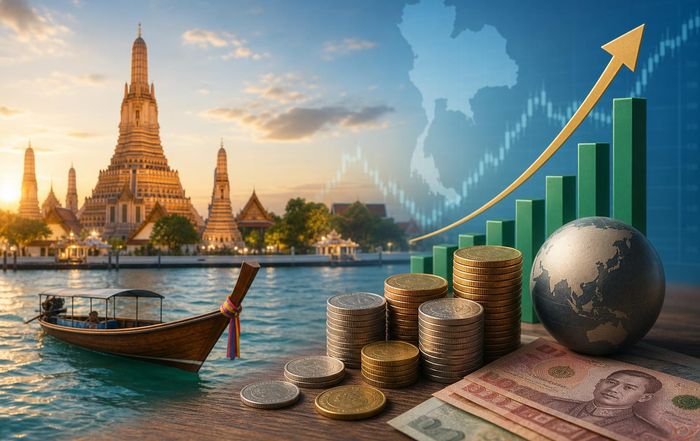
Thailand's Tourism Revival and Currency Dynamics: A New Chapter for Investors and Policy Makers
Thailand's Tourism Engine Reawakens
Thailand's tourism sector, long regarded as one of the pillars of the country's economic model, is undergoing a renewed phase of expansion after the unprecedented disruptions of the early 2020s. Before the global pandemic, tourism directly and indirectly accounted for an estimated 18-20% of Thailand's GDP according to multiple assessments by the World Travel & Tourism Council (WTTC) and analysts at The World Bank, making it one of the most tourism-dependent major economies in Asia. When borders closed and international travel collapsed, the country experienced one of the steepest contractions in visitor arrivals worldwide, highlighting both the strength and vulnerability of its growth model.
As borders reopened and travel restrictions eased, Thailand embarked on a multi-year journey to rebuild its visitor economy, restore employment in hospitality and services, and stabilize foreign exchange inflows that had long been supported by tourism receipts. For readers of FinancialDailys, which closely follows developments in global markets and economic trends, the Thai case offers an instructive example of how tourism, currency conditions, and macroeconomic policy interact in an open, middle-income economy highly integrated into regional and global trade.
The Structure of Thailand's Tourism Revenue
Thailand's tourism revenues are shaped by a combination of mass-market arrivals, higher-spending long-haul visitors, and a growing segment of niche and luxury tourism. Data from the Bank of Thailand and Ministry of Tourism and Sports show that international visitors historically contributed the bulk of tourism receipts, with average spending per visitor often significantly higher than that of domestic tourists. Prior to the pandemic, international arrivals exceeded 39 million in 2019, with receipts surpassing US$60 billion according to UNWTO statistics, placing Thailand among the world's top tourism earners.
The composition of these revenues has evolved. Regional visitors from China, Malaysia, South Korea, Japan, and India make up a substantial share of arrivals, while long-haul tourists from Europe, Australia, and North America traditionally contribute higher per-capita spending on accommodation, wellness, and experiences. Visitors from the United States, the United Kingdom, Germany, France, and Australia have long favored Thailand's beach destinations, cultural centers, and wellness retreats, supporting higher-end hospitality segments and ancillary services such as medical tourism and international education. Learn more about how these patterns influence global investing and portfolio allocation.
In the years following the pandemic shock, Thailand's tourism revenue recovery has been uneven but broadly upward, with domestic tourism providing a partial buffer during the slow return of international travel. The government, through agencies such as the Tourism Authority of Thailand (TAT), has promoted domestic travel campaigns and regional tourism corridors, while airlines and hotel operators have adjusted capacity and pricing strategies to match the new demand landscape. For international investors and analysts, this evolving revenue composition is critical, as it shapes the resilience of earnings for listed hotel groups, airlines, retail REITs, and consumer-facing businesses covered in FinancialDailys' stock market analysis.
Currency Conditions and the Thai Baht
Tourism revenues in Thailand are closely intertwined with the performance of the Thai baht (THB), which is managed under a flexible exchange rate regime overseen by the Bank of Thailand (BoT). The baht's value against major currencies such as the US dollar (USD), euro (EUR), and Japanese yen (JPY) has historically been influenced by a combination of external factors-global risk sentiment, US Federal Reserve policy, commodity prices-and domestic variables, including current account balances, tourism receipts, and capital flows.
During the height of travel restrictions, Thailand's current account surplus, long supported by tourism and goods exports, narrowed sharply and at times shifted into deficit, contributing to periods of baht weakness relative to the dollar. As international arrivals have returned and tourism receipts have recovered, the current account position has improved, providing some support to the currency. Analysts at institutions like IMF and Asian Development Bank (ADB) have noted that the restoration of tourism inflows is an important factor in stabilizing Thailand's external accounts, even as the country continues to navigate global interest rate cycles and shifting investor risk appetite.
Currency conditions also reflect structural forces. Thailand's integration into regional manufacturing supply chains, especially in automotive, electronics, and agri-food products, generates export revenues that complement tourism inflows. However, when tourism revenue drops, the economy's sensitivity to terms-of-trade shocks and capital flows becomes more visible, and the baht can experience more pronounced volatility. For readers monitoring broader economic indicators and policy responses, the interaction between tourism and currency dynamics in Thailand provides a clear illustration of how sectoral shocks can propagate through exchange rates and balance-of-payments channels.
Tourism Recovery and Macroeconomic Stability
The revival of Thailand's tourism sector has significant implications for growth, employment, and fiscal policy. Tourism supports millions of jobs directly in hotels, restaurants, transport, and entertainment, and indirectly in agriculture, construction, and retail. When international arrivals collapsed, unemployment and underemployment rose, particularly among younger workers and those in urban service hubs such as Bangkok, Phuket, and Chiang Mai. As visitor numbers have rebounded, labor market conditions have improved, but challenges remain in matching skills, wages, and working conditions to the new realities of global travel and consumer preferences.
From a macroeconomic perspective, the return of tourism receipts has helped stabilize GDP growth and supported government revenue through value-added tax, income tax, and various tourism-related levies. The Fiscal Policy Office and other Thai authorities have gradually scaled back some emergency support measures while promoting targeted incentives for investment in tourism infrastructure, digitalization, and sustainable practices. This policy mix aims to balance short-term recovery with long-term competitiveness, a theme that aligns with the forward-looking analysis often featured on FinancialDailys' business pages.
The BoT, for its part, has monitored the interplay between tourism-driven foreign exchange inflows and domestic financial conditions, adjusting policy rates and macroprudential tools in response to inflation trends, credit growth, and external risks. While the precise trajectory of the baht is influenced by global monetary policy, the restoration of robust tourism inflows tends to reduce pressure on foreign exchange reserves and helps maintain investor confidence in Thailand's external position. Research from BIS and regional think tanks has highlighted that economies with diversified export bases and recovering tourism sectors are better positioned to manage currency volatility without resorting to disruptive measures.
Shifting Visitor Mix: China, India, and Beyond
One of the most significant developments in Thailand's tourism landscape has been the evolving composition of source markets. Before the pandemic, Chinese visitors were the largest single group of international tourists, and their spending played a pivotal role in supporting everything from luxury retail to budget tour operators. Disruptions to outbound travel from China, combined with changing consumer preferences and regulatory developments, created a temporary gap that Thailand sought to fill by targeting other markets.
India has emerged as a key growth market, with rising middle-class incomes, expanding aviation links, and cultural affinity supporting increased travel to Thai destinations. Visitors from Malaysia, Singapore, and other ASEAN neighbors have also contributed to the recovery, supported by relatively short travel distances and strong business ties. Meanwhile, long-haul markets in Europe, North America, and Australia remain crucial for higher-value segments such as wellness retreats, eco-tourism, and medical tourism. Organizations like UN Tourism (UNWTO) and OECD have documented these shifts, noting that Thailand's ability to diversify its visitor base enhances resilience against shocks affecting any single country or region.
For investors and analysts following global trade and cross-border services flows, this diversification is an important factor in assessing Thailand's medium-term growth prospects. It reduces concentration risk in tourism revenues and supports more stable foreign exchange earnings, which in turn can influence perceptions of sovereign risk and currency stability.
Currency Competitiveness and Travel Affordability
The relative strength or weakness of the Thai baht has a direct impact on the affordability of Thailand as a destination for foreign tourists. When the baht depreciates against major currencies such as the US dollar, euro, or British pound, Thailand becomes relatively cheaper for visitors from those countries, potentially stimulating demand for travel and higher discretionary spending on hotels, dining, and experiences. Conversely, a stronger baht can make the country more expensive, potentially dampening price-sensitive segments of demand.
However, the relationship is not purely mechanical. Tourism demand is also shaped by income growth in source markets, airline capacity, visa policies, health and safety perceptions, and global geopolitical conditions. For example, visitors from Japan and South Korea may be influenced by both exchange rate movements and broader economic conditions at home, while European travelers often plan long-haul trips months in advance, making them less sensitive to short-term currency fluctuations. Studies by IMF and academic institutions such as Chulalongkorn University suggest that while price competitiveness matters, destination image, connectivity, and service quality remain decisive.
For financial market participants, these dynamics feed into expectations for listed Thai tourism-related equities, hospitality REITs, and currency-sensitive sectors. Readers of FinancialDailys' finance coverage often track how foreign exchange trends and tourism data releases influence earnings forecasts, valuation multiples, and capital expenditure plans across the Thai corporate landscape.
Banking, Credit, and Tourism-Linked Investment
Thailand's banking sector has long been a critical conduit for financing tourism-related infrastructure, including hotels, resorts, shopping centers, and transport facilities. The downturn in tourism placed pressure on loan books exposed to hospitality and commercial real estate, prompting banks and regulators to implement restructuring measures, payment holidays, and targeted support. As tourism revenues recover, non-performing loan ratios in these segments have shown signs of stabilization according to data from the Bank of Thailand and leading research houses.
Looking ahead, Thai banks are likely to play a central role in funding the next phase of tourism investment, including upgrades to airports, port facilities for cruise tourism, and digital platforms for bookings and payments. International lenders and multilateral institutions such as IFC have also expressed interest in projects that combine tourism development with environmental sustainability and community benefits. For readers monitoring banking sector trends and credit conditions, Thailand's experience illustrates how sectoral shocks can be managed through proactive regulation, capital buffers, and flexible restructuring frameworks, while still enabling new lending to support recovery and transformation.
Credit conditions and access to finance are particularly important for small and medium-sized enterprises (SMEs) in tourism, including family-run hotels, restaurants, tour operators, and transport providers. Many of these businesses faced acute liquidity constraints during the downturn and now require working capital and investment financing to rebuild capacity, adopt digital tools, and upgrade facilities. Policy initiatives aimed at easing collateral requirements, expanding credit guarantees, and promoting financial literacy can have a significant impact on the inclusiveness and sustainability of the tourism rebound.
Property Markets and Tourism-Driven Real Estate
Tourism has long influenced Thailand's property markets, particularly in popular destinations such as Phuket, Pattaya, Koh Samui, and parts of Bangkok. Rising visitor numbers and foreign demand for vacation homes, condominiums, and investment properties have supported construction activity, rental yields, and property values. The downturn in international travel led to a cooling in some segments, especially those heavily dependent on short-term rentals and foreign buyers, but domestic demand and long-stay visitors helped cushion the impact.
As tourism recovers, developers, investors, and policymakers are reassessing the balance between tourism-driven real estate and broader housing needs. Urban planners and local authorities are increasingly attentive to issues such as infrastructure capacity, environmental impact, and community displacement. Learn more about how tourism and real estate intersect in global property and housing markets. In Thailand, some developers are shifting toward mixed-use projects that combine residential, hospitality, retail, and co-working spaces, aiming to create more resilient revenue streams that can withstand fluctuations in short-term tourist arrivals.
Foreign ownership regulations, land use planning, and taxation policies also shape the trajectory of tourism-linked property markets. Authorities are mindful of the need to attract investment while preventing speculative excesses that could undermine financial stability or social cohesion. Analysts at Bank for International Settlements (BIS) and regional policy institutes have pointed to Thailand's experience as a case study in balancing openness to foreign capital with prudent macroprudential oversight.
Consumer Trends, Digitalization, and New Tourism Models
The nature of tourism demand in Thailand is evolving in tandem with global consumer trends. Travelers from Europe, North America, China, India, and across ASEAN are increasingly seeking personalized experiences, wellness and medical services, eco-friendly options, and digital convenience. Platforms for online booking, digital payments, and peer-to-peer accommodation have become central to the travel experience, and Thai businesses are investing in technology to remain competitive. Explore how these shifts align with broader consumer behavior and technology adoption trends.
Digital transformation in tourism extends beyond front-end booking platforms. Hotels, tour operators, and attractions are using data analytics to optimize pricing, manage capacity, and tailor marketing campaigns. Airports and transport providers are deploying biometric solutions, digital identity tools, and automated border control systems to streamline passenger flows and enhance security. The Thai government has promoted initiatives to support digital skills, encourage e-payments, and integrate tourism services into broader smart city and digital economy strategies, in line with its long-term development vision.
At the same time, new tourism models are emerging. Long-stay visitors, digital nomads, and retirees from Europe, Australia, and East Asia are drawn by Thailand's relatively affordable cost of living, healthcare quality, and lifestyle amenities. Policy experiments related to special visas and flexible work arrangements have sought to capture this segment, which provides stable consumption and foreign exchange inflows even when short-term tourism fluctuates. Organizations like World Bank, ILO, and regional policy networks have examined the potential of such models to support inclusive growth and skills transfer, while also highlighting the need to manage pressures on housing, infrastructure, and local labor markets.
Sustainability, Climate Risk, and the Future of Thai Tourism
Sustainability has become a central consideration in the future of tourism in Thailand. The country's natural assets-beaches, islands, forests, and marine ecosystems-are both key attractions and highly vulnerable to climate change, pollution, and over-tourism. Episodes of coral reef damage, coastal erosion, and air quality concerns have prompted authorities to implement measures such as temporary beach closures, visitor caps in sensitive areas, and stricter environmental regulations. Learn more about sustainable business practices and green investment themes in FinancialDailys' sustainability coverage.
Climate risk is increasingly factored into economic planning and investment decisions. Rising sea levels, more intense storms, and heatwaves have implications for infrastructure design, insurance costs, and destination planning. The Intergovernmental Panel on Climate Change (IPCC) and UNEP have underscored the need for climate-resilient tourism strategies, including diversification of destinations, investment in green infrastructure, and promotion of low-carbon transport and accommodation. In Thailand, public and private stakeholders are beginning to explore renewable energy solutions for hotels and resorts, waste management improvements, and community-based tourism models that share benefits more equitably.
International investors and lenders are also increasingly attentive to environmental, social, and governance (ESG) considerations. Hospitality groups and tourism-linked companies that can demonstrate credible sustainability strategies may enjoy improved access to capital and stronger brand positioning. For readers of FinancialDailys interested in global investing, Thailand's tourism sector offers a case study in how ESG factors are reshaping risk assessments and opportunity sets in emerging markets.
Opportunities for Startups, Technology, and Innovation
Thailand's tourism revival is creating fertile ground for startups and technology-driven innovation. Entrepreneurs are launching platforms for travel planning, local experiences, language support, and digital payments, often targeting niche segments such as adventure tourism, culinary tours, or wellness retreats. The country's growing digital infrastructure, combined with a relatively young population and supportive policy initiatives, is fostering an ecosystem where tourism and tech intersect. Readers can explore broader innovation trends and entrepreneurial opportunities in FinancialDailys' startups section.
Technology is also being deployed to improve safety, transparency, and regulatory compliance. Digital identity solutions, e-visa platforms, and real-time data analytics help authorities manage visitor flows, monitor health and security risks, and respond quickly to emerging challenges. The experience of the pandemic accelerated the adoption of contactless payments, online check-in, and remote customer service, changes that are likely to endure and evolve further. Organizations such as World Economic Forum (WEF) and UNCTAD have highlighted Thailand as a country where digital trade, tourism, and services exports can reinforce each other, provided that regulatory frameworks remain adaptive and inclusive.
For investors in technology and tourism-related ventures, Thailand presents a mix of established demand, supportive infrastructure, and regional connectivity, linking South-East Asia, East Asia, and global markets. Coverage on FinancialDailys' technology pages often emphasizes how such ecosystems can generate new business models and cross-border partnerships.
Careers, Skills, and Human Capital in a Tourism-Driven Economy
The evolution of Thailand's tourism sector has profound implications for careers and human capital development. Tourism and hospitality require a diverse range of skills, from language proficiency and customer service to digital literacy, marketing, and management. As the industry modernizes and integrates more technology, demand is rising for professionals who can combine traditional hospitality expertise with data analysis, revenue management, and sustainability planning. Readers interested in how these dynamics shape labor markets and professional development can explore FinancialDailys' careers coverage.
Training institutions, universities, and vocational schools in Thailand are adapting curricula to reflect these needs, often in partnership with international organizations and private sector employers. Programs focusing on eco-tourism, culinary arts, wellness services, and digital marketing are expanding, and there is growing emphasis on lifelong learning to enable workers to adapt to changing roles and technologies. The International Labour Organization (ILO) and local research institutes have highlighted the importance of social protection, fair working conditions, and skills recognition in ensuring that tourism-driven growth translates into inclusive and sustainable employment.
For many communities, tourism provides a pathway to higher incomes and new opportunities, but it also brings challenges related to cultural preservation, cost of living, and environmental pressures. Balanced policy frameworks and community engagement are therefore essential to ensure that the benefits of tourism are widely shared and that local voices are incorporated into planning and development.
Thailand's Tourism and Currency Outlook: Implications for Global Investors
As Thailand continues to rebuild and transform its tourism sector, the interplay between visitor revenues and currency conditions will remain a focal point for policymakers, businesses, and international investors. A resilient and diversified tourism industry can bolster the current account, support the baht, and provide a steady stream of foreign exchange, thereby enhancing macroeconomic stability. At the same time, prudent management of capital flows, debt levels, and fiscal policy is necessary to mitigate vulnerabilities to external shocks.
For readers of FinancialDailys, the Thai case underscores the importance of integrating sectoral analysis with macroeconomic and currency perspectives. Tourism trends influence not only hospitality and travel stocks, but also banking, real estate, consumer goods, and infrastructure, all of which are covered extensively in FinancialDailys' global business and finance reporting. As the world continues to adjust to new patterns of travel, work, and consumption, Thailand's experience offers valuable insights into how an open, tourism-intensive economy can adapt, innovate, and pursue a more sustainable and inclusive growth path, while navigating the complex dynamics of exchange rates and global capital markets.
