
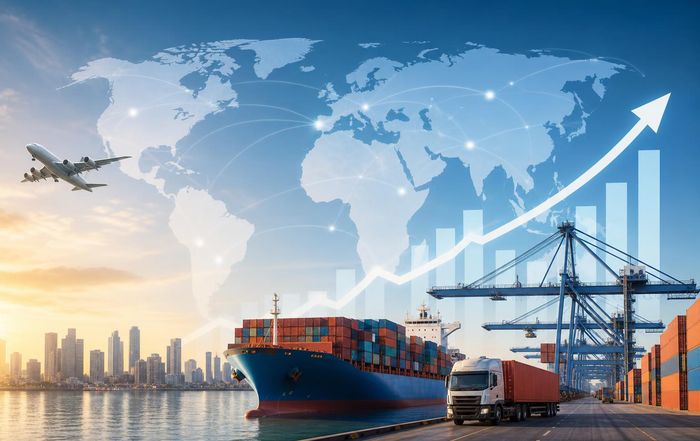
Trade Growth and the Outlook for Exporters in 2026
A New Phase for Global Trade
As 2026 unfolds, global trade is entering a new and more complex phase, shaped by the lingering aftershocks of the pandemic era, accelerating technological change, geopolitical realignment and the intensifying urgency of the climate transition. For the audience of Financialdailys.com, which spans exporters, investors, policymakers and corporate leaders across North America, Europe, Asia-Pacific, Africa and South America, the question is no longer whether trade will grow, but which segments of trade will expand, who will capture that growth and how resilient those gains will be in the face of structural risks.
The macro picture is mixed but far from bleak. According to recent assessments from organizations such as the World Trade Organization (WTO), global merchandise trade volumes, after a period of stagnation and mild contraction in 2023, have returned to moderate growth, supported by easing supply chain bottlenecks, more stable energy markets and a gradual recovery in consumer and investment demand in major economies. Readers tracking the broader macroeconomic context on Financialdailys Economy will recognize that this rebound is uneven across regions and sectors, and that the composition of trade is shifting decisively toward services, digital-intensive goods and low-carbon technologies.
In this environment, exporters in the United States, United Kingdom, Germany, Canada, Australia, France, Italy, Spain, the Netherlands, Switzerland, China, Sweden, Norway, Singapore, Denmark, South Korea, Japan, Thailand, Finland, South Africa, Brazil, Malaysia and New Zealand face both a wider opportunity set and a more demanding competitive landscape. The winners will be those who combine operational excellence with strategic agility, invest in technology and talent, and embed sustainability and risk management into their core export strategies rather than treating them as peripheral concerns.
The State of Global Trade in 2026
Global trade growth in 2026 is best understood as a normalization after extreme volatility rather than a simple return to pre-pandemic trends. Data from the International Monetary Fund (IMF) and OECD indicate that while headline trade volumes are expanding at a moderate pace, the value and composition of trade flows are being reshaped by inflation dynamics, exchange rate movements and significant changes in relative prices for energy, critical minerals and advanced technologies. Those following global indicators on Financialdailys World will note that trade has become more regionalized, with intra-Asia, intra-Europe and North America-centric supply chains gaining share relative to long, thin, globally dispersed networks.
The United States remains a pivotal market and exporter, particularly in high-value services, aerospace, agriculture and advanced manufacturing, while the United Kingdom and the European Union continue to be central players in pharmaceuticals, automotive, luxury goods, machinery and green technologies. In Asia, China, Japan, South Korea and Singapore are consolidating their roles as hubs for electronics, semiconductors, shipping and regional financial services, even as some production migrates to emerging manufacturing centers in Thailand, Malaysia and other parts of Southeast Asia. At the same time, countries such as Brazil and South Africa are seeking to move up the value chain from raw commodity exports to more processed and technology-enabled offerings.
An important structural shift is the increasing share of services trade, including digital services, professional services, financial services and cloud-based solutions. Organizations like the World Bank have highlighted how digital platforms and cross-border data flows are enabling even smaller firms to participate in global markets. Exporters that once focused primarily on physical goods are now bundling services such as remote monitoring, predictive maintenance, software updates and training into their offerings, creating more durable revenue streams and deeper customer relationships.
Geopolitics, Fragmentation and Trade Policy
Trade growth in 2026 cannot be analyzed without acknowledging the impact of geopolitics and policy fragmentation. Rising strategic competition between major powers, sanctions regimes, export controls on advanced technologies and the reconfiguration of security alliances are all shaping where and how exporters operate. The WTO's own discussions on reform and dispute settlement underscore that the rules-based trading system is under pressure, even as many countries continue to rely on it as a stabilizing framework.
Exporters in Europe, North America and key Asian economies are navigating a more intricate web of trade agreements, regional compacts and regulatory regimes, from the European Union's evolving trade policy and carbon border mechanisms to the Comprehensive and Progressive Agreement for Trans-Pacific Partnership (CPTPP) and various bilateral deals in the Indo-Pacific. Businesses that once optimized purely for cost and efficiency are now re-optimizing for resilience, redundancy and regulatory alignment, often accepting slightly higher operating costs in exchange for more predictable market access and reduced geopolitical exposure.
For the readership of Financialdailys.com, which closely follows developments in trade and policy, the key takeaway is that exporters must maintain a sophisticated understanding of the policy environment across their priority markets, whether those are in the United States and Canada, the United Kingdom and the European Union, or rapidly growing economies in Asia, Africa and Latin America. Legal, compliance and government-relations capabilities, once seen as supporting functions, are increasingly central to export strategy and risk management.
Supply Chains: From Fragility to Strategic Resilience
The supply chain disruptions of the early 2020s, from container shortages and port congestion to semiconductor bottlenecks and raw material spikes, prompted a fundamental rethinking of global production and logistics models. By 2026, many exporters have moved beyond emergency responses and begun embedding structural resilience into their networks. This includes multi-sourcing critical inputs, diversifying manufacturing footprints across regions, increasing inventory buffers for high-risk components and adopting advanced digital tools for end-to-end visibility.
Leading logistics providers and consultancies, including McKinsey & Company and Boston Consulting Group, have analyzed how companies that invested early in digital supply chain management, predictive analytics and scenario planning were better able to adapt to shocks. Exporters are now leveraging technologies such as Internet of Things sensors, AI-driven demand forecasting and blockchain-enabled traceability to anticipate disruptions and reroute flows in near real time. Those following the technology dimension on Financialdailys Tech will recognize that the convergence of AI, cloud and data analytics is transforming not only operational efficiency but also strategic decision-making in trade.
Regionalization is another defining trend. North American firms have accelerated nearshoring to Mexico and within the United States and Canada, European manufacturers have strengthened intra-EU and near-EU supply chains, and Asian exporters have developed more regionally self-sufficient ecosystems. This does not signal the end of globalization but rather a shift toward "multi-local" globalization, where exporters design supply networks that balance global reach with regional resilience, aligned with local regulatory and security considerations.
Sectoral Outlook: Where Export Growth Is Concentrated
The outlook for exporters varies significantly by sector, with some industries poised for robust expansion and others facing structural headwinds. For readers of Financialdailys Markets and Financialdailys Stocks, understanding these sectoral dynamics is critical to capital allocation, portfolio strategy and corporate planning.
Technology and electronics remain at the forefront of export growth, driven by sustained demand for semiconductors, cloud infrastructure, artificial intelligence hardware, consumer electronics and industrial automation equipment. Exporters in South Korea, Taiwan, Japan, China, the United States, Germany and the Netherlands are key beneficiaries, though they must navigate export controls, intellectual property risks and intense competition. Parallel to this, software-as-a-service and digital platforms are expanding cross-border revenues without the physical constraints of traditional trade, reshaping how value is created and captured.
The energy transition is another powerful engine of trade growth. Exports of solar panels, wind turbines, battery technologies, electric vehicles, grid equipment and energy-efficiency solutions are accelerating, supported by policy frameworks such as the European Green Deal, the U.S. Inflation Reduction Act and various national net-zero strategies. Countries like Germany, Denmark, Spain, China and the United States are positioning themselves as leaders in green technology exports, while resource-rich countries from Australia and Canada to Chile and South Africa are seeking to maximize the value of their critical minerals through processing and technology partnerships. Learn more about sustainable business practices through the International Energy Agency (IEA) and other specialized institutions that track the low-carbon transition.
In contrast, traditional fossil fuel exporters face a more uncertain long-term outlook, even if short- and medium-term demand remains resilient in certain regions. The challenge for these exporters is to leverage current revenues to diversify into cleaner energy and adjacent sectors, building future-proof export capabilities while managing social and fiscal transitions.
Agriculture and food exports continue to be shaped by climate variability, shifting dietary preferences and evolving trade policies. Exporters in the United States, Brazil, Canada, Australia, New Zealand and parts of Europe are focusing on higher-value, branded and sustainably certified products, often supported by digital traceability and climate-smart farming practices. Organizations such as the Food and Agriculture Organization (FAO) have emphasized the importance of resilient food systems and sustainable land use, which in turn influence market access, consumer trust and regulatory requirements.
Services exports, from financial and professional services to education, tourism and digital content, are increasingly central to the trade profiles of advanced economies such as the United States, United Kingdom, Germany, France, Singapore and Switzerland. Financial hubs like London, New York, Singapore and Zurich continue to act as gateways for capital and expertise, while universities and cultural industries in Europe, North America and parts of Asia play a growing role in soft-power-driven exports. Readers exploring Financialdailys Finance and Financialdailys Business will see that services trade is closely linked to investment flows, regulatory harmonization and talent mobility.
Financing, Currencies and the Role of Banks
Trade growth depends not only on demand and supply but also on the availability and cost of trade finance, as well as exchange rate stability. In 2026, exporters are operating in a financial landscape marked by still-elevated interest rates compared with the ultra-low era of the 2010s, divergent monetary policies across major central banks and ongoing debates about the future of the international monetary system. Institutions such as the Bank for International Settlements (BIS) and European Central Bank (ECB) have underscored the importance of robust financial infrastructure and risk management in supporting cross-border trade.
Banks and specialized trade finance providers are adapting by expanding digital trade finance platforms, enhancing compliance and anti-money-laundering controls, and partnering with fintechs to streamline documentation and credit assessment. Exporters in markets such as Germany, the Netherlands, Singapore and the United Kingdom often benefit from well-developed export credit agencies and guarantee schemes, while firms in emerging markets may still face gaps in affordable trade finance, particularly small and mid-sized enterprises. Readers seeking deeper insight into banking trends can explore Financialdailys Banking, which regularly examines how credit conditions and regulatory changes affect exporters.
Currency volatility remains a double-edged sword, creating risks for unhedged exporters but opportunities for those who actively manage their foreign exchange exposure. Firms with revenues diversified across the United States, Europe and Asia increasingly use sophisticated hedging strategies, multi-currency pricing and natural hedges through matching costs and revenues in the same currencies. As central banks in the United States, euro area, United Kingdom, Japan and other major economies calibrate their policy paths in response to inflation and growth data, exporters must continuously reassess their currency risk frameworks.
Technology and Digital Trade as Force Multipliers
Digitalization is no longer an optional enhancement for exporters; it is a core driver of competitiveness, scalability and resilience. The rise of cross-border e-commerce, digital marketplaces, virtual sales channels and data-driven customer engagement has opened new pathways for exporters of all sizes, including startups and mid-market firms that historically struggled to access distant markets. Platforms and tools inspired by pioneers such as Amazon, Alibaba and Shopify have demonstrated how even niche products can find global audiences when supported by digital infrastructure, localized content and efficient logistics.
Artificial intelligence is particularly transformative. Exporters are using AI for market intelligence, pricing optimization, demand forecasting, localization of marketing materials, and even automated negotiation support. Organizations like OECD and World Economic Forum (WEF) have highlighted how AI can enhance productivity and innovation, though they also caution about ethical, regulatory and workforce implications. For technology-driven exporters and investors following Financialdailys Tech, the strategic question is how to integrate AI and data analytics into core business processes in a way that strengthens differentiation and customer trust.
Digital trade also raises new regulatory and policy issues, from data localization and privacy rules such as the EU's General Data Protection Regulation (GDPR) to cybersecurity standards and digital tax regimes. Exporters in sectors like fintech, healthtech and edtech must navigate a patchwork of national regulations while ensuring compliance and protecting customer data. Those who proactively invest in robust cybersecurity, transparent data governance and regulatory engagement will be better positioned to scale internationally.
Sustainability, ESG and the Green Trade Imperative
Sustainability has moved from the margins to the mainstream of trade strategy. Environmental, social and governance (ESG) considerations now influence investor decisions, consumer preferences, regulatory frameworks and supply chain requirements. Exporters that fail to align with emerging sustainability standards risk losing market access, facing higher financing costs and damaging their reputations in key markets such as the European Union, United Kingdom, Canada and increasingly the United States and parts of Asia.
Policies such as the EU's Carbon Border Adjustment Mechanism (CBAM), mandatory climate-related disclosures and due-diligence laws on deforestation and human rights are reshaping the terms of trade. Exporters in carbon-intensive sectors, from steel and cement to chemicals and agriculture, must invest in emissions reduction, energy efficiency and low-carbon technologies to maintain competitiveness. Organizations like the Task Force on Climate-related Financial Disclosures (TCFD) and IFRS Foundation have contributed to the standardization of climate reporting, which in turn affects how investors and lenders evaluate export-oriented firms.
For readers of Financialdailys Sustainability, it is clear that sustainability is not only a compliance challenge but also a source of competitive advantage. Exporters that can demonstrate traceable, verifiable and credible ESG performance often secure preferential access to buyers, better financing terms and more resilient customer relationships. This is particularly relevant for exporters in Europe, North America and advanced Asian economies, where institutional investors and large corporates are embedding ESG criteria into procurement and investment decisions.
Startups, Scale-ups and the Democratization of Exporting
The export landscape in 2026 is no longer dominated exclusively by large multinationals. Startups and scale-ups in technology, consumer goods, fintech, biotech and creative industries are increasingly "born global," designing their products, platforms and brands from the outset for international markets. This shift is facilitated by digital distribution, cloud infrastructure, cross-border payment solutions and more accessible market intelligence. For readers exploring Financialdailys Startups, the emergence of export-oriented entrepreneurial ecosystems in cities from Berlin and London to Toronto, Singapore, Stockholm, Sydney and São Paulo is a defining trend.
Governments and development agencies, including UNCTAD and various national export promotion bodies, have recognized the potential of small and medium-sized enterprises (SMEs) to drive export diversification, innovation and job creation. Many have introduced programs that provide market access support, trade finance guarantees, digital skills training and matchmaking with international buyers. However, challenges remain, particularly in terms of navigating complex customs procedures, compliance requirements and logistics for smaller shipments.
For startups and high-growth firms, the critical capabilities include building flexible, API-driven technology stacks, cultivating cross-cultural marketing and sales expertise, and developing partnerships with local distributors, resellers or ecosystem platforms in target markets. They must also manage intellectual property risks, particularly in sectors such as software, biotech and advanced manufacturing, where the value of intangible assets is high and legal frameworks vary widely across jurisdictions.
Talent, Skills and the Human Dimension of Export Growth
Behind every export strategy are people, and the human capital dimension has become more important than ever in 2026. Exporters need leaders and teams who can operate across cultures, understand diverse regulatory environments, manage complex stakeholder relationships and leverage technology effectively. The competition for such talent is intense, particularly in fields such as data science, digital marketing, supply chain management, sustainability and international regulatory compliance.
Labor market dynamics differ across regions. The United States, United Kingdom, Germany, Canada, Australia, Singapore and the Nordics continue to attract international talent, though immigration policies and political debates can affect mobility. Countries such as China, India, Brazil and South Africa are investing heavily in domestic skills development to support export-oriented sectors. Organizations like the International Labour Organization (ILO) and leading business schools have emphasized the need for continuous upskilling and reskilling to keep pace with technological and regulatory change.
For professionals and executives reading Financialdailys Careers, the implication is that international experience, digital fluency, ESG literacy and cross-functional collaboration are no longer differentiators but baseline expectations in export-oriented roles. Companies that invest in employee development, inclusive leadership and global mobility programs will be better equipped to execute complex export strategies and adapt to shifting market conditions.
Strategic Priorities for Exporters and Investors
From the vantage point of Financialdailys.com, which serves readers across finance, markets, investing, business, economy, consumer behavior, stocks, banking, property, startups, technology, careers, trade, sustainability and world affairs, several strategic priorities stand out for exporters and the investors who back them.
First, exporters must anchor their strategies in robust market intelligence and scenario planning, recognizing that trade growth will not be linear and that regional divergences in growth, policy and consumer preferences will persist. This requires disciplined capital allocation, with clear criteria for entering, expanding or exiting markets, and a willingness to pivot as conditions evolve.
Second, operational resilience and digital excellence are now inseparable from export success. Firms that invest in advanced supply chain capabilities, integrated data platforms, AI-driven decision support and secure digital infrastructure will be better positioned to manage volatility, reduce costs and capture emerging opportunities. This is as true for established multinationals as it is for agile startups.
Third, sustainability and ESG performance must be treated as core strategic pillars, not peripheral initiatives. Exporters that embed climate risk management, human rights due diligence and transparent governance into their operations will not only meet regulatory expectations but also build trust with customers, investors and employees across markets.
Fourth, talent strategy and organizational culture will increasingly differentiate exporters. Companies that foster diverse, globally minded, digitally savvy teams and empower them to innovate and collaborate across borders will be more adaptable and resilient.
Finally, investors tracking export-exposed sectors on Financialdailys Investing and Financialdailys Property should recognize that trade growth in 2026 and beyond will be shaped by structural themes rather than short-term cycles: the digital transformation of commerce, the decarbonization of industry, the regionalization of supply chains, the rise of services and data as tradeable assets, and the reconfiguration of geopolitics and policy. Aligning portfolios and corporate strategies with these themes, while maintaining rigorous risk management, will be essential.
Outlook: Cautious Optimism in a Reshaped Global Order
The outlook for exporters in 2026 is one of cautious optimism within a reshaped global order. Trade is growing again, but in ways that differ markedly from the patterns of the early 2000s. The era of unconstrained hyper-globalization has given way to a more complex landscape of regional blocs, digital platforms, sustainability imperatives and strategic competition. Yet within this complexity lies significant opportunity for those who bring experience, expertise, authoritativeness and trustworthiness to their export strategies.
For the global readership of Financialdailys.com, the central message is that trade growth will reward preparation, innovation and integrity. Exporters that combine deep understanding of their target markets with technological sophistication, financial discipline, ESG commitment and strong governance will not only navigate the uncertainties of this decade but also help shape a more resilient, inclusive and sustainable global trading system.
