
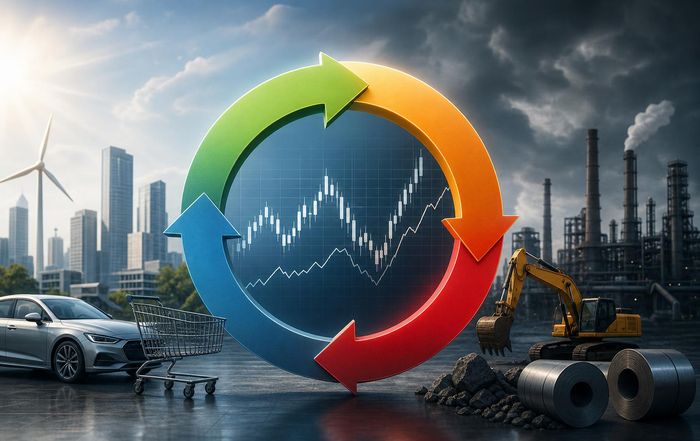
Understanding Cyclical Stocks and Economic Sensitivity
Cyclical stocks sit at the intersection of macroeconomics, corporate strategy, and investor psychology, and in an era of rapid monetary shifts, geopolitical uncertainty, and technological disruption, understanding their behavior has become essential for readers of FinancialDailys who seek to navigate increasingly complex global markets. While defensive sectors often dominate conversations about portfolio stability, it is cyclical equities that typically define the amplitude of both bull and bear markets, amplifying economic upswings and exposing vulnerabilities when growth falters.
What Makes a Stock "Cyclical"?
Cyclical stocks are shares of companies whose revenues and profits are closely tied to the broader economic cycle. When economic growth accelerates, demand for their products and services usually rises disproportionately, supporting higher earnings, stronger margins, and often expanding valuation multiples. Conversely, when growth slows or contracts, these companies frequently experience sharper declines in sales and profits than the overall economy, leading to more pronounced drawdowns in their share prices.
Economists and market strategists commonly distinguish cyclical sectors such as autos, consumer discretionary, industrials, materials, energy, semiconductors, and certain segments of financials, from more defensive sectors such as utilities, consumer staples, and healthcare. For example, historical sector performance data from S&P Dow Jones Indices and MSCI show that consumer discretionary and industrials have tended to outperform early in economic recoveries and underperform in recessions, while consumer staples and utilities typically exhibit lower volatility across cycles. Learn more about sector performance across cycles through resources from S&P Global and MSCI.
Cyclical sensitivity arises because many of these companies sell big-ticket or postponable items, depend on capital spending, or are leveraged to commodity prices and global trade flows. A family can delay purchasing a new car, a company can postpone building a new factory, and a government can slow infrastructure projects, but people will still buy food, basic household goods, and essential medicines. This simple behavioral difference underpins much of the distinction between cyclical and defensive equities.
The Economic Cycle and Earnings Sensitivity
The economic cycle, typically described in phases of expansion, peak, contraction, and trough, provides the backdrop against which cyclical stocks move. While no two cycles are identical, research from institutions such as the Bank for International Settlements, the International Monetary Fund, and various central banks suggests that credit conditions, labor markets, business confidence, and monetary policy are key drivers of cyclical dynamics. Detailed macroeconomic analysis can be explored via IMF and BIS publications.
During expansions, rising employment, improving consumer confidence, and easier financial conditions generally support higher spending on discretionary goods, housing, travel, and capital investment. Cyclical companies often experience operating leverage in this phase, as fixed costs are spread over higher volumes, pushing profit growth faster than revenue growth. Conversely, in downturns, demand softens, capacity utilization falls, and margins compress, exposing the inherent volatility of earnings in these sectors.
Analysts frequently track earnings sensitivity by examining how profits move relative to changes in GDP or industrial production. For instance, research from OECD and World Bank datasets shows that sectors such as manufacturing, construction, and trade-related services exhibit higher covariance with output growth than healthcare or basic consumer goods. Investors on FinancialDailys who follow macro data on FinancialDailys Economy can often anticipate where cyclical earnings pressure or upside surprise may emerge as the data turn.
Types of Cyclical Stocks: From Autos to Semiconductors
Although cyclical stocks share common macro sensitivities, their drivers and risk profiles differ significantly across industries, geographies, and business models. Understanding these nuances is crucial for informed decision-making in areas such as investing and markets.
In the consumer discretionary space, companies producing automobiles, luxury goods, travel services, and non-essential retail products are classic examples of cyclical exposure. When household incomes rise and credit is readily available, consumers are more likely to purchase vehicles, upgrade electronics, travel internationally, or spend on fashion and leisure. Data from organizations like OECD and Eurostat highlight how consumer confidence indices often correlate strongly with discretionary spending in the United States, Europe, and other advanced economies; further context can be found through OECD consumer data.
Industrial and capital goods companies, including machinery manufacturers, engineering firms, and construction-related businesses, depend heavily on corporate capital expenditure and public infrastructure investment. These decisions are inherently cyclical, as businesses and governments increase investment during periods of optimism and scale back when uncertainty rises. The World Bank and UNCTAD provide extensive statistics on global investment trends and trade flows that help frame these dynamics, accessible via World Bank data and UNCTAD.
Semiconductor and technology hardware firms represent a modern, highly visible category of cyclical exposure. While technology is often perceived as secularly growing, chipmakers and hardware producers have long been subject to pronounced boom-bust cycles driven by inventory swings, capital spending, and end-market demand in smartphones, PCs, data centers, and automotive electronics. Industry reports from Semiconductor Industry Association (SIA) and market research firms such as Gartner and IDC document these cycles, noting periods of overcapacity followed by shortages and rapid pricing shifts. Learn more about global semiconductor trends from the SIA.
Energy and materials companies, including those in oil, gas, mining, and chemicals, are heavily influenced by commodity price cycles, which in turn reflect global growth, supply dynamics, and geopolitical events. Organizations such as the International Energy Agency (IEA) and OPEC publish regular market reports that track demand, supply, and price developments across energy markets, which can have direct implications for earnings and share prices in these sectors; investors can consult IEA reports for additional insight.
Finally, certain financial stocks, particularly those tied to lending, investment banking, and capital markets, exhibit cyclical behavior. When economic activity is robust, credit demand, deal-making, and trading volumes often increase, supporting profits at banks, brokers, and asset managers. In downturns, loan losses, reduced issuance, and weaker investor activity can pressure earnings. Readers of FinancialDailys who follow banking coverage can better understand how credit cycles and regulatory changes affect this segment.
Cyclical Versus Defensive: Portfolio Roles and Risk Profiles
From a portfolio construction perspective, cyclical and defensive stocks play complementary roles. Defensive sectors, including utilities, consumer staples, and healthcare, tend to exhibit more stable earnings and lower volatility, providing ballast when economic conditions deteriorate. Cyclical sectors, by contrast, offer greater upside potential during expansions but carry higher drawdown risk in contractions.
Long-term analysis from Morningstar, Vanguard, and academic research published through sources such as the National Bureau of Economic Research (NBER) suggests that over multi-decade horizons, cyclical sectors can contribute meaningfully to total returns, particularly when purchased at attractive valuations during or near economic troughs. However, they also tend to experience deeper losses in recessions and bear markets, underscoring the importance of diversification and risk management. Investors can explore additional asset allocation insights via Morningstar and Vanguard.
For sophisticated investors and institutions, cyclical exposure is often calibrated based on macro views, valuation metrics, and risk tolerance. In practice, this can involve tilting portfolios toward or away from sectors like industrials, consumer discretionary, and financials depending on the perceived stage of the cycle. On FinancialDailys, coverage of stocks and finance frequently emphasizes how sector rotation strategies seek to harness these cyclical patterns while mitigating downside risk.
Economic Sensitivity in an Era of Policy Shifts and Structural Change
The relationship between cyclical stocks and the economic cycle is evolving under the influence of powerful structural forces, including monetary policy normalization, demographic change, digital transformation, and the global energy transition. These forces can alter the amplitude and timing of cycles, as well as the relative performance of different cyclical industries.
Monetary policy remains a central driver of economic sensitivity, as shifts in interest rates and balance sheet policies by central banks such as the Federal Reserve, European Central Bank, and Bank of England directly affect borrowing costs, asset valuations, and credit conditions. In recent years, rapid policy tightening following extended periods of low rates has led to heightened volatility in rate-sensitive sectors such as housing, autos, and certain financials. Official communications and research from central banks, accessible via the Federal Reserve and ECB, provide critical context for understanding how policy decisions filter through to cyclical earnings.
Demographic trends, including aging populations in developed economies and growing middle classes in parts of Asia, Latin America, and Africa, are reshaping demand patterns for cyclical goods and services. For example, rising urbanization and income levels in emerging markets have supported long-term demand for infrastructure, housing, and consumer durables, even as aging populations in advanced economies change the mix of consumption. The United Nations Department of Economic and Social Affairs and the World Bank offer extensive demographic and development data that investors can use to evaluate regional cyclical exposures; see UN DESA for detailed analyses.
Digital transformation and automation are also influencing cyclical sensitivity. On one hand, technology adoption can improve efficiency and reduce cost volatility for industrial and manufacturing companies, potentially dampening some cyclical swings. On the other, the rapid pace of innovation in areas such as cloud computing, artificial intelligence, and electric vehicles has created new forms of cyclical demand tied to capital spending cycles in data centers, telecom infrastructure, and advanced manufacturing. Readers of FinancialDailys can follow these developments through tech coverage, which often links technological adoption to sectoral earnings trends.
The global energy transition toward lower-carbon systems adds another layer of complexity. Traditional energy companies face evolving demand patterns and regulatory environments, while renewable energy developers, battery producers, and related supply chains are experiencing their own investment and policy-driven cycles. Organizations such as the International Renewable Energy Agency (IRENA) and BloombergNEF track investment flows, capacity additions, and technology costs in clean energy, helping investors understand how cyclical and structural forces interact; more information is available via IRENA.
Regional Differences: United States, Europe, and Asia-Pacific
Cyclical behavior also varies across regions, reflecting differences in economic structure, policy frameworks, and market composition. For readers of FinancialDailys with global portfolios, an appreciation of these regional distinctions is essential.
In the United States, equity markets contain a broad mix of cyclical sectors, with significant representation from technology, consumer discretionary, industrials, and financials. The depth of capital markets and the central role of the US dollar in global finance mean that shifts in US monetary policy and domestic demand often have outsized impacts on cyclical stocks worldwide. Data and analysis from U.S. Bureau of Economic Analysis (BEA), Bureau of Labor Statistics (BLS), and Conference Board consumer confidence indices offer valuable indicators for US cyclical exposure; relevant data can be accessed via BEA and BLS.
European markets, including the United Kingdom, Germany, France, Italy, Spain, and the Netherlands, feature substantial exposure to industrials, autos, luxury goods, and financials, all of which are sensitive to both regional and global economic conditions. The export-oriented nature of many European economies means that global trade dynamics, exchange rates, and regulatory policy within the European Union can significantly influence cyclical performance. Institutions such as Eurostat and the European Commission provide macroeconomic and sectoral data that help investors gauge these risks and opportunities, available via Eurostat.
In the Asia-Pacific region, including China, Japan, South Korea, Singapore, and Australia, cyclical sectors such as semiconductors, electronics, shipping, commodities, and manufacturing play an outsized role in local and global supply chains. Chinese growth trends, in particular, have been a major driver of global demand for commodities, machinery, and consumer goods, making Chinese policy decisions and domestic cycles highly relevant for cyclical stocks worldwide. Economic updates from People's Bank of China, National Bureau of Statistics of China, and regional institutions such as the Asian Development Bank can provide important signals; see ADB for regional economic outlooks.
For investors who follow global developments through FinancialDailys World and trade coverage, tracking how regional economic cycles interact can reveal both diversification benefits and contagion risks within cyclical sectors.
Valuation, Timing, and Risk Management
Investing in cyclical stocks requires particular attention to valuation metrics, balance sheet strength, and the timing of entry and exit points. Traditional valuation ratios such as price-to-earnings can be misleading at extremes of the cycle, as earnings may be temporarily depressed in recessions or unusually elevated during booms. Many experienced investors therefore focus on normalized earnings, price-to-book ratios, free cash flow measures, and through-the-cycle return on capital when assessing cyclical companies.
Risk management is especially important because cyclical stocks tend to experience larger price swings. Analysts often scrutinize leverage levels, liquidity profiles, and cost structures to determine how well a company can withstand downturns. Firms with conservative balance sheets, diversified revenue streams, and flexible cost bases are generally better positioned to navigate economic volatility than those with high fixed costs and heavy debt burdens.
Resources from organizations such as the CFA Institute, as well as educational content from major asset managers and exchanges, offer frameworks for analyzing cyclicals, including sensitivity analysis and scenario planning. Investors can deepen their understanding of valuation and risk through materials available from the CFA Institute and major exchanges such as the New York Stock Exchange.
Readers of FinancialDailys who monitor markets and stocks can integrate these tools with real-time data and earnings reports to refine their approach, focusing on companies that combine cyclical upside with robust financial foundations.
The Role of Behavioral Finance and Market Sentiment
Beyond macroeconomic data and company fundamentals, investor psychology plays a crucial role in how cyclical stocks trade. Behavioral finance research, including work recognized by the Nobel Prize in Economic Sciences, has documented systematic biases such as overreaction, herding, and extrapolation, which can cause cyclical sectors to overshoot both on the upside and the downside.
During periods of optimism, investors may project recent strong earnings growth far into the future, bidding up valuations and compressing risk premiums for cyclical companies. Conversely, in recessions or market stress, pessimism can become pervasive, leading to indiscriminate selling and valuations that imply unrealistically dire scenarios. Academic literature available through platforms like SSRN and NBER, as well as overviews from OECD and Bank of England, provide extensive analysis of these phenomena; further reading can be found via NBER.
For professionals and individual investors alike, recognizing these behavioral patterns can create opportunities to buy quality cyclical companies at attractive prices when sentiment is excessively negative, or to exercise discipline when enthusiasm appears detached from underlying fundamentals. On FinancialDailys, coverage of investing and finance often highlights how sentiment indicators, positioning data, and volatility measures can complement traditional analysis.
Sustainability, Regulation, and the Future of Cyclical Industries
Environmental, social, and governance (ESG) considerations are reshaping many cyclical industries, influencing capital allocation, regulatory frameworks, and consumer preferences. Energy, autos, mining, and industrials, in particular, face rising expectations around emissions reduction, resource efficiency, labor standards, and community impact. These changes introduce both risks and opportunities, as companies that adapt proactively may gain competitive advantages, while those that lag could face higher costs, legal challenges, or shrinking market share.
Frameworks and standards developed by organizations such as the Sustainability Accounting Standards Board (SASB), now part of the Value Reporting Foundation, and the Task Force on Climate-related Financial Disclosures (TCFD), encourage companies to disclose material sustainability risks and strategies. Regulators in the United States, Europe, and other jurisdictions are increasingly integrating climate and ESG considerations into financial oversight and reporting requirements. Investors can explore these developments through resources from IFRS / ISSB and the TCFD.
For readers of FinancialDailys, the intersection of sustainability and cyclical sectors is an area of growing importance, covered regularly in sustainability and business sections. Whether in the shift to electric vehicles, the development of low-carbon steel and cement, or the expansion of renewable energy infrastructure, cyclical industries are at the forefront of the transition to more sustainable economic models, potentially reshaping their long-term growth and risk profiles.
Practical Implications for Investors and Businesses
Understanding cyclical stocks and economic sensitivity has implications not only for equity investors but also for corporate executives, policymakers, and professionals across the financial ecosystem. For investors, the key challenge is to balance the potential for superior returns during expansions with the need to manage drawdowns during contractions, using diversification, valuation discipline, and macro awareness as core tools.
For corporate leaders in cyclical industries, strategic decisions about capital allocation, cost management, and geographic diversification can significantly influence resilience across cycles. Companies that maintain prudent leverage, invest in productivity-enhancing technologies, and cultivate flexible supply chains are often better positioned to withstand downturns and capitalize on recoveries. Insights from management consulting firms, industry associations, and academic case studies, available through platforms such as Harvard Business Review and McKinsey & Company, provide valuable perspectives on cyclical strategy; readers can explore further via Harvard Business Review.
Policymakers and regulators, meanwhile, must consider how fiscal and monetary policies, financial regulation, and structural reforms affect the amplitude of economic cycles and the stability of cyclical sectors. Institutions like the OECD, IMF, and national central banks continue to analyze how policy frameworks can support sustainable, inclusive growth while limiting systemic risk. Their findings, often publicly available, inform both market participants and the broader public debate.
For the audience of FinancialDailys, which spans private investors, finance professionals, entrepreneurs, and policy observers across North America, Europe, Asia, Africa, and South America, integrating these perspectives can lead to more informed decisions, whether allocating capital, managing careers, or building businesses in cyclical industries. Coverage across finance, careers, property, and startups reflects the interconnected nature of these issues.
Conclusion: Cyclicality as a Source of Opportunity and Insight
Cyclical stocks, with their pronounced sensitivity to economic conditions, offer both challenges and opportunities for investors and businesses alike. They embody the dynamic interplay between macroeconomic forces, corporate strategy, technological change, policy decisions, and human behavior. While their volatility can be unsettling, especially during downturns, it also creates moments when disciplined, well-informed participants can acquire high-quality assets at compelling valuations or reposition portfolios for the next phase of the cycle.
As the global economy continues to evolve, shaped by demographic shifts, digital innovation, and the transition to more sustainable models of growth, the nature of cyclicality itself may change, redistributing risks and opportunities across sectors and regions. Yet the fundamental principle remains: understanding how earnings and valuations respond to the economic cycle is indispensable for anyone seeking to navigate financial markets with confidence.
For readers of financialdailys, staying attuned to these dynamics through ongoing coverage of markets, economy, and business can provide not only a clearer view of current conditions but also a more robust framework for long-term decision-making. In doing so, cyclical stocks become not merely a source of volatility, but a powerful lens through which to understand and engage with the broader forces shaping global finance and economic progress in this decade.
